

Monday, July 27, 2026
Science
No Result
View All Result
  • Login
  • HOME
  • SCIENCE NEWS
  • CONTACT US
  • HOME
  • SCIENCE NEWS
  • CONTACT US
No Result
View All Result
Scienmag
No Result
View All Result
Home Science News Medicine

Programmable DNA tetrahedra enable selective, efficient capture of cells and proteins

July 27, 2026
in Medicine
Reading Time: 2 mins read
0
Programmable DNA tetrahedra enable selective, efficient capture of cells and proteins

Programmable DNA tetrahedra enable selective, efficient capture of cells and proteins

65
SHARES
587
VIEWS
Share on FacebookShare on Twitter
ADVERTISEMENT

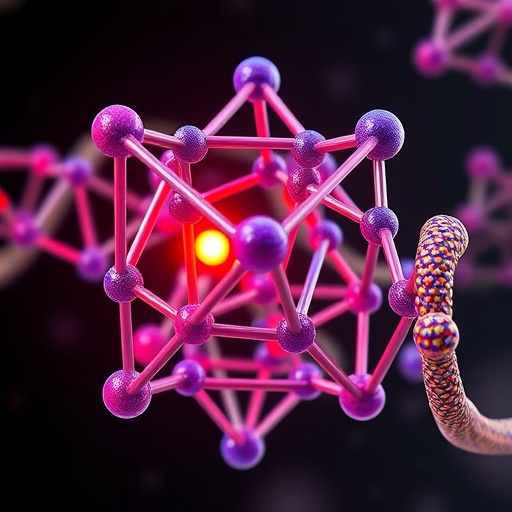
A new viral-science-style protocol described in Nature Protocols introduces a programmable DNA tetrahedral nanostructure (TDN) designed to selectively capture cells and proteins with unprecedented spatial precision. The promise for regenerative medicine, single-cell analysis, biosensing, and targeted cell therapy is clear: capture systems must bind the right target without losing efficiency to randomness in how ligands distribute and align.

Conventional multivalent platforms often stumble on two technical bottlenecks. First, ligand placement can become uncontrolled during assembly, producing variable binding sites across a surface. Second, even when ligands are present, they may not be positioned in the geometries that maximize multivalent interactions. Together, these issues limit capture efficiency and reproducibility—especially when targeting complex endogenous environments.

The researchers’ solution is a tetrahedral DNA scaffold that is not merely assembled, but programmed. By exploiting site-specific “editability,” the TDN allows capture ligands to be positioned with defined spatial control, tuning how and where binding occurs. In effect, the nanostructure becomes a molecular address system rather than a static binder.

In one capture mode, aptamers are integrated onto the TDN to recognize mesenchymal stem cells. The protocol reports a marked performance gain: binding affinity increases 2.25-fold, and overall capture reaches around 90%. Such improvements suggest that controlled ligand geometry boosts cooperative binding events that conventional, less aligned systems cannot reliably reproduce.

A second system targets proteins directly using a peptide-functionalized TDN embedded in a hydrogel. Here, the goal is sequestration of endogenous growth factors—important in tissue engineering and regenerative signaling. Compared with conventional methods that capture fewer than 40%, the TDN–hydrogel approach boosts capture efficiency to nearly 90%.

What makes the study notable for translational pipelines is the end-to-end scope. The protocol spans computational design of the nanostructure, assembly into the tetrahedral architecture, functionalization with aptamers or peptides, and in vitro validation of capture performance. The workflow is stated to be feasible in roughly 10–20 days, setting a practical cadence for iterative optimization.

Beyond the bench, the platform is positioned for longer-term biological testing, with in vivo studies extending over several weeks. That timeline reflects not only capture efficiency but also the need to evaluate stability, biodistribution, and functional outcomes in living systems.

Overall, the programmable TDN framework offers a rational route to high-efficiency capture agents—one that can be adapted to diverse targets by swapping ligand types and programming their placement. For a field still constrained by inconsistent multivalent display, this DNA-based spatial control strategy could become a modular foundation for next-generation cell and protein capture technologies.

Subject of Research: Programmable DNA nanostructure for selective capture of cells and proteins
Article Title: A programmable DNA tetrahedron platform for selective and efficient capture of cells and proteins.
Article References: Chen, X., Yin, W., Li, S. et al. A programmable DNA tetrahedron platform for selective and efficient capture of cells and proteins. Nat Protoc (2026). https://doi.org/10.1038/s41596-026-01410-5
Image Credits: AI Generated
DOI: https://doi.org/10.1038/s41596-026-01410-5
Keywords: DNA nanostructure, tetrahedral DNA, programmable ligands, cell capture, aptamer, protein sequestration, hydrogel, biosensing

Tags: biosensing and diagnosticsDNA nanostructuresligand placement control in nanostructuresmolecular address system in DNA scaffoldsmultivalent binding enhancementprogrammable DNA tetrahedral nanostructuresregenerative medicine applicationsselective cell and protein capturesingle-cell analysis techniquessite-specific DNA editing for nanostructuresspatial precision in nanostructure designtargeted cell therapy
Share26Tweet16
Previous Post

PET Ligand Enables Quantitative Imaging of Brain Gene Expression

Next Post

APREAL Fall-Prevention Program Improves Safety for Hospitalized Elderly Patients

Related Posts

KRAS inhibitors MRTX1133 or daraxonrasib synergize with anti-CTLA4 in pancreatic cancer
Medicine

KRAS inhibitors MRTX1133 or daraxonrasib synergize with anti-CTLA4 in pancreatic cancer

July 27, 2026
Multidisciplinary Neurohemodynamics Team Improves Echocardiography-Guided Care for Neonatal AVMs
Medicine

Multidisciplinary Neurohemodynamics Team Improves Echocardiography-Guided Care for Neonatal AVMs

July 27, 2026
Cytokine-Expanded Memory NK Cells Show Metabolic and Epigenetic Reprogramming and Persistence
Medicine

Cytokine-Expanded Memory NK Cells Show Metabolic and Epigenetic Reprogramming and Persistence

July 27, 2026
Dopamine-Linked Brain Network Reconfiguration Dynamics Altered in Parkinson’s Disease
Medicine

Dopamine-Linked Brain Network Reconfiguration Dynamics Altered in Parkinson’s Disease

July 27, 2026
APREAL Fall-Prevention Program Improves Safety for Hospitalized Elderly Patients
Medicine

APREAL Fall-Prevention Program Improves Safety for Hospitalized Elderly Patients

July 27, 2026
PET Ligand Enables Quantitative Imaging of Brain Gene Expression
Medicine

PET Ligand Enables Quantitative Imaging of Brain Gene Expression

July 27, 2026
Next Post
APREAL Fall-Prevention Program Improves Safety for Hospitalized Elderly Patients

APREAL Fall-Prevention Program Improves Safety for Hospitalized Elderly Patients

  • Mothers who receive childcare support from maternal grandparents show more

    Mothers who receive childcare support from maternal grandparents show more parental warmth, finds NTU Singapore study

    27656 shares
    Share 11059 Tweet 6912
  • University of Seville Breaks 120-Year-Old Mystery, Revises a Key Einstein Concept

    1061 shares
    Share 424 Tweet 265
  • Bee body mass, pathogens and local climate influence heat tolerance

    682 shares
    Share 273 Tweet 171
  • Researchers record first-ever images and data of a shark experiencing a boat strike

    546 shares
    Share 218 Tweet 137
  • Groundbreaking Clinical Trial Reveals Lubiprostone Enhances Kidney Function

    531 shares
    Share 212 Tweet 133
Science

Embark on a thrilling journey of discovery with Scienmag.com—your ultimate source for cutting-edge breakthroughs. Immerse yourself in a world where curiosity knows no limits and tomorrow’s possibilities become today’s reality!

RECENT NEWS

  • KRAS inhibitors MRTX1133 or daraxonrasib synergize with anti-CTLA4 in pancreatic cancer
  • Study Examines How Waiting Shapes Child Development
  • Multidisciplinary Neurohemodynamics Team Improves Echocardiography-Guided Care for Neonatal AVMs
  • Cytokine-Expanded Memory NK Cells Show Metabolic and Epigenetic Reprogramming and Persistence

Categories

  • Agriculture
  • Anthropology
  • Archaeology
  • Athmospheric
  • Biology
  • Biotechnology
  • Blog
  • Bussines
  • Cancer
  • Chemistry
  • Climate
  • Earth Science
  • Editorial Policy
  • Marine
  • Mathematics
  • Medicine
  • Pediatry
  • Policy
  • Psychology & Psychiatry
  • Science Education
  • Social Science
  • Space
  • Technology and Engineering

Subscribe to Blog via Email

Enter your email address to subscribe to this blog and receive notifications of new posts by email.

Join 5,146 other subscribers

© 2025 Scienmag - Science Magazine

Welcome Back!

Login to your account below

Forgotten Password?

Retrieve your password

Please enter your username or email address to reset your password.

Log In
No Result
View All Result
  • HOME
  • SCIENCE NEWS
  • CONTACT US

© 2025 Scienmag - Science Magazine

Discover more from Science

Subscribe now to keep reading and get access to the full archive.

Continue reading
