


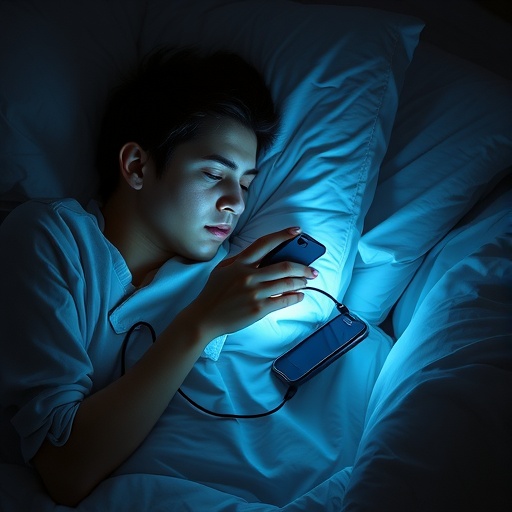
In the ever-evolving landscape of mental health research, a groundbreaking study published in BMC Psychiatry sheds new light on the intricate interplay between problematic mobile phone use, sleep patterns, mental health, and non-suicidal self-injury (NSSI) among young adults. As the digital age increasingly permeates daily life, understanding how modifiable lifestyle factors contribute to psychological distress is more urgent than ever. This study boldly explores these connections, examining the potential causal pathways and moderation effects that link mobile phone habits, circadian preferences, mental health symptoms, and self-injurious behaviors.
Non-suicidal self-injury, a deliberate act of harming oneself without suicidal intent, remains a pressing public health concern, particularly within adolescent and college-aged populations. This behavior, often a coping mechanism for psychological pain, is complex and multifactorial. Prior research has suggested that mental health issues like depression and anxiety commonly coexist with NSSI, yet the role of technological behaviors—especially problematic mobile phone use (PMPU)—and biological rhythms in this association remains less understood. The recent investigation offers a nuanced perspective by integrating sleep-related variables, circadian typologies, and emotional well-being into a comprehensive analytical model.
The research utilized a robust cross-sectional design, encompassing a large sample of 5,639 adolescents with a mean age of approximately 19.6 years. Participants completed an electronic questionnaire that assessed a variety of parameters: general demographics, PMPU measured by the Mobile Phone Addiction Tendency Scale (MPATS), chronotype via the Morningness-Eveningness Questionnaire (MEQ), depression symptoms using the Patient Health Questionnaire-9 (PHQ-9), anxiety symptoms through the Generalized Anxiety Disorder Scale (GAD-7), and validated NSSI instruments. The methodological rigor ensured standardized symptom quantifications and behavioral evaluations, allowing for intricate multivariate regression analyses and moderation testing.
Key findings from the study revealed that 12.1% of participants reported engaging in NSSI, a prevalence rate that underscores the magnitude of this mental health challenge among youth. Crucially, higher scores on the MPATS indicated a strong positive association between problematic mobile phone use and increased NSSI risk. Meanwhile, eveningness—a chronotype reflecting a preference for later sleep and activity hours—also correlated significantly with elevated self-injurious behavior. These associations were further amplified in participants exhibiting pronounced depressive and anxiety symptoms, highlighting the synergistic impact of mental health struggles.
The incorporation of moderation analyses added a vital dimension to interpreting these results. Specifically, chronotype and mental health status emerged as moderators in the relationship between PMPU and NSSI. This suggests that not only do mobile phone use patterns influence self-harm tendencies directly, but they also interact intricately with individuals’ biological clocks and psychological states to shape risk trajectories. Evening-type individuals with higher levels of depression or anxiety demonstrated the most pronounced linkages, indicating that circadian misalignment and emotional dysregulation may potentiate the harmful effects of excessive digital engagement.
From a neurobiological standpoint, these findings resonate with evidence implicating circadian rhythm disturbances in mood dysregulation and cognitive control deficits. The evening chronotype has been associated with delayed melatonin onset and altered sleep architecture, factors that can exacerbate mood symptoms and impair executive functioning. When combined with problematic mobile phone use—often characterized by excessive screen time, blue light exposure, and disrupted sleep hygiene—the cumulative burden may elevate vulnerability to maladaptive coping behaviors such as NSSI.
The study’s implications extend profoundly into the realms of prevention and intervention. Targeted strategies that address modifiable lifestyle factors like mobile phone overuse and sleep hygiene hold promising potential in mitigating self-injury risk. Educational programs tailored towards young adults, especially within academic settings, can emphasize balanced technology use, structured sleep schedules, and early detection of mental health symptoms. By fostering environments conducive to healthy digital habits and emotional resilience, it may be possible to curb the cascading effects leading from behavioral addictions to self-harm.
Furthermore, this research underscores the necessity of integrating mental health services with technology use assessments in clinical practice. Psychological interventions that simultaneously address anxiety, depression, and behavioral addictions are poised to offer holistic benefits. Cognitive-behavioral therapies, chronotherapy, and mindfulness-based approaches that recalibrate circadian rhythms and reduce digital distractions could serve as innovative modalities to decrease NSSI incidence.
While the cross-sectional nature of the study limits causal inferences, the extensive sample size and multifaceted analytic approach provide compelling correlational evidence. Future longitudinal research is warranted to delineate temporal dynamics and causal pathways linking PMPU, chronotype, mental health, and NSSI. Additionally, exploring neuroimaging and biomarker correlates might elucidate underlying neurophysiological mechanisms and inform personalized therapeutic strategies.
In navigating the digital era’s pervasive challenges, this study accentuates the critical nexus among technology use, biological rhythms, and mental health outcomes. The findings advocate for a paradigm shift that transcends traditional psychiatric symptomatology and incorporates behavioral and chronobiological perspectives. A concerted societal effort involving academic institutions, healthcare providers, families, and policymakers is essential to craft supportive systems that promote digital well-being and psychological health.
Moreover, the research highlights the importance of digital literacy in fostering awareness regarding the potential risks of mobile phone addiction. As devices became indispensable tools for connectivity and learning, their overuse risks remain underappreciated contributors to mental health crises among youth. Amplifying public health campaigns that elucidate the hidden dangers of PMPU, combined with practical guidance on digital detoxification, could empower individuals to adopt healthier interaction patterns with technology.
The integration of mental health screenings alongside assessments for problematic digital behaviors could facilitate early identification of at-risk individuals. Screening tools deployed in educational and community settings might capture concomitant symptoms of PMPU, depression, anxiety, and NSSI, enabling timely interventions. Additionally, leveraging technological solutions such as app-based monitoring and real-time feedback could support behavioral regulation and reinforce positive habits.
Ultimately, the research posits an urgent call to action: addressing modifiable sleep-related and technological factors offers a powerful vector to reduce the prevalence and severity of non-suicidal self-injury among young adults. By bridging the domains of chronobiology, behavioral addiction, and mental health, this study carves a path towards multifaceted preventive strategies that resonate with the realities of contemporary youth. It challenges scientists, clinicians, and society alike to rethink traditional mental health frameworks and embrace integrative, technology-informed perspectives for fostering youth wellbeing.
Cite Scienmag News
Glenn Wilkins. (June 6, 2025). Problematic Phone Use Links Sleep and Self-Injury. Scienmag. https://scienmag.com/problematic-phone-use-links-sleep-and-self-injury/
Glenn Wilkins. "Problematic Phone Use Links Sleep and Self-Injury." Scienmag, 6 June 2025, https://scienmag.com/problematic-phone-use-links-sleep-and-self-injury/. Accessed 4 September 2026.
Glenn Wilkins. "Problematic Phone Use Links Sleep and Self-Injury." Scienmag. June 6, 2025. https://scienmag.com/problematic-phone-use-links-sleep-and-self-injury/


