


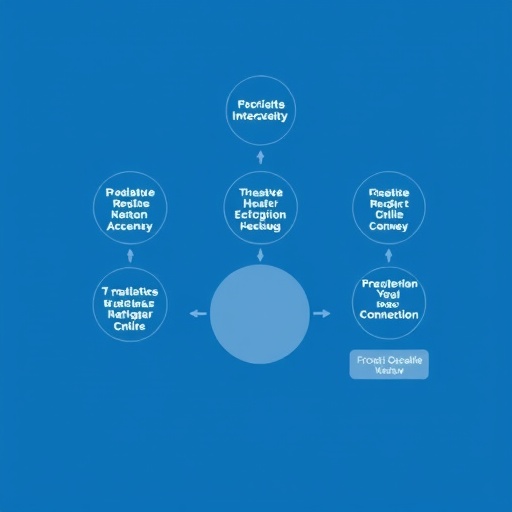
In an ambitious stride toward optimizing healthcare allocation in one of Southeast Asia’s most populous nations, a groundbreaking study unveiled a sophisticated conceptual framework that aims to revolutionize how Indonesia prioritizes its healthcare interventions. This comprehensive framework emerges against a backdrop of escalating healthcare demands, resource constraints, and a pressing need for equitable access to medical services. By meticulously integrating a multitude of variables—from epidemiological data to socio-economic parameters—the approach promises to guide policymakers in executing more informed, transparent, and effective healthcare strategies.
Indonesia’s healthcare landscape is multifaceted, characterized by stark disparities in access and outcomes across various regions and demographic groups. Traditional prioritization methods have often been criticized for lacking systematic rigor, relying instead on ad hoc decisions driven by immediate political or logistic concerns. This new framework addresses these challenges head-on by applying a structured, evidence-based methodology that accounts for both disease burden and societal values, ultimately enabling a more nuanced and ethically grounded distribution of healthcare resources.
At the core of the framework lies an intricate decision-analytic modeling system, designed to capture the dynamic interplay between intervention efficacy, cost-effectiveness, and equity considerations. By incorporating data such as morbidity and mortality rates, population demographics, and health system capacities, the framework facilitates the ranking of healthcare interventions according to their potential impact. This prioritization extends beyond mere health outcomes, integrating social determinants of health to ensure interventions also address the underlying inequities that perpetuate disparities.
The importance of such a model in Indonesia cannot be overstated. With its sprawling archipelago, vast socio-economic diversity, and varying healthcare infrastructure, the country faces unique obstacles in achieving universal health coverage. The framework incorporates geographic information systems (GIS) analyses and region-specific health indicators, allowing for granular policy design that adapts to local contexts rather than deploying one-size-fits-all solutions. This spatial dimension ensures that remote and underserved populations gain visibility in national planning, a crucial step toward achieving equity.
Technically, the researchers employed a multi-criteria decision analysis (MCDA) approach embedded within a comprehensive health economic evaluation. This hybrid method synthesizes quantitative metrics such as quality-adjusted life years (QALYs) and disability-adjusted life years (DALYs) with qualitative stakeholder inputs. By engaging diverse groups—including healthcare providers, community representatives, and policy experts—the framework balances scientific rigor with societal preferences, embodying a participatory governance model essential for sustainable healthcare reform.
An essential innovation in this framework is its adaptability over time. Recognizing that disease patterns and healthcare capacities evolve, the model incorporates feedback loops and update mechanisms informed by ongoing surveillance data. This dynamic nature ensures that priority settings remain responsive to emerging health threats, technological advancements, and shifting demographic trends, positioning Indonesia to proactively tackle future healthcare challenges.
Furthermore, the model emphasizes transparency and replicability, key tenets for fostering trust among stakeholders. It utilizes open-source analytical tools and publishes its assumptions, data sources, and weighting schemes openly, enabling external validation and independent review. This openness not only enhances credibility domestically but also encourages international collaboration and adaptation in other low- and middle-income countries grappling with similar challenges.
A significant technical challenge addressed by the framework is the integration of equity weighting in cost-effectiveness analyses, a topic that has generated extensive debate in health economics. The model operationalizes equity by assigning differential weights to health gains accruing to disadvantaged groups, thus acknowledging the moral imperative to reduce health inequalities alongside maximizing aggregate health benefits. This nuanced approach is facilitated through a robust ethical foundation, informed by extensive stakeholder consultations and normative health principles.
From a policy perspective, the framework offers a practical toolkit for decision-makers, complete with scenario analysis capabilities. Policymakers can simulate various funding allocation scenarios, assess trade-offs, and predict long-term impacts on population health and equity. Such foresight is invaluable in balancing competing priorities under budget constraints and political considerations, ultimately fostering more resilient healthcare systems.
Indonesia’s commitment to implementing this framework signals a transformative shift in its health system governance. The approach aligns with the Sustainable Development Goals (SDGs), particularly the targets related to universal health coverage and reducing health disparities. By systematically incorporating equity and efficiency considerations, the framework operationalizes global health aspirations into concrete, context-specific actions, potentially serving as a blueprint for other nations navigating complex health system reforms.
The framework’s implications extend beyond policy mechanics; they embody a paradigm shift toward evidence-based and ethically informed healthcare priority setting in resource-limited settings. Its comprehensive nature showcases the power of interdisciplinary collaboration, combining epidemiology, economics, ethics, and political science to craft a holistic solution tailored to Indonesia’s unique context. This integrated perspective is critical in addressing the multi-layered challenges that define modern health systems.
Moreover, the study underscores the increasing necessity of leveraging advanced data analytics and computational modeling in public health decision-making. As health challenges grow more complex and data-rich environments become more accessible, harnessing these tools is indispensable for navigating uncertainty and complexity in healthcare planning. Indonesia’s conceptual framework exemplifies this trend, where systematic data use merges with participatory governance to elevate health equity outcomes.
Looking forward, successful adoption and implementation of this conceptual framework will require capacity building at multiple levels of Indonesia’s health system. Training policymakers and health administrators in model application, data interpretation, and stakeholder engagement are crucial steps to translate theory into practice. The research team advocates for parallel investments in health information systems and data infrastructure to sustain the framework’s utility and scalability over time.
In conclusion, the introduction of this comprehensive conceptual framework marks a milestone in Indonesia’s healthcare evolution, offering an empirical and ethically grounded foundation for prioritizing interventions. By balancing efficiency, equity, and adaptability, it promises to enhance resource allocation processes critical to advancing health outcomes for all Indonesians. As low- and middle-income countries worldwide confront similar dilemmas, Indonesia’s pioneering approach stands as an exemplar of how sophisticated, context-aware methodologies can drive equitable health progress in complex systems.
Cite Scienmag News
Courtney Benton. (November 29, 2025). Prioritizing Healthcare Interventions in Indonesia: Framework Overview. Scienmag. https://scienmag.com/prioritizing-healthcare-interventions-in-indonesia-framework-overview/
Courtney Benton. "Prioritizing Healthcare Interventions in Indonesia: Framework Overview." Scienmag, 29 November 2025, https://scienmag.com/prioritizing-healthcare-interventions-in-indonesia-framework-overview/. Accessed 3 September 2026.
Courtney Benton. "Prioritizing Healthcare Interventions in Indonesia: Framework Overview." Scienmag. November 29, 2025. https://scienmag.com/prioritizing-healthcare-interventions-in-indonesia-framework-overview/


