


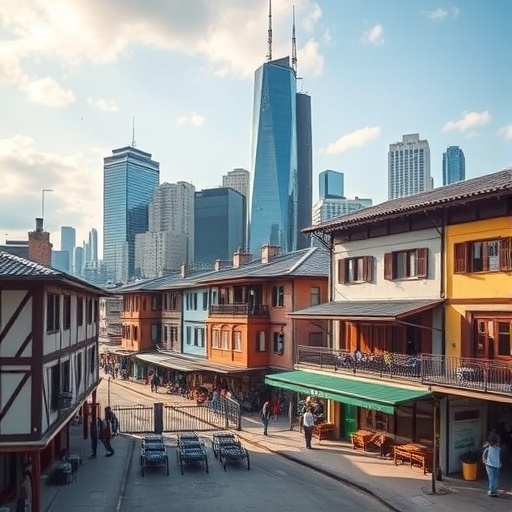
The vibrancy of color within urban environments is more than mere aesthetic embellishment; it is an essential medium through which cities express their unique cultural identities. Urban color reflects the collective memory, histories, and lived experiences of its communities, serving as a visual narrative that intertwines space, society, and time. Traditionally, heritage conservation efforts have sought to preserve these local palettes as static entities—unchanged snapshots to be safeguarded. However, as global cities evolve into melting pots of diverse cultures and shifting demographics, this static approach to color conservation may no longer suffice. Emerging research from Singapore, a quintessential global city, challenges prevailing assumptions about urban color constancy and offers new insights into the dynamic interplay of heritage, culture, and color.
In a groundbreaking study, researchers combined machine learning with traditional archival analysis and fieldwork to examine the chromatic evolution of over 3,000 heritage buildings in Singapore, spanning four decades before and after these sites were designated for conservation. This multifaceted methodological approach leveraged computational image analysis to decode subtle changes in dominant hues, color complexity, harmony, and saturation levels, while traditional text-based sources provided contextual depth to the meanings embedded within these chromatic shifts. The comprehensive dataset offers an unprecedented window into how urban color both responds to and reflects the multifarious cultural currents coursing through a cosmopolitan society.
The prevailing paradigm in heritage color conservation has typically regarded color as a fixed attribute—a pigment locked in time, emblematic of a particular era or ethnic identity. Yet, this research compellingly demonstrates that color in continuously inhabited heritage sites is anything but static. Instead, it is a living, evolving language, constantly reinterpreted through processes the authors term historicization, ethnicization, and commercialization. These processes signify how past narratives are invoked, ethnic identities asserted, and economic imperatives enacted, each layering distinct cultural meanings onto the visual fabric of built heritage.
Historicization manifests as deliberate efforts to evoke and preserve the ‘authentic’ feel of a locale, often through restoration to reference periods deemed culturally significant. Yet, the study reveals that even these efforts can incorporate contemporary reinterpretations of history, blending old and new shades to align heritage color with modern identities. This fluid interplay complicates the traditional notion of an unchanging local palette and highlights the dynamic way in which color acts as a bridge between past and present urban experiences.
Ethnicization refers to the ways in which color palettes come to symbolize, reinforce, or resist the identities of the diverse communities inhabiting these urban spaces. Singapore’s highly heterogeneous population—including Chinese, Malay, Indian, and migrant groups—imbues local color with layered meanings that adapt as demographics and cultural interactions evolve. Buildings within the same conservation zone might display chromatic variations reflecting this ethnic mosaic, reinforcing color as a potent marker of cultural expression and negotiation.
Commercialization adds another dimension to color evolution by introducing economic motivations into the heritage color equation. As neighborhoods undergo commercialization through tourism, retail, and real estate developments, color schemes are strategically adapted to appeal to broader audiences or market demands. This dynamic introduces tension between preserving cultural authenticity and embracing economic viability, ultimately reshaping local color in ways that reflect contemporary urban priorities.
The researchers’ application of a five-dimensional color analysis framework—examining dominant colors, complexity, harmony, saturation, and value—enabled a precise quantification of how heritage colors are transformed over time. For instance, an increase in color complexity and saturation might signify layers of new cultural influences or intensified commercial branding, whereas shifts in harmony could suggest negotiated continuities between tradition and innovation. These nuanced metrics, derived from computational techniques, provide a replicable and objective toolset to deepen our understanding of urban color dynamics.
What distinguishes this study is its insistence on viewing color as an integral component of sociocultural ecology rather than a mere physical attribute of architectural artifacts. This conceptual shift acknowledges that color is deeply embedded in the lived experiences, identities, and economic practices of urban inhabitants. The vibrancy or subtlety of a building’s hue thus becomes a form of ongoing dialogue—a constantly renegotiated semiotic resource that both shapes and is shaped by the changing urban milieu.
The implications for heritage conservation strategies are profound. Rather than attempting to arrest and freeze color in a presumed “original” form, conservationists are urged to embrace the fluidity and pluralistic nature of local color, recognizing it as an evolving phenomenon enriched by ongoing social interactions and cultural negotiations. This approach calls for adaptable conservation frameworks that can engage with contemporary community identities while honoring historical continuities.
Moreover, integrating computational machine learning with qualitative archival and field methods points toward a new interdisciplinary frontier in heritage studies. The capacity to analyze large-scale datasets involving visual and textual information offers unprecedented depth and precision, enabling researchers and practitioners to capture both measurable patterns and contextual narratives of color change. Such methods democratize access to conservation knowledge by transforming subjective visual impressions into actionable analytical insights.
Singapore, as a microcosm of global urban transformation, exemplifies how rapid cultural diversification and cosmopolitanism complicate traditional heritage paradigms. Its 40-plus years of conservation efforts demonstrate that color is neither monolithic nor immutable but rather a dynamic palimpsest reflecting layers of memory, identity, and economic activity. This finding resonates universally, calling on heritage management worldwide to rethink how color conservation aligns with realities of urban migration, globalization, and cultural hybridity.
As cities continue to evolve, urban planners, conservationists, and policymakers must reimagine color not as an ancillary aspect of built heritage but as a vital and evolving cultural form. The challenge lies in balancing the preservation of place-based meanings with the acceptance of inevitable change driven by demographic and socioeconomic forces. Doing so demands inclusive dialogues that position communities as active agents articulating the chromatic vocabularies of their surroundings.
Finally, this research underscores the vital role that interdisciplinary collaboration—melding art history, architecture, computational science, anthropology, and urban studies—plays in enriching our comprehension of urban color. By transcending disciplinary silos, scholars and practitioners can holistically address the intricate processes by which color becomes a mutable yet meaningful feature of cityscapes, simultaneously embodying history and signaling future trajectories.
In essence, sustaining the local color of a global city demands a nuanced appreciation of color as a fluid sociocultural phenomenon, continuously reshaped by historic memories, ethnic identities, and economic considerations. This study redefines urban color from a static preservation target to an evolving canvas that chronicles the multifaceted stories of its inhabitants, urging a transformation in heritage conservation that celebrates diversity, dynamism, and dialogue.
Cite Scienmag News
Denise Maddox. (May 22, 2025). Preserving Local Culture in a Globalized City. Scienmag. https://scienmag.com/preserving-local-culture-in-a-globalized-city/
Denise Maddox. "Preserving Local Culture in a Globalized City." Scienmag, 22 May 2025, https://scienmag.com/preserving-local-culture-in-a-globalized-city/. Accessed 4 September 2026.
Denise Maddox. "Preserving Local Culture in a Globalized City." Scienmag. May 22, 2025. https://scienmag.com/preserving-local-culture-in-a-globalized-city/


