


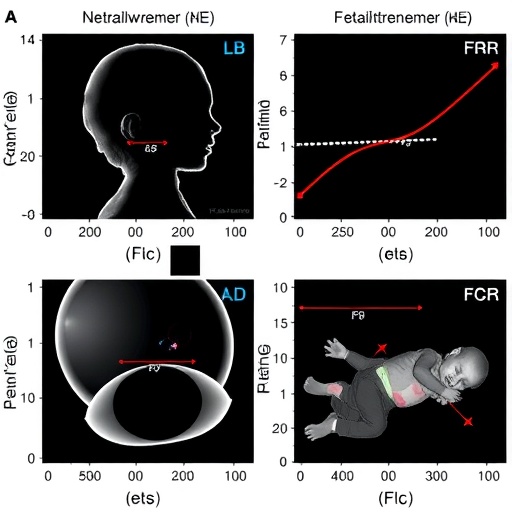
A new prenatal roadmap could soon help clinicians place endotracheal tubes (ETTs) more precisely in the tiniest preterm newborns. In infants with birth weights under 500 g, even small positioning errors during intubation can increase the risk of life‑threatening complications, including inadequate ventilation or airway trauma. Researchers say their approach uses measurements taken before birth—capturing the baby’s anatomy while it is still developing in utero.
The study focuses on predicting the optimal ETT depth rather than relying solely on standard postnatal formulas. Using prenatal biometry, investigators model how fetal growth and structural proportions relate to the distance from the mouth to the trachea. The goal is to translate ultrasound-derived anatomical signals into a practical estimate that can guide clinicians at the bedside.
Technically, the model links prenatal measurements to the anticipated airway dimensions at delivery. This requires defining which biometric inputs best correlate with the final tube placement target, then training a predictive framework to output a recommended insertion depth for extremely low birth weight infants. By emphasizing prenatal inputs, the method aims to reduce uncertainty that can arise from day-to-day postnatal changes.
Importantly, the research targets a subgroup with particularly high vulnerability. Infants below 500 g are at increased risk because their airway structures are extremely small and intubation margins are narrow. In this context, individualized prediction could improve consistency compared with one-size-fits-all guidelines.
If validated in larger clinical settings, the prenatal model could be integrated into obstetric and neonatal workflows. After routine prenatal ultrasound assessments, clinicians would generate an ETT depth estimate ahead of delivery, supporting more confident planning for immediate respiratory care.
The findings also highlight a broader trend in perinatal medicine: using quantitative prenatal data to optimize invasive procedures. Instead of reacting after intubation placement, the strategy moves decision-making earlier—toward anticipation, personalization, and safety.
Overall, the work suggests that prenatal biometry can carry actionable information for airway management. The team frames the approach as a step toward more precise, data-driven neonatal resuscitation and ventilation strategies for the smallest patients.
The study, published in Journal of Perinatology, is available under DOI: 10.1038/s41372-026-02851-2.
Cite Scienmag News
Harold Sullivan. (July 29, 2026). Prenatal biometry predicts optimal endotracheal tube depth in very low-birthweight infants. Scienmag. https://scienmag.com/prenatal-biometry-predicts-optimal-endotracheal-tube-depth-in-very-low-birthweight-infants/
Harold Sullivan. "Prenatal biometry predicts optimal endotracheal tube depth in very low-birthweight infants." Scienmag, 29 July 2026, https://scienmag.com/prenatal-biometry-predicts-optimal-endotracheal-tube-depth-in-very-low-birthweight-infants/. Accessed 4 September 2026.
Harold Sullivan. "Prenatal biometry predicts optimal endotracheal tube depth in very low-birthweight infants." Scienmag. July 29, 2026. https://scienmag.com/prenatal-biometry-predicts-optimal-endotracheal-tube-depth-in-very-low-birthweight-infants/


