


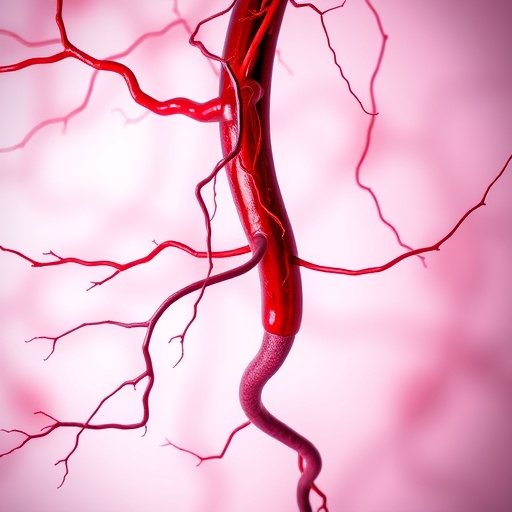
In the realm of pediatric surgery, the investigation and management of vascular anomalies, particularly those involving the portal vein, have garnered significant attention. A recent case series reported by Arafa and colleagues intricately explores the clinical manifestations and surgical ramifications associated with a rare condition known as the preduodenal portal vein (PDPV). Remarkably, the PDPV constitutes a unique anatomical variant where the portal vein’s route runs anterior to the duodenum rather than its typical position posterior to it. This anatomical deviation has profound clinical implications, making awareness and understanding essential for healthcare professionals.
The anomaly’s rarity poses challenges for diagnosis, often delaying prompt medical intervention. Pediatricians and surgeons may initially encounter vague gastrointestinal symptoms that complicate the clinical picture. Such ambiguity necessitates a meticulous approach to patient evaluation and diagnosis, giving rise to the importance of imaging studies. Techniques such as ultrasound, computed tomography (CT), or magnetic resonance imaging (MRI) are pivotal in unveiling this intricate vascular configuration. Each modality provides unique insights, but together they create a comprehensive view that facilitates accurate identification of PDPV.
The clinical manifestations of preduodenal portal vein are multifaceted and can range significantly. Some patients display asymptomatic conditions, while others may present with serious complications such as bowel obstruction, gastrointestinal bleeding, or even life-threatening conditions. The variability of symptoms is largely attributed to the degree of vascular compromise and the anatomical relationships that influence surrounding structures. The studied case series highlighted stark contrasts in presentations among patients, emphasizing the importance of personalized approaches to care.
Surgical intervention plays a crucial role in managing cases where PDPV is suspected or identified during exploratory surgeries. The nature and timing of surgical approaches hinge upon the clinical picture presented by the individual patient. In certain instances, immediate intervention may be warranted to relieve acute vascular compression or to address other complications. However, understanding the implications of the preduodenal portal vein configuration can also lead to delays in surgery if misdiagnosed, demonstrating the need for a robust knowledge foundation about this anatomical anomaly.
An essential consideration when addressing pediatric patients with PDPV is assessing their general health and nutritional status. For some, chronic symptoms arising from this condition can lead to poor weight gain or malnutrition, further complicating surgical outcomes. Consequently, preoperative optimization is pivotal. Nutritionists and healthcare teams must collaborate to ensure patients receive adequate nutritional support, which can facilitate better recovery post-surgery and mitigate risks associated with the surgical procedure itself.
Postoperative care also requires careful attention, as children recovering from procedures addressing PDPV may face unique challenges. Monitoring for complications such as infections or vascular complications can be critical in the first few days following surgery. Healthcare providers must remain vigilant and prioritize comprehensive follow-up evaluations to ensure patients return to optimal health. Education for the families regarding signs of potential complications also plays a vital role in maintaining patient safety after leaving the clinical setting.
Beyond the immediate clinical concerns, researchers continue to investigate the genetic and developmental underpinnings of PDPV. As understanding of embryogenesis progresses, it may reveal important insights into the causes of this anomaly. Investigating potential hereditary patterns could illumine whether certain genetic predispositions heighten the risk for abnormalities like the preduodenal portal vein. A collective effort among researchers and clinicians fosters a more integrated approach to understanding PDPV’s etiology.
The implications of this research extend to surgical protocol refinements and enhanced diagnostic capabilities. As the understanding of PDPV becomes more nuanced, pediatric surgical programs can incorporate these insights into their practice. Protocols may evolve to include specific imaging pathways or referral processes for patients suspected of having this condition. Additionally, interdisciplinary collaborations can further harness insights from various specialties, ensuring holistic patient management.
These advancements in the study of preduodenal portal vein augment existing literature, contributing progressively to the body of knowledge concerning vascular anomalies in pediatrics. Awareness campaigns targeting advanced imaging techniques and emphasizing early intervention can aid in improving outcomes for patients. As more anecdotal evidence of successful surgical strategies emerges, the collective learning curve can contribute to higher success rates and improved quality of life for affected children.
An ongoing dialogue about the best practices for managing patients with PDPV will influence future developments in the field. As more case series and studies are published, an invaluable knowledge database emerges, fostering innovation and the sharing of insights among pediatric specialists. Engaging in these academic exchanges will be key to elevating standards of care.
In a rapidly evolving medical landscape, continued exploration and discussion regarding the preduodenal portal vein will remain critical. Each new finding strengthens the foundation upon which more effective treatments and management strategies can be built, ultimately reinforcing the commitment to quality healthcare for all pediatric patients. With ongoing research and dedication to refining clinical practices, the goal remains clear: enhancing patient outcomes and elevating the standard of pediatric surgical care.
The case series by Arafa et al. invites all involved in pediatric medicine to reconsider diagnostic frameworks and surgical strategies in light of anatomical variations such as PDPV. It serves as a clarion call for awareness, education, and innovation in the management of this rare condition, ensuring that every child receives the highest standard of care possible.
Arafa, A., Abdelhafez, A.M., Ragab, A.S. et al. Preduodenal portal vein: a case series of variable clinical presentations and surgical implications.BMC Pediatr 25, 676 (2025). https://doi.org/10.1186/s12887-025-06009-5
Cite Scienmag News
Ophelia Keating. (September 9, 2025). Preduodenal Portal Vein: Diverse Cases and Surgery Insights. Scienmag. https://scienmag.com/preduodenal-portal-vein-diverse-cases-and-surgery-insights/
Ophelia Keating. "Preduodenal Portal Vein: Diverse Cases and Surgery Insights." Scienmag, 9 September 2025, https://scienmag.com/preduodenal-portal-vein-diverse-cases-and-surgery-insights/. Accessed 4 September 2026.
Ophelia Keating. "Preduodenal Portal Vein: Diverse Cases and Surgery Insights." Scienmag. September 9, 2025. https://scienmag.com/preduodenal-portal-vein-diverse-cases-and-surgery-insights/


