


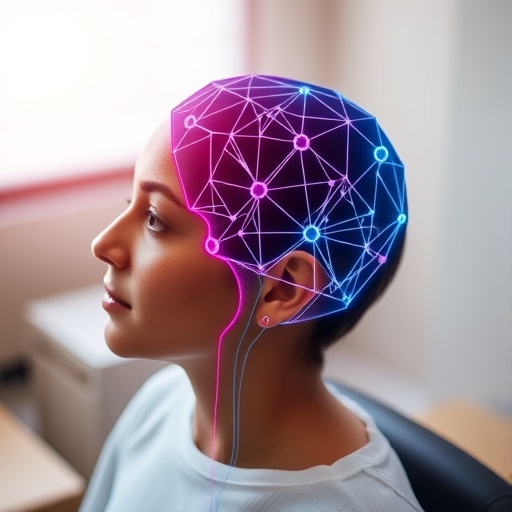
In a remarkable leap forward for psychiatric care, recent advancements in functional connectivity neurofeedback (FCN) are charting a new course toward precision treatment for mental health disorders. This emerging approach harnesses the intricate patterns of brain activity and connectivity to tailor therapeutic interventions with unprecedented specificity, potentially transforming decades of traditional psychiatric treatment paradigms.
At the heart of this innovation is the principle that psychiatric symptoms often arise from dysfunctional communication between distinct brain regions rather than isolated regional anomalies. By mapping and modulating these network dynamics in real-time, FCN offers an individualized window into the neurobiological underpinnings of disorders such as depression, anxiety, schizophrenia, and obsessive-compulsive disorder. Unlike conventional pharmacological or talk therapies, which apply broad-stroke remedies with variable efficacy, functional connectivity neurofeedback enables targeted recalibration of neural circuits, thereby enhancing symptom relief and minimizing side effects.
The core technology integrates real-time functional magnetic resonance imaging (fMRI) or electroencephalography (EEG) feedback to monitor activity across multiple brain networks simultaneously. This continuous measurement provides patients and clinicians with dynamic visual or auditory signals reflecting the current state of neural connectivity. Patients can then learn to modulate these signals through guided mental strategies, effectively gaining volitional control over aberrant brain networks that underlie their symptoms.
Critically, this technique capitalizes on neural plasticity—the brain’s intrinsic ability to reorganize and adapt. By reinforcing healthier connectivity patterns repetitively during neurofeedback sessions, long-lasting neuroadaptive changes can be induced. This capacity distinguishes FCN from classical neurofeedback approaches limited to single-region up- or down-regulation, positioning it as a sophisticated therapy capable of addressing complex psychiatric phenotypes with network-level precision.
One of the foremost challenges tackled by this research is individualized brain mapping. Psychiatric illnesses manifest heterogeneously across patients, often involving unique connectivity signatures. The study published by Taylor, Oka, Murakami, and colleagues in Translational Psychiatry emphasizes methodological innovations to customize neurofeedback targets. Using advanced machine learning algorithms and multi-modal neuroimaging datasets, the researchers delineate patient-specific aberrant connectivity profiles, which then inform personalized treatment protocols. This tailored methodology contrasts sharply with prior ‘one size fits all’ neurofeedback protocols, enhancing clinical responsiveness.
Furthermore, the temporal resolution enhancements in imaging technology allow the capture of rapid fluctuations within critical networks such as the default mode network (DMN), salience network, and frontoparietal control network—each implicated in a spectrum of psychiatric syndromes. By temporally aligning feedback with these transient connectivity states, FCN enables patients to develop refined meta-cognitive control over pathological thought patterns and emotional dysregulation.
The translational potential of this research is immense. Beyond symptomatic relief, functional connectivity neurofeedback may facilitate maintenance of recovery and prevent relapse by consolidating adaptive network configurations. Initial clinical trials demonstrate promising improvements in mood regulation, anxiety levels, and cognitive function after a series of FCN sessions, surpassing outcomes seen with traditional neurofeedback or cognitive-behavioral interventions alone.
An exciting facet of this endeavor is the integration of virtual reality (VR) environments that provide immersive, engaging contexts for neurofeedback practice. VR enhances patient motivation and facilitates complex mental tasks necessary for efficient modulation of brain networks. By coupling FCN with VR, therapy becomes a multidimensional experience, amplifying the neuroplastic impact and improving adherence.
Moreover, ongoing research into FCN explores its synergistic combination with pharmacotherapy and neuromodulation techniques such as transcranial magnetic stimulation (TMS). These multimodal approaches aim to optimize brain states prior to or during neurofeedback sessions, creating a fertile substrate for enduring circuit modifications.
The scalability and accessibility of FCN interventions are also under active development. Portable EEG systems with cloud-based real-time analytics could democratize access to personalized neurofeedback, enabling outpatient or even home-based treatment regimens. This evolution could alleviate healthcare burdens and extend precision psychiatric care beyond specialized centers.
Ethical considerations remain paramount as this technology progresses. Issues around data privacy, potential cognitive manipulation, and patient autonomy invite robust discourse to ensure responsible implementation. Transparency in patient education and rigorous clinical protocols will be essential to harness FCN’s benefits while safeguarding individual rights.
In conclusion, functional connectivity neurofeedback heralds a transformative era in psychiatry, marrying cutting-edge neuroimaging, machine learning, and patient-centered therapy. By decoding and reshaping the neural circuitry that underpins mental illness, this approach opens unprecedented avenues for durable symptom alleviation and tailored mental health interventions. As research substantiates and refines these techniques, the promise of precision psychiatry through FCN is on the verge of becoming a clinical reality capable of improving millions of lives worldwide.
Cite Scienmag News
Glenn Wilkins. (April 23, 2026). Precision Treatment Advances with Connectivity Neurofeedback. Scienmag. https://scienmag.com/precision-treatment-advances-with-connectivity-neurofeedback/
Glenn Wilkins. "Precision Treatment Advances with Connectivity Neurofeedback." Scienmag, 23 April 2026, https://scienmag.com/precision-treatment-advances-with-connectivity-neurofeedback/. Accessed 3 September 2026.
Glenn Wilkins. "Precision Treatment Advances with Connectivity Neurofeedback." Scienmag. April 23, 2026. https://scienmag.com/precision-treatment-advances-with-connectivity-neurofeedback/


