
Sunday, March 22, 2026
Science
No Result
View All Result
  • Login
  • HOME
  • SCIENCE NEWS
  • CONTACT US
  • HOME
  • SCIENCE NEWS
  • CONTACT US
No Result
View All Result
Scienmag
No Result
View All Result
Home Science News Cancer

Potential new target for colorectal cancer treatment

June 27, 2024
in Cancer
Reading Time: 2 mins read
0
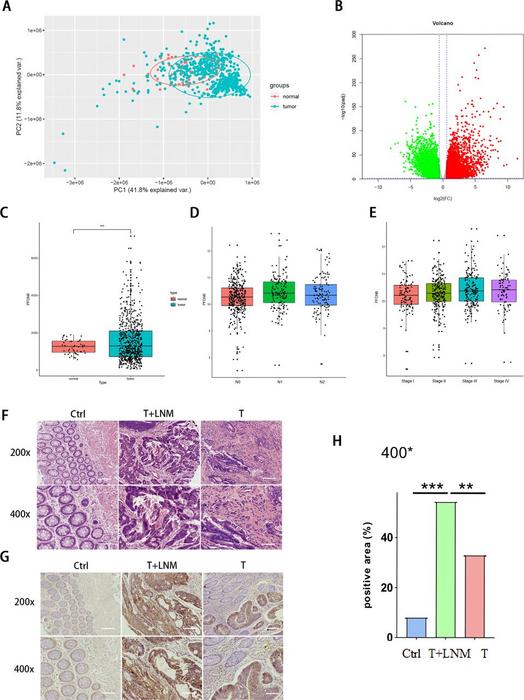
Expression of PFDN6 in patients with CRC.
67
SHARES
606
VIEWS
Share on FacebookShare on Twitter
ADVERTISEMENT

Researchers have identified a protein called PFDN6 that may play a role in the development and spread of colorectal cancer (CRC). The study, published in [journal name], found that PFDN6 levels are increased in CRC patients and contribute to tumor growth. By reducing PFDN6 in lab studies, scientists were able to slow cancer cell spread and increase cell death. These findings suggest that PFDN6 could be a target for future CRC treatments.

Expression of PFDN6 in patients with CRC.

Credit: By Fenghua Xu, LingYang Kong, Xiao Sun et al.

Researchers have identified a protein called PFDN6 that may play a role in the development and spread of colorectal cancer (CRC). The study, published in [journal name], found that PFDN6 levels are increased in CRC patients and contribute to tumor growth. By reducing PFDN6 in lab studies, scientists were able to slow cancer cell spread and increase cell death. These findings suggest that PFDN6 could be a target for future CRC treatments.

CRC is the third most common cancer worldwide and has a poor prognosis, especially in advanced stages. While surgery, radiotherapy, and chemotherapy are available treatment options, they often have side effects and limited effectiveness. Therefore, there is a critical need for new therapeutic approaches.

This study investigated the role of PFDN6 in CRC. Researchers analyzed data from an extensive cancer genomics database and found that PFDN6 expression is elevated in CRC tissues compared to healthy tissues. Additionally, higher PFDN6 levels were associated with more advanced cancer stages.

Further lab experiments confirmed that reducing PFDN6 levels in CRC cells led to decreased cell migration and invasion, essential steps for cancer spread. Additionally, researchers identified a protein called ZNF575 that may be involved in PFDN6’s effects on CRC. These findings suggest that PFDN6 may be involved in promoting the growth and spread of CRC.

While these results are promising, further research is needed. The current study was conducted in the lab, and additional studies in animal models are required to confirm the findings. Additionally, scientists need to investigate the specific mechanisms by which PFDN6 contributes to CRC development.

Overall, this study highlights PFDN6 as a potential new target for CRC treatment. Targeting PFDN6 could lead to the development of more effective therapies for patients with this disease.


See the article: 

Xu F, Kong L, Sun X, et al. PFDN6 contributes to colorectal cancer progression via transcriptional regulation. eGastroenterology 2024;2:e100001. doi:10.1136/egastro-2023-100001


About eGastroenterology 

eGastroenterology is a new, open-access, and open peer-reviewed BMJ Journal, which focuses on basic, clinical, translational, and evidence-based medicine research in all areas of gastroenterology (including hepatology, pancreatology, esophagology, and gastrointestinal surgery).

For more information, please visit: egastroenterology.bmj.com and follow us on Twitter (@eGastro_BMJ).

Sign-up to Email Alerts for eGastroenterology: 


Journal

eGastroenterology

DOI

10.1136/egastro-2023-100001

Share27Tweet17
Previous Post

ETRI revolutionizes 6G core network signal processing

Next Post

KRISS successfully develops domestic 6G antenna measurement system

Related Posts

blank
Cancer

Dr. Chun Li Honored with SNMMI Mars Shot Research Fund Award

March 20, 2026
blank
Cancer

Pre-Chemotherapy Exercise Demonstrates Potential to Alleviate Cancer-Related Fatigue

March 20, 2026
blank
Cancer

New Questionnaire Developed for Accurate Assessment of Cancer Patients’ Anxiety

March 20, 2026
blank
Cancer

MSK Research Highlights: Breakthroughs Unveiled – March 20, 2026

March 20, 2026
blank
Cancer

Link Between Tobacco Smoking and Lung Cancer Risk Following Negative Initial Low-Dose CT Scan Results

March 20, 2026
blank
Cancer

Nivolumab Combo Shrinks Esophageal Cancer Pre-Surgery

March 20, 2026
Next Post
KRISS successfully develops domestic 6G antenna measurement system

KRISS successfully develops domestic 6G antenna measurement system

  • Mothers who receive childcare support from maternal grandparents show more parental warmth, finds NTU Singapore study

    Mothers who receive childcare support from maternal grandparents show more parental warmth, finds NTU Singapore study

    27627 shares
    Share 11047 Tweet 6905
  • University of Seville Breaks 120-Year-Old Mystery, Revises a Key Einstein Concept

    1029 shares
    Share 412 Tweet 257
  • Bee body mass, pathogens and local climate influence heat tolerance

    671 shares
    Share 268 Tweet 168
  • Researchers record first-ever images and data of a shark experiencing a boat strike

    535 shares
    Share 214 Tweet 134
  • Groundbreaking Clinical Trial Reveals Lubiprostone Enhances Kidney Function

    520 shares
    Share 208 Tweet 130
Science

Embark on a thrilling journey of discovery with Scienmag.com—your ultimate source for cutting-edge breakthroughs. Immerse yourself in a world where curiosity knows no limits and tomorrow’s possibilities become today’s reality!

RECENT NEWS

  • Mobile Geriatrics Team Reduces Inappropriate Drug Prescriptions
  • Transforming Hawaiian Roads: Innovative Pavement Using Recycled Plastics and Abandoned Fishing Nets
  • Green Analysis of Diclofenac and Methocarbamol Tablets
  • Innovative Geriatric Care: The GEROS Service-Learning Program

Categories

  • Agriculture
  • Anthropology
  • Archaeology
  • Athmospheric
  • Biology
  • Biotechnology
  • Blog
  • Bussines
  • Cancer
  • Chemistry
  • Climate
  • Earth Science
  • Editorial Policy
  • Marine
  • Mathematics
  • Medicine
  • Pediatry
  • Policy
  • Psychology & Psychiatry
  • Science Education
  • Social Science
  • Space
  • Technology and Engineering

Subscribe to Blog via Email

Success! An email was just sent to confirm your subscription. Please find the email now and click 'Confirm Follow' to start subscribing.

Join 5,191 other subscribers

© 2025 Scienmag - Science Magazine

Welcome Back!

Login to your account below

Forgotten Password?

Retrieve your password

Please enter your username or email address to reset your password.

Log In
No Result
View All Result
  • HOME
  • SCIENCE NEWS
  • CONTACT US

© 2025 Scienmag - Science Magazine