


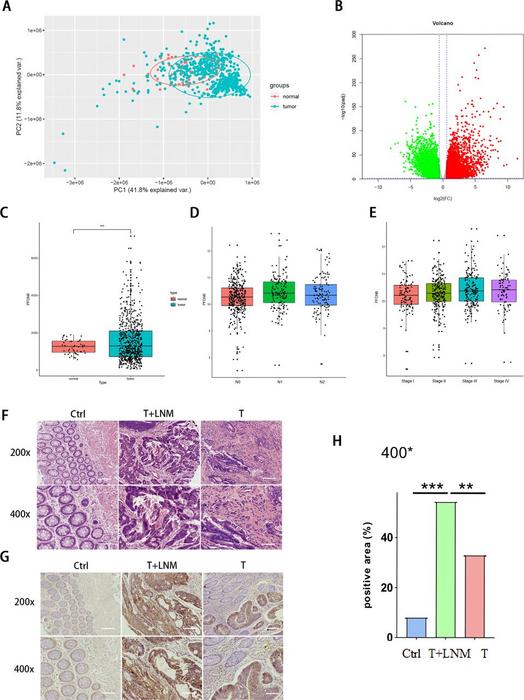
Researchers have identified a protein called PFDN6 that may play a role in the development and spread of colorectal cancer (CRC). The study, published in [journal name], found that PFDN6 levels are increased in CRC patients and contribute to tumor growth. By reducing PFDN6 in lab studies, scientists were able to slow cancer cell spread and increase cell death. These findings suggest that PFDN6 could be a target for future CRC treatments.

Credit: By Fenghua Xu, LingYang Kong, Xiao Sun et al.
Researchers have identified a protein called PFDN6 that may play a role in the development and spread of colorectal cancer (CRC). The study, published in [journal name], found that PFDN6 levels are increased in CRC patients and contribute to tumor growth. By reducing PFDN6 in lab studies, scientists were able to slow cancer cell spread and increase cell death. These findings suggest that PFDN6 could be a target for future CRC treatments.
CRC is the third most common cancer worldwide and has a poor prognosis, especially in advanced stages. While surgery, radiotherapy, and chemotherapy are available treatment options, they often have side effects and limited effectiveness. Therefore, there is a critical need for new therapeutic approaches.
This study investigated the role of PFDN6 in CRC. Researchers analyzed data from an extensive cancer genomics database and found that PFDN6 expression is elevated in CRC tissues compared to healthy tissues. Additionally, higher PFDN6 levels were associated with more advanced cancer stages.
Further lab experiments confirmed that reducing PFDN6 levels in CRC cells led to decreased cell migration and invasion, essential steps for cancer spread. Additionally, researchers identified a protein called ZNF575 that may be involved in PFDN6’s effects on CRC. These findings suggest that PFDN6 may be involved in promoting the growth and spread of CRC.
While these results are promising, further research is needed. The current study was conducted in the lab, and additional studies in animal models are required to confirm the findings. Additionally, scientists need to investigate the specific mechanisms by which PFDN6 contributes to CRC development.
Overall, this study highlights PFDN6 as a potential new target for CRC treatment. Targeting PFDN6 could lead to the development of more effective therapies for patients with this disease.
See the article:
Xu F, Kong L, Sun X, et al. PFDN6 contributes to colorectal cancer progression via transcriptional regulation. eGastroenterology 2024;2:e100001. doi:10.1136/egastro-2023-100001
About eGastroenterology
eGastroenterology is a new, open-access, and open peer-reviewed BMJ Journal, which focuses on basic, clinical, translational, and evidence-based medicine research in all areas of gastroenterology (including hepatology, pancreatology, esophagology, and gastrointestinal surgery).
For more information, please visit: egastroenterology.bmj.com and follow us on Twitter (@eGastro_BMJ).
Sign-up to Email Alerts for eGastroenterology:
Journal
eGastroenterology
Cite Scienmag News
Nathaniel Bowman. (June 27, 2024). Potential new target for colorectal cancer treatment. Scienmag. https://scienmag.com/potential-new-target-for-colorectal-cancer-treatment/
Nathaniel Bowman. "Potential new target for colorectal cancer treatment." Scienmag, 27 June 2024, https://scienmag.com/potential-new-target-for-colorectal-cancer-treatment/. Accessed 4 September 2026.
Nathaniel Bowman. "Potential new target for colorectal cancer treatment." Scienmag. June 27, 2024. https://scienmag.com/potential-new-target-for-colorectal-cancer-treatment/

