


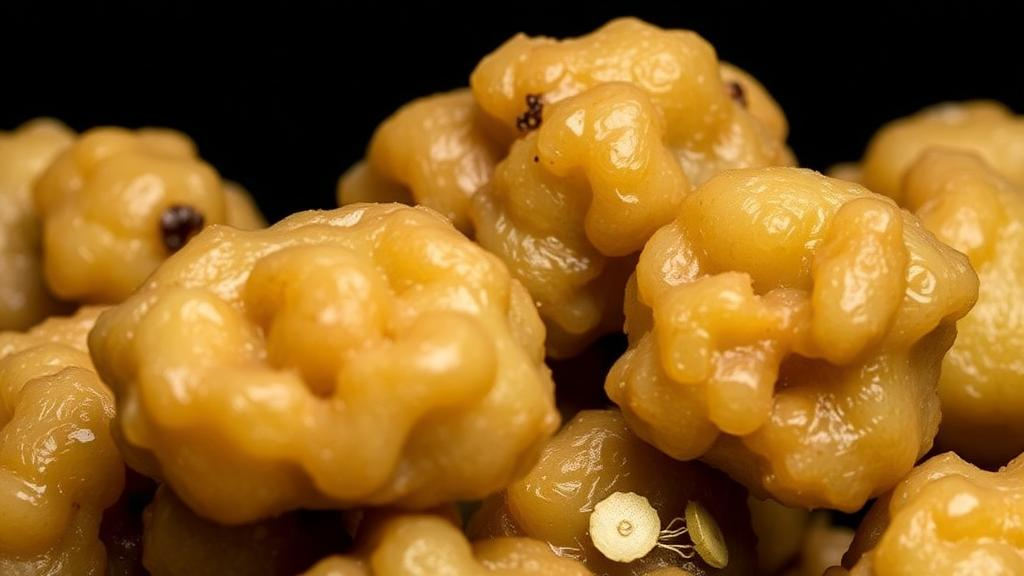
Five kilometres beneath the surface of the Indian Ocean, in a region of abyssal seafloor between roughly 9.5°S and 12°S latitude, black potato-shaped lumps have been quietly growing for millions of years. These ferromanganese nodules, concretions of iron and manganese oxides that accrete at the almost unimaginably slow rate of about one millimetre per million years, are among the most enigmatic archives of deep-sea geochemistry on the planet. They are also potential treasure chests: rich in manganese, nickel, copper, cobalt, zinc and rare earth elements, the very metals on which batteries, wind turbines and modern electronics depend. A new open-access study published in Discover Geoscience by Saurabh Kumar Barman of Banaras Hindu University and colleagues has now systematically untangled how nodule size, shape, mineralogy and chemistry intertwine in the Central Indian Ocean Basin, and the results overturn some simple assumptions about how these deep-sea objects form.
The research team examined thirty dried nodule samples collected during a 1985 cruise using boomerang grabs, from water depths ranging between 4,900 and 5,900 metres. The Central Indian Ocean Basin, a 75,000-square-kilometre exploration area located roughly 864 nautical miles from the southern tip of the Indian Peninsula, has long been the focus of India’s nodule exploration programme. Nodules in the basin range from half a centimetre to 25 centimetres in diameter, though the average is a modest 2 to 4 centimetres. The researchers sorted their specimens into three size classes, small from 0 to 3 centimetres, medium from 3 to 6 centimetres and large above 6 centimetres, and then subjected them to an unusually thorough analytical battery: atomic absorption spectroscopy for major and trace metals, UV-visible spectrophotometry for specific elemental determinations, X-ray diffraction for mineral phases, and both conventional and high-resolution scanning electron microscopy coupled with energy-dispersive X-ray spectroscopy for micro-textures and semi-quantitative chemistry.
The analytical rigour was considerable. Calibration verification standards were run and instruments recalibrated whenever deviations exceeded plus or minus 2 percent, replicate analyses delivered precision better than plus or minus 3 percent for major elements and plus or minus 5 percent for trace elements, and detection limits fell below 1 part per million for trace metals. X-ray diffraction was performed on a Rigaku SmartLab 9 kW instrument with two-theta accuracy maintained within plus or minus 0.02 degrees, while electron microscopy at IIT (BHU) Varanasi resolved features down to 500 nanometres. This combination of bulk chemistry and microscopic observation is what allowed the team to connect what a nodule looks like on the outside with what it is made of, and ultimately with how and where it grew.
On morphology, the nodules proved remarkably varied. Six primary forms emerged from the hand-specimen work: spheroidal, ellipsoidal, discoidal, poly or coalesced forms, biological types containing fragments of tooth, bone or vertebra, and faceted varieties shaped by angular nuclei or fracturing. Spheroidal and ellipsoidal shapes dominate, particularly among small and medium specimens, while larger nodules show increasing irregularity and fragmentation. Surface texture tells its own story: the proportion of rough-surfaced nodules decreases with increasing size, whereas smooth-surfaced nodules become more common in larger classes. Edges are generally rounded, and fractures less than a centimetre wide occur mainly in larger nodules, sometimes filled with sediment or secondary mineral precipitates. The dark brown to black colouration reflects the iron oxyhydroxides and manganese oxides that make up the outer layers, and the overall pattern points to progressive growth by millimetre-scale concentric accretion around a nucleus, with the shape of that nucleus partly steering the final form.
Under the microscope, the nodules revealed a rich mineral inventory. The principal constituents are goethite, lepidocrocite, 7 Å and 10 Å manganates, pyrolusite, quartz and phyllosilicates, with accessory dolomite, calcite, siderite, pyrite, rhodochrosite, marcasite, potassium feldspar, chalcopyrite, zircon, rutile, ilmenite, apatite and chlorite, and traces of gypsum. Iron-manganese oxides and oxyhydroxides constitute more than 70 percent of the nodular mass on average, forming the concentric layers, while silicates and carbonates account for roughly the remaining 30 percent. Intriguingly, the nuclei are composed mainly of zoned carbonates ranging between siderite and rhodochrosite, set in a phyllosilicate-rich matrix containing scattered detrital grains of quartz, feldspar and pyrite. Rhombic carbonate crystals from 2 to 20 micrometres, occasionally reaching 100 micrometres, are commonly associated with goethite, and the matrix of phyllosilicates, manganese oxides and carbonates frequently fills micro-fractures within the nodule interior.
Perhaps the most striking microscopic finding concerns life. Scanning electron microscopy revealed both spherical cocci and elongated rod-shaped microbial forms on nodule surfaces, and the regions enriched in microorganisms were also enriched in manganese, whereas silica dominated areas where microbial structures were absent. The presence of microporous and filamentous structures suggests a possible role for microbial mediation in metal accretion, hinting that nodule growth may begin with the formation of micronodules that later aggregate into larger nodules through continued incorporation of biogenic, detrital and authigenic material. Angular detrital grains embedded in the oxide matrix also point to episodic input of continental material during growth, a reminder that even the most remote abyssal plains receive sediment from distant shores.
The bulk geochemistry delivered the study’s headline result: a systematic inverse relationship between nodule size and metal grade. Larger nodules are comparatively poor in total metal content but enriched in iron, cobalt and moisture, a signature of slow growth under predominantly hydrogenetic conditions, meaning metals scavenged directly from seawater, at greater water depth. Smaller nodules, by contrast, are richer in manganese, zinc and total metal grade, reflecting a stronger diagenetic influence, in which metals are remobilised from suboxic to anoxic sediment layers and diffuse upward through pore waters before re-precipitating around existing nuclei. Under reducing conditions, manganese(IV) oxides dissolve to soluble manganese(II), which migrates into oxic zones and oxidises back onto nodule surfaces, producing higher manganese-to-iron ratios, porous internal textures and faster growth. Medium-sized nodules between 3 and 6 centimetres exhibited the highest metal grades of all, suggesting optimal growth conditions and the greatest economic potential of the three classes.
Correlation analysis sharpened the picture into two contrasting geochemical associations. Manganese clusters strongly and positively with copper, nickel and zinc, an assemblage indicative of diagenetic remobilisation from sediments and pore waters, while iron pairs with cobalt, lead, strontium, calcium oxide, sodium oxide and titanium dioxide, an association suggestive of hydrogenetic precipitation and possible terrigenous input via hydrolytic release of continental material. These two element families are strongly anti-correlated with each other, so a nodule’s chemistry records which of the two metal-supply pathways dominated at any moment. Todorokite, the more crystalline manganese mineral associated with diagenetic formation and greater depths, shows diffraction peaks that generally decrease from small to large nodules, whereas vernadite, the poorly crystalline manganese oxide typical of hydrogenetic growth, remains pervasive. The manganese-to-iron ratio varies from 3.06 in smaller nodules to 2.50 in larger ones, and the combined copper-plus-nickel ratio from 2.05 to 2.22, indicating variation in metal source alongside broadly uniform regional geochemical conditions.
Ternary discrimination diagrams added a genetic verdict. On the classic (Ni + Cu + Co) × 10 – Fe – Mn plot originally proposed by Bonatti, which separates hydrogenetic nodules precipitated from seawater from diagenetic nodules enriched within sediment pore waters, the studied samples plot predominantly within the hydrogenetic field. On the Cu–Ni–Zn diagram they show a strong compositional affinity with Pacific Ocean nodules described by John Mero in his classic 1965 work on marine mineral resources, while the Al–Mn–Fe diagram reveals consistently low aluminium, indicating minimal detrital input and a predominantly authigenic mode of formation. The Si–Mn–Fe diagram places the samples squarely in the oxide-hydroxide domain typical of oceanic nodules. The nodules show moderate enrichment in copper at about 1.10 percent and nickel at about 1.05 percent, comparable to Pacific nodules, cobalt contents of roughly 2,227 parts per million that are relatively lower, and zinc notably enriched relative to typical Pacific values.
One of the most consequential conclusions concerns where the different-sized nodules actually formed. Increasing nucleus size and nucleus-to-nodule ratios with increasing nodule diameter indicate that small and large nodules formed under different environmental conditions and likely at different locations, rather than growing progressively from a common precursor. Because nodules of different sizes occur close together on the seafloor, the authors argue it is not reasonable to suppose the relevant processes operated simultaneously across the area; instead, formation of different-sized nodules took place separately in different regions. They even propose a possible transport scenario: a nucleus initially formed at shallower depth may have been carried downslope by currents to greater depth, where it then grew slowly and hydrogenetically from seawater. For the emerging deep-sea mining industry, the practical message is clear. Hydrogenetic nodules tend to be enriched in cobalt and rare earth elements, whereas diagenetic nodules carry higher nickel-copper grades, and integrating nodule size, internal structure, mineralogy and geochemical proxies is essential both for understanding how these slow-growing archives form and for identifying which fractions of the seafloor hold the most promising metal resources.
Subject of Research: Size-dependent morphology, geochemistry and genesis of ferromanganese nodules in the Central Indian Ocean Basin
Article Title: Morphology, geochemical association and genesis of Fe–Mn nodules from the Central Indian Ocean Basin
Article References: Morphology, geochemical association and genesis of Fe–Mn nodules from the Central Indian Ocean Basin. (n.d.). https://doi.org/10.1007/s44288-026-00661-9
Image Credits: AI Generated
DOI: 10.1007/s44288-026-00661-9
Keywords: ferromanganese nodules, Central Indian Ocean Basin, deep-sea mining, geochemistry, hydrogenetic, diagenetic, manganese, critical metals, X-ray diffraction, scanning electron microscopy, todorokite, vernadite
Cite Scienmag News
Violet Maxwell. (October 10, 2026). Potato-Sized Clues: Deep-Sea Nodules Reveal Their Metal-Rich Secrets. Scienmag. https://scienmag.com/potato-sized-clues-deep-sea-nodules-reveal-their-metal-rich-secrets/
Violet Maxwell. "Potato-Sized Clues: Deep-Sea Nodules Reveal Their Metal-Rich Secrets." Scienmag, 10 October 2026, https://scienmag.com/potato-sized-clues-deep-sea-nodules-reveal-their-metal-rich-secrets/. Accessed 10 October 2026.
Violet Maxwell. "Potato-Sized Clues: Deep-Sea Nodules Reveal Their Metal-Rich Secrets." Scienmag. October 10, 2026. https://scienmag.com/potato-sized-clues-deep-sea-nodules-reveal-their-metal-rich-secrets/


