


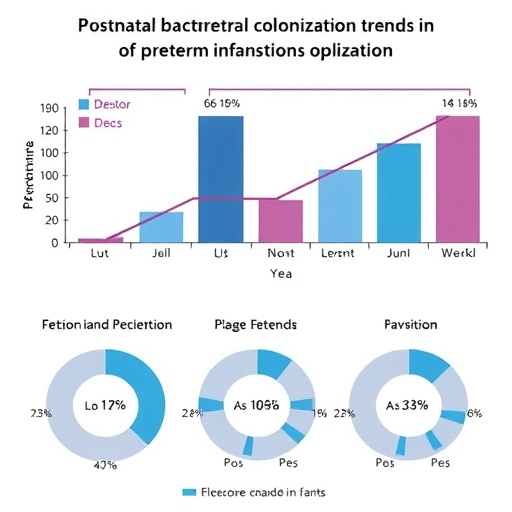
In an era where the microbiome is emerging as a critical player in human health, the study of bacterial colonization in vulnerable populations, specifically preterm infants, holds immense importance. Recent research has elucidated the dynamics of upper airway bacterial colonization in preterm infants weighing less than 1000g, particularly those afflicted with bronchopulmonary dysplasia (BPD). This investigation sheds light on the intricate relationships between bacterial communities and the health trajectories of these fragile patients in the neonatal period.
Healthcare practitioners and researchers have long understood that the initial colonization of the human body by microorganisms is a vital process that can significantly influence future health outcomes. For preterm infants, this process is fraught with challenges, as their immature immune systems place them at a higher risk of infection and chronic diseases. By exploring the bacterial colonization in the upper airways of these infants, researchers aim to uncover potential therapeutic targets that could improve their health prospects.
In this innovative study published in Scientific Reports, a team of scientists embarked on a mission to track the bacterial colonization patterns of preterm infants with very low birth weights. The researchers meticulously collected samples from the upper airways of these infants at different time points, enabling them to construct a comprehensive timeline of microbial colonization. By employing advanced sequencing technologies, they gained unprecedented insights into the microbial diversity residing within the airways of these vulnerable patients.
BPD, a serious lung condition that affects many preterm infants, complicates their clinical management. The disease is characterized by inflammation and scarring of the lungs and is linked to the mechanical ventilation and oxygen therapy often required to support these infants. Understanding the microbiome’s role in BPD is crucial as it may influence the pathophysiology of the disease. The bacterial populations residing in the upper airways may interact with local immune responses, potentially exacerbating or alleviating inflammation.
The findings from this research reveal that bacterial colonization begins early in life, even within the first few days after birth. The study identified a diverse array of bacterial species, some of which are known to be pivotal in maintaining respiratory health. Conversely, there was also a notable presence of pathogenic bacteria, raising questions about their role in the development or exacerbation of BPD. Through rigorous analysis, the researchers uncovered that specific bacterial communities appeared to flourish in infants with BPD compared to their healthier counterparts.
Interestingly, the dynamic nature of bacterial colonization suggests that these microbial communities are not static. Instead, they undergo rapid changes in response to the infant’s health status, environmental factors, and medical interventions. The researchers emphasized the need for continuous monitoring of these microbial populations as they may serve as indicators of respiratory health or disease progression in preterm infants.
This research also aligns with the growing body of literature advocating for the prebiotic and probiotic interventions in neonatal care. By understanding the bacterial landscape of the upper airway, potential strategies could be devised to manipulate these communities favorably. For instance, could the administration of specific probiotics during the neonatal period enhance microbial diversity and suppress pathogenic growth? This question represents an exciting frontier for future research.
The implications of this study extend beyond immediate clinical applications. Bacterial colonization patterns can provide insights into the broader understanding of how infants adapt to the challenges of life outside the womb. Each exposure and subsequent colonization event can shape the infant’s immune responses and metabolic pathways, laying the groundwork for their long-term health. By prioritizing research in this area, the scientific community can strive towards more holistic approaches to neonatal care.
Moreover, the methodology employed in this work sets a precedent for future investigations. The use of metagenomic sequencing not only captures the richness of microbial diversity but also reveals the potential interactions between different species. This brings to light the significance of microbial networks and their collective impact on health. The lessons learned from studying preterm infants may ultimately translate into broader advancements in our understanding of microbiomes across different populations.
As awareness grows about the relevance of the microbiome in various health contexts, this study serves as a pivotal reminder of the delicate balancing act that occurs in the early life stages of infants. Realizing how early interventions can steer the establishment of a healthy microbiome will be crucial in developing targeted therapies for at-risk populations.
In summary, Frodermann and colleagues have made significant strides in opening the dialogue around microbial colonization in preterm infants. The study prompts essential questions about potential interventions to manipulate and improve these bacterial communities for better health outcomes. The researchers advocate for continued exploration of the upper airway microbiome, given its potential to inform clinical strategies aimed at preventing or mitigating developmental issues, including chronic lung diseases like BPD.
Ultimately, this research underscores the imperative of interdisciplinary collaboration in neonatal care, integrating microbiology, immunology, and clinical medicine to foster environments that optimize outcomes for our most vulnerable patients. As we continue to unravel the complexities of the human microbiome, the hope is that this knowledge will lead to tangible improvements in the care and quality of life for preterm infants around the globe.
Frodermann, T., Rochwalsky, U., Selting, A. et al. Dynamics of postnatal upper airway bacteria colonization in preterm infants <1000g and bronchopulmonary dysplasia.
Sci Rep (2025). https://doi.org/10.1038/s41598-025-29038-7
Cite Scienmag News
Harold Sullivan. (November 28, 2025). Postnatal Bacterial Colonization Trends in Preterm Infants. Scienmag. https://scienmag.com/postnatal-bacterial-colonization-trends-in-preterm-infants/
Harold Sullivan. "Postnatal Bacterial Colonization Trends in Preterm Infants." Scienmag, 28 November 2025, https://scienmag.com/postnatal-bacterial-colonization-trends-in-preterm-infants/. Accessed 4 September 2026.
Harold Sullivan. "Postnatal Bacterial Colonization Trends in Preterm Infants." Scienmag. November 28, 2025. https://scienmag.com/postnatal-bacterial-colonization-trends-in-preterm-infants/


