


Container based sanitation has been heralded as a game-changing answer to one of the world’s most stubborn infrastructure problems: how to provide safe, dignified toilets to the billions of people living in dense, unplanned urban settlements where sewers cannot reach. But new research from a South African informal settlement suggests that the technology, at least as currently delivered, may barely meet the needs of the very people it is meant to serve. The study, published in PLOS Water, examined whether residents of BM Section in Khayelitsha, Cape Town, can realise their Human Right to Sanitation through household portable flush toilets or shared facilities, and the answer is a qualified and troubling no.
The scale of the global challenge is enormous. Around 3.5 billion people lack access to safely managed sanitation, and more than half of them live in rapidly expanding urban areas. In sub-Saharan Africa, over 60 percent of urban dwellers reside in areas without the infrastructure to provide sanitation services. Informal settlements like BM Section, which packs roughly 14,000 residents onto 32.42 hectares of land owned by the City of Cape Town, illustrate the dilemma: land tenure is insecure, housing is overcrowded and precarious, and unemployment is high, making conventional sewered sanitation technically and politically difficult to deliver.
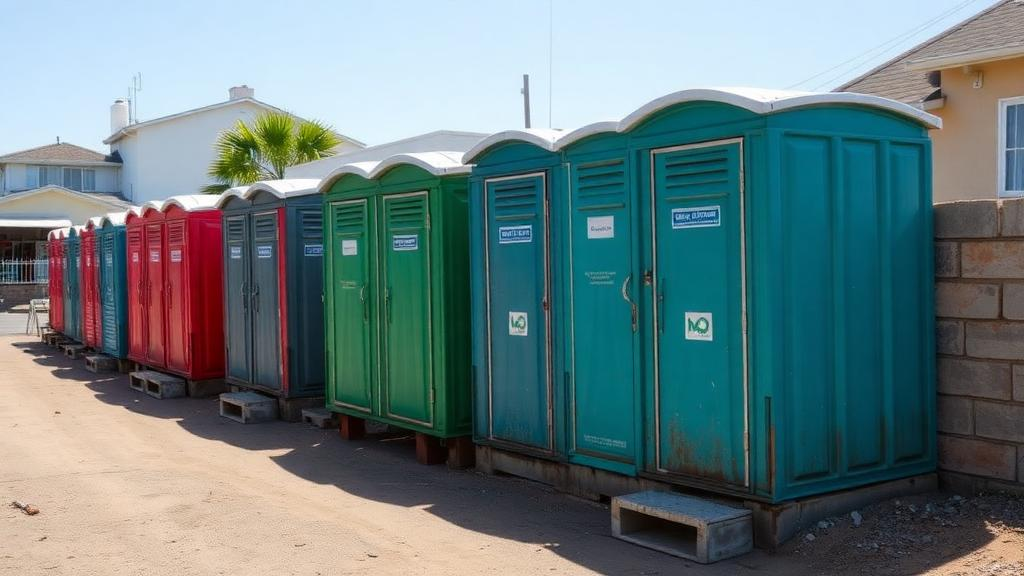
Container based sanitation works by capturing excreta in sealable containers that are transported to semi-centralised facilities for treatment. The technology ranges from small portable toilets resembling camping equipment to larger units moved by vehicles, and the World Health Organization and UNICEF’s Joint Monitoring Programme classify it as improved sanitation that can count as safely managed when appropriately serviced. In BM Section, the City of Cape Town provides household container based sanitation in the form of portable flush toilets, known locally as pota-pota, consisting of a toilet seat and two detachable storage cartridges used in rotation. A private contractor is supposed to collect filled cartridges three times a week and return clean ones directly to each household.
The research team, led by Mmeli Dube of the University of the Western Cape and Dani Barrington of the University of Western Australia, used a participatory method called Photovoice, in which thirteen residents were given disposable cameras and asked to photograph their sanitation experiences. The photographs then served as prompts during in-depth interviews, allowing participants to document conditions that conventional interviews often miss. Participants were purposively selected along axes of gender, disability, income and exposure to shocks such as flooding and fire, with roughly half using household portable flush toilets and half relying on shared sanitation. The team analysed the material using Winkler’s five normative contents of the Human Right to Sanitation, namely availability, accessibility, affordability, safety and acceptability, combined with Crenshaw’s theory of intersectionality.
The findings on shared sanitation were stark. Chemical and container toilets are notionally shared among five households, but residents reported that the real ratios are far higher, and public ablution blocks serving hundreds of people sometimes had only one working toilet out of five on the female side. Keli, a middle-aged unemployed mother, described a chemical toilet 100 metres from her home that was sometimes full of maggots, unstable in the wind, and fitted with a door that would not close properly, exposing users to passers-by. Because the toilet offered so little privacy during daylight hours, she resorted to using it at night, despite the risks of robbery and sexual assault that she said were frequently reported in her area.
Other participants had fared even worse. Bonani, an unemployed woman with care responsibilities, gave up on the shared toilet entirely after conflicts over keys, which were hoarded by more socially powerful residents who changed the locks and distributed keys only to people they preferred. She now practices open defecation in a field with her children, navigating flooded paths and fearing snakes, assault and the stigma of managing menstruation without any disposal facilities. Mila, who uses an ablution block, reported contracting an infection she traced to the filthy, blocked toilets, and at night she urinates and defecates in a bucket that she empties into a drain. The researchers found that exclusion from sanitation was not only a consequence of individual vulnerabilities but also of unequal power relations governing access to infrastructure.
Household portable flush toilets performed better in some respects, but only for those with the resources to adapt them. Sihle, a 60-year-old partially blind woman, described how her life improved when she received a pota-pota, which her son-in-law sheltered in a repurposed storage cubicle next to her shack. With a phone torch to light her way, she could use the toilet safely at night without depending on anyone. Yet her story is the exception. John, who has lived with disability since childhood and has a paralysed left arm, could not use his household toilet safely because it stood unsheltered on uneven ground, forcing him to balance by holding onto the sides of adjacent shacks. For him, a shared toilet with a solid structure was actually more acceptable than his own household facility.
The study’s central insight is that the technology’s benefits depend entirely on users’ capacity to adapt it, what the researchers describe as a form of implicit infrastructure in which residents complete or compensate for infrastructural shortcomings through their own labour and money. To make a portable flush toilet private, safe and dignified, users must build secure cubicles, level the ground, install locks, acquire torches, and rebuild after fires or floods. Lizwe, a young man with memory loss and eyesight problems living with seven family members, kept the family toilet in an unlocked storeroom where strangers used it without permission, and his household avoided flushing to delay filling the 16-litre cartridge, pushing waste down with broomsticks instead. When cartridges became too heavy, contractors refused to collect them, and residents carried them to the roadside themselves.
These adaptations carry serious hygiene consequences. When servicing schedules are not observed and cartridges fill faster than collections allow, users improvise by restricting toilet use to emergencies, emptying waste into drains, or resorting to shared facilities, all of which increase the likelihood of human contact with excreta and environmental contamination. The researchers calculate that a household of six, given typical excreta volumes of about 1.5 litres per person per day plus flushing water and toilet paper, could fill a standard cartridge in a single day. This complicates the classification of household container based sanitation as safely managed, because that classification assumes a level of servicing and user capacity that the reality on the ground does not support.
The authors conclude that technical provision alone is insufficient to realise the Human Right to Sanitation, and that policy and scholarship must incorporate intersectional and rights-based approaches if container based sanitation is to bring users closer to that right. In BM Section, a toilet delivered free of charge still fails the woman who cannot reach it safely, the disabled man who cannot sit on it, and the family that cannot lock it. As informal settlements grow and container based sanitation shifts from transitional fix to permanent reality by default, the study warns that monitoring frameworks based on facility type alone risk obscuring exactly the disparities in dignity, safety and access that human rights law was written to eliminate.
Subject of Research: Container based sanitation and the Human Right to Sanitation in a South African informal settlement
Article Title: Achieving the Human Right to Sanitation? Container based sanitation and intersectional vulnerabilities in a South African informal settlement
Article References: Dube, M., Anciano, F., Ofori, A. D., Mabaso, L., & Barrington, D. J. (2026). Achieving the Human Right to Sanitation? Container based sanitation and intersectional vulnerabilities in a South African informal settlement. PLOS Water, 5(10), e0000524. https://doi.org/10.1371/journal.pwat.0000524
Image Credits: AI Generated
DOI: 10.1371/journal.pwat.0000524
Keywords: sanitation, container based sanitation, informal settlements, human rights, Cape Town, intersectionality, Photovoice, portable flush toilets, Khayelitsha, water and sanitation, public health, urban inequality
Cite Scienmag News
Violet Maxwell. (October 10, 2026). Portable Toilets Fall Short of the Human Right to Sanitation in Cape Town’s Informal Settlements. Scienmag. https://scienmag.com/portable-toilets-fall-short-of-the-human-right-to-sanitation-in-cape-towns-informal-settlements/
Violet Maxwell. "Portable Toilets Fall Short of the Human Right to Sanitation in Cape Town’s Informal Settlements." Scienmag, 10 October 2026, https://scienmag.com/portable-toilets-fall-short-of-the-human-right-to-sanitation-in-cape-towns-informal-settlements/. Accessed 10 October 2026.
Violet Maxwell. "Portable Toilets Fall Short of the Human Right to Sanitation in Cape Town’s Informal Settlements." Scienmag. October 10, 2026. https://scienmag.com/portable-toilets-fall-short-of-the-human-right-to-sanitation-in-cape-towns-informal-settlements/


