


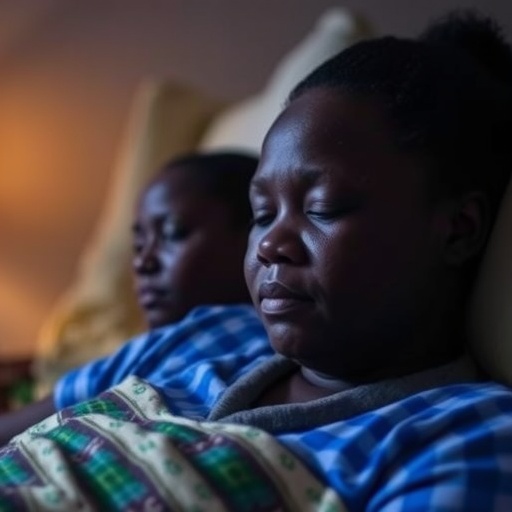
In a groundbreaking new meta-analysis published in BMC Psychiatry, researchers have illuminated the concerning prevalence and profound impact of poor sleep quality on mental health among Ethiopian women of reproductive age. This extensive systematic review aggregates data across multiple studies to provide a comprehensive understanding of how sleep disturbances intersect with common mental disorders (CMDs) such as depression, anxiety, and stress in this population. The findings not only highlight a critical public health issue but also pave the way for targeted interventions to improve both sleep and psychological well-being.
Sleep, a fundamental pillar of physical and mental health, is notoriously affected during the reproductive years due to a confluence of hormonal, social, and environmental factors. In Ethiopia, as in many low- and middle-income countries, the burden of sleep disturbance remains underexplored despite its potential to exacerbate mental disorders. This study, spearheaded by Hasen and colleagues, meticulously analyzed ten studies drawing from a widespread array of databases including PubMed and African Journals Online, offering an unprecedented meta-analytical perspective focused explicitly on women in this vulnerable demographic.
The methodological rigor of the analysis is notable, applying the Newcastle-Ottawa Scale to ensure study quality and employing a DerSimonian-Laird random-effects model to account for heterogeneity among data sources. This statistical approach allows for a more generalized conclusion beyond individual studies, synthesizing results while maintaining robust confidence intervals. The pooled prevalence of poor sleep quality, strikingly high at 54%, signals a pervasive issue that transcends individual locale or study sample characteristics.
The relationship between poor sleep and common mental disorders emerges from the analysis as particularly significant. Depression, often intertwined with sleep impairment, showed an adjusted odds ratio (AOR) of 2.78, indicating that women with poor sleep quality were nearly three times more likely to suffer from depressive symptoms. This strong linkage affirms prior global research while contextualizing it within Ethiopia’s unique cultural, socioeconomic, and healthcare environments. Anxiety followed closely with an AOR of 2.65, underscoring the intricate bidirectional effects between sleep disruption and heightened anxiety levels.
Stress, although somewhat less conclusively correlated with poor sleep (AOR = 1.69), remains an important facet of this multidimensional analysis. The moderate heterogeneity observed suggests variable influences likely rooted in differing stress definitions and assessment methods across studies. Nevertheless, the overarching narrative remains clear: disturbed sleep is a hallmark of psychological distress in reproductive age women and warrants urgent attention from healthcare providers.
These findings carry profound implications not only for clinical practice but for public health policy. The exceedingly high prevalence of poor sleep quality among Ethiopian women calls for comprehensive screening programs integrated within reproductive health services. Mental health interventions should incorporate sleep hygiene education, cognitive-behavioral therapies focused on sleep improvement, and structural adjustments addressing environmental or socioeconomic determinants contributing to sleep disruption.
Crucially, the study highlights the bidirectional and potentially self-reinforcing relationship between sleep disorders and mental health conditions. Poor sleep quality can exacerbate symptoms of CMDs, which themselves can further impair sleep, creating a vicious cycle detrimental to overall quality of life. Breaking this cycle demands multidisciplinary approaches that equip healthcare workers with the necessary tools and knowledge tailored to the Ethiopian context.
While sleep research is abundant in high-income countries, this meta-analysis addresses a notable gap by providing localized evidence within an Ethiopian framework. This is invaluable for guiding context-sensitive intervention development and resource allocation, especially in a region where mental health services remain sparse and stigmatized. It also prompts a broader conversation about the global dimensions of sleep deprivation and its hidden toll within underserved populations.
From a technical standpoint, this meta-analytical study applied rigorous search strategies across diverse databases and adhered to stringent quality assessment criteria. The use of random-effects models acknowledges inter-study variability – an essential consideration given that epidemiological studies on sleep and mental health often report heterogeneous findings due to varying tools, sample sizes, and demographic profiles. Yet the consistency of associations observed reinforces the robustness of the conclusions drawn.
Future research directions should consider longitudinal designs to unravel temporal dynamics between sleep and mental health disorders. Additionally, exploring the influence of cultural practices, nutritional status, and co-morbid medical conditions could elucidate further nuances affecting sleep quality. Integrating objective sleep measures such as actigraphy or polysomnography could enrich data precision beyond self-reported instruments that dominate existing literature.
In summary, this seminal work serves as a clarion call for heightened awareness and coordinated efforts to address poor sleep quality among Ethiopian women of reproductive age. Its revelations extend beyond academic circles, emphasizing sleep health as a crucial determinant of mental wellness and a potential leverage point for mitigating the burden of depression, anxiety, and stress globally. As such, it stands as a compelling advocate for sleep-centered public health initiatives tailored to the specific needs and constraints of low-resource settings.
As the interplay between sleep and mental health garners increasing scientific attention, this study’s insights spotlight the indispensable role of sleep in safeguarding not only individual health but generational and societal well-being. Investing in sleep improvement strategies could yield cascading benefits for mothers and families, ultimately contributing to stronger, healthier communities.
By confronting sleep problems head-on, Ethiopia and similar countries can pave the way toward holistic health paradigms that integrate mental, physical, and social dimensions. This meta-analysis thus charts a vital path forward, combining empirical rigor with actionable knowledge poised to transform lives and redefine healthcare priorities across reproductive lives and beyond.
Cite Scienmag News
Glenn Wilkins. (August 29, 2025). Poor Sleep Linked to Mental Disorders in Ethiopian Women. Scienmag. https://scienmag.com/poor-sleep-linked-to-mental-disorders-in-ethiopian-women/
Glenn Wilkins. "Poor Sleep Linked to Mental Disorders in Ethiopian Women." Scienmag, 29 August 2025, https://scienmag.com/poor-sleep-linked-to-mental-disorders-in-ethiopian-women/. Accessed 5 September 2026.
Glenn Wilkins. "Poor Sleep Linked to Mental Disorders in Ethiopian Women." Scienmag. August 29, 2025. https://scienmag.com/poor-sleep-linked-to-mental-disorders-in-ethiopian-women/


