


A new editorial in Frontiers in Insect Science, published on 22 October 2026, draws together six research contributions examining how pests and diseases of pollinators are spreading in a changing world. Written by Chuleui Jung of Gyeongkuk National University in the Republic of Korea and Terd Disayathanoowat of Chiang Mai University in Thailand, the editorial introduces a Research Topic titled “Spread of Pest and Diseases of Pollinators in a Changing World” and argues that pollinator health can no longer be understood through any single lens. The collected work spans parasite surveillance, viral diversity, molecular host responses, pesticide effects, and potential mitigation strategies, and the editors present it as evidence that pollinator health is fundamentally a multi-stressor problem demanding multi-level solutions.
The starting point for the editorial is a stark assessment of the pressures facing both managed and wild pollinators. Pollinators are fundamental to the reproduction of wild plants and to the production of many crops that contribute to human nutrition and agricultural diversity. Yet, according to the editorial, they are increasingly exposed to multiple and interacting stressors, including habitat degradation, nutritional limitation, pesticides, parasites, pathogens, invasive species, and climate change. Crucially, the editors stress that these pressures rarely act independently. Climate change can modify the distributions of hosts and parasites and generate phenological mismatches between pollinators and the flowering crops that depend on them. At the same time, global trade and the movement of managed bees facilitate the transboundary spread of parasites and pathogens, meaning that local beekeeping decisions can have international consequences.
A central theme of the Research Topic is the continuing emergence and redistribution of parasitic mites. Varroa destructor remains one of the most important biological threats to the western honey bee, Apis mellifera, both through direct parasitism and through its role in altering the transmission and epidemiology of honey bee viruses. Among the six contributions, Kim and colleagues provide a comprehensive virome analysis of Varroa destructor populations in South Korea. Their work carries a practical message for surveillance programmes: the editors argue that monitoring should extend beyond simply measuring infestation intensity to include the pathogens associated with mite populations. Such approaches are increasingly relevant because parasite prevalence and risk vary with management and landscape context, as demonstrated for both Varroa destructor and Tropilaelaps mercedesae in Korean apiaries.
The geographical expansion of Tropilaelaps mercedesae receives particular attention in the editorial. Esmaeily and colleagues, in a 2026 synthesis, review current knowledge of the mite’s biology, distribution, diagnosis, and management, and identify it as an emerging global threat to apiculture. The mite’s rapid reproductive cycle, its dependence on honey bee brood, and its potential for movement through managed colonies make early detection especially important. The editors use this case to illustrate a broader pattern: historically regional pests can become international biosecurity issues when climate suitability, bee movements, and trade interact. In response, they call for standardized monitoring, improved diagnostic tools, international information exchange, and integrated control strategies as essential elements of any response to the growing Tropilaelaps concern.
Pathogens represent another important dimension of pollinator health covered by the Research Topic. Kumar and colleagues investigated acute bee paralysis virus infection in a honey bee-derived cell line and demonstrated changes in host microRNA expression following infection. By moving from pathogen detection toward regulatory mechanisms, the editors note, the study highlights the potential role of microRNAs in antiviral defense and viral pathogenesis. This shift in focus, from simply identifying which viruses are present to understanding how host cells respond at the molecular level, reflects a maturing field in which molecular tools are reshaping how scientists think about disease in pollinators.
Complementing that molecular perspective, Li and colleagues examined the effects of Bidens pilosa phytogenic treatment on Nosema ceranae gene expression in infected honey bees. Their results illustrate, according to the editorial, the growing potential of transcriptomic approaches to identify biological pathways affected by candidate phytogenic treatments and to provide mechanistic support for disease-management strategies. Rather than testing whether a treatment works at the colony level alone, transcriptomics allows researchers to see which host and parasite pathways are being touched, offering a mechanistic bridge between laboratory observation and practical disease management.
Chemical stressors add another layer of complexity to the pollinator health picture. The editorial points out that pollinators encounter pesticides used on crops as well as veterinary compounds applied within colonies, creating opportunities for mixture effects that conventional single-compound risk assessments may overlook. Species sensitivity also differs substantially: comparative testing of four Asian honey bee species showed that pesticide toxicity cannot necessarily be extrapolated from Apis mellifera to other Apis species. Likewise, combined exposure to agricultural insecticides, fungicides, bactericides, or in-hive acaricides can alter toxicity. Recent studies have documented interactive risks involving copper hydroxide and co-occurring pesticides, and increased honey bee vulnerability when amitraz exposure occurs together with organophosphate insecticides. Together, these findings challenge the assumption that assessing compounds one at a time is sufficient to protect bees.
Two contributions in the Research Topic address pesticide-related effects and possible mitigation directly. Rondoni and colleagues developed a microcontroller-based device to standardize proboscis extension reflex conditioning, a classical measure of olfactory learning in bees, and showed that spinosad exposure can impair this learning. The editors argue that this study reinforces the need to evaluate behavioral and other sublethal endpoints rather than relying solely on mortality as a measure of harm. At the same time, Mohamadzade Namin and colleagues explored curcumin and rosmarinic acid as dietary additions against pesticide-induced harm. Their findings suggest that phytochemicals may enhance detoxification or stress resilience under some exposure conditions, opening a possible nutritional avenue for supporting bees in chemically stressed environments.
The editors are careful, however, to temper enthusiasm about such mitigation strategies. They note that these approaches are promising, but that laboratory benefits should ultimately be validated at colony and field scales, and that they should complement, rather than replace, efforts to reduce hazardous exposure in the first place. This caution reflects a recurring theme throughout the editorial: promising laboratory findings, whether molecular, toxicological, or nutritional, must be connected to outcomes at the organismal and colony level before they can inform real-world practice. Molecular studies, the editors argue, should be explicitly linked with organismal and colony-level outcomes if they are to change how beekeepers and policymakers act.
Taken together, the six contributions deliver what the editors describe as a common message: pollinator health is a multi-stressor problem requiring multi-level solutions. Surveillance must integrate parasites and pathogens; pesticide assessment should incorporate realistic mixtures, sublethal effects, and interspecific differences; and candidate treatments require ecological validation. Climate change adds urgency by altering phenology, host-parasite interactions, and the potential ranges of pests and diseases. Looking forward, the editors argue that progress will depend on closer integration of molecular biology, epidemiology, toxicology, ecology, spatial monitoring, and practical beekeeping. Coordinated surveillance across countries, rapid diagnostic technologies, standardized sampling protocols, and predictive approaches incorporating climate and landscape information will become increasingly important. Protecting pollinators in a changing world, they conclude, will ultimately require not only treating individual diseases or controlling individual pests, but understanding and managing the interacting biological and environmental processes that determine pollinator resilience.
Subject of Research: An editorial introducing a research collection on the spread of pests and diseases of pollinators in a changing world.
Article Title: Editorial: Spread of pest and diseases of pollinators in a changing world
Article References: Jung, C., & Disayathanoowat, T. (2026). Editorial: Spread of pest and diseases of pollinators in a changing world. Frontiers in Insect Science, 6, Article 2014558. https://doi.org/10.3389/finsc.2026.2014558
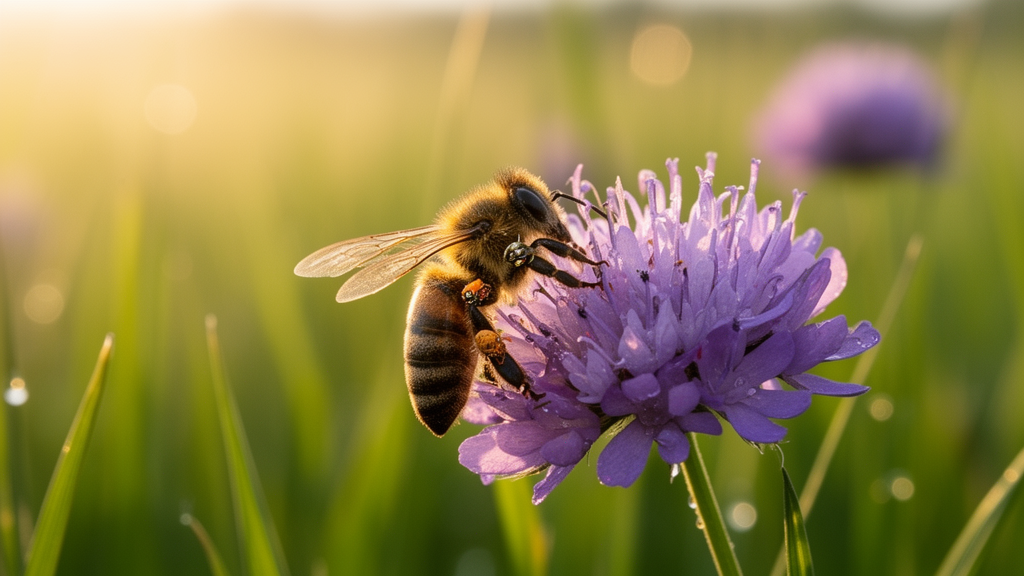
Image Credits: AI Generated
DOI: 10.3389/finsc.2026.2014558
Keywords: pollinators, Varroa destructor, Tropilaelaps mercedesae, honey bee viruses, pesticides, Nosema ceranae, climate change, bee health, microRNAs, phytochemicals, apiculture, biosecurity
Cite Scienmag News
Julie Wynn. (October 27, 2026). Pollinator Pests and Pathogens Spread as a Warming World Reshapes Bee Health. Scienmag. https://scienmag.com/pollinator-pests-and-pathogens-spread-as-a-warming-world-reshapes-bee-health/
Julie Wynn. "Pollinator Pests and Pathogens Spread as a Warming World Reshapes Bee Health." Scienmag, 27 October 2026, https://scienmag.com/pollinator-pests-and-pathogens-spread-as-a-warming-world-reshapes-bee-health/. Accessed 27 October 2026.
Julie Wynn. "Pollinator Pests and Pathogens Spread as a Warming World Reshapes Bee Health." Scienmag. October 27, 2026. https://scienmag.com/pollinator-pests-and-pathogens-spread-as-a-warming-world-reshapes-bee-health/


