


When British Columbia launched its controversial drug decriminalization pilot project in January 2023, one of its central promises was that people who use drugs would face fewer encounters with law enforcement. The policy was designed to shift the response to substance use away from the criminal justice system and toward health services, removing the threat of arrest and prosecution for possessing small amounts of illicit drugs for personal consumption. But new research from Simon Fraser University suggests that, at least in Vancouver, the reality of the pilot’s first year looked strikingly different from its intent. Instead of a decline in police contact, the study found a significant upward trend in reports of police seizing drugs from people who use drugs, even when no arrest followed, raising difficult questions about how decriminalization was implemented on the street and what lessons should carry forward into future policy.
The study, published in the peer-reviewed journal BMC Public Health, analyzed longitudinal data from 490 participants in the long-running Vancouver Injection Drug Users Study, known as VIDUS, covering the period between March 2022 and February 2024. That window allowed researchers to compare experiences before the pilot began on January 31, 2023, with experiences during its first year of operation. Under the pilot, police in British Columbia were not meant to arrest or charge people for possessing drugs for personal consumption, with a possession threshold defined as 2.5 grams. The policy was framed as a three-year experiment in reducing the harms associated with criminalization, and its conclusion in January 2026 has only intensified scrutiny of what the evidence actually shows.
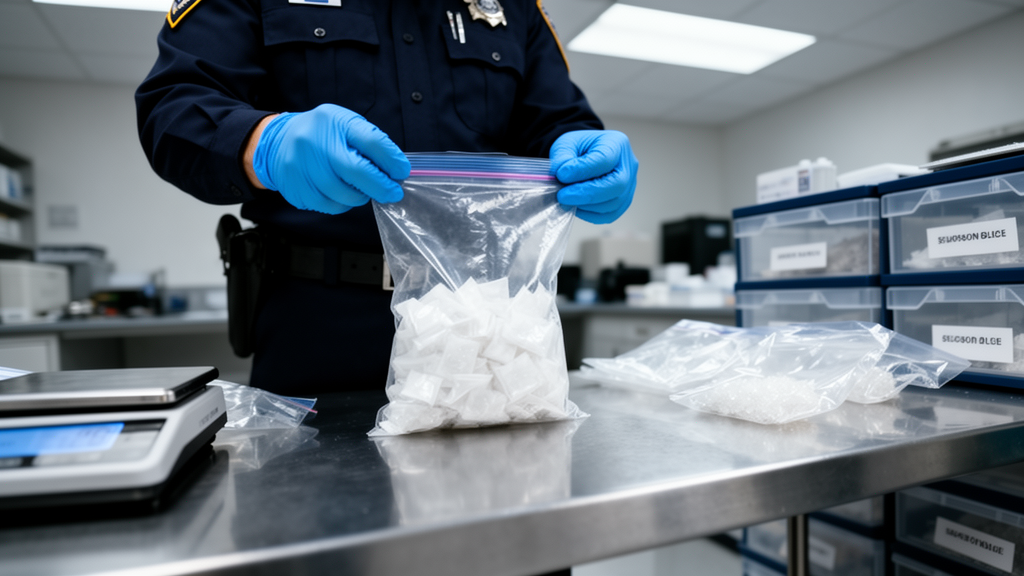
The headline finding is stark. Before the decriminalization pilot took effect, the quarterly prevalence of police drug seizure without arrest, regardless of the quantity of drugs a person possessed, ranged from 0.8 percent to 2.1 percent of study participants. During the pilot, that figure rose to between 1.1 percent and 4.1 percent. In other words, people in Vancouver reported experiencing more, not fewer, incidents in which police took their drugs away during the first year of a policy explicitly intended to reduce interaction between police and people who use drugs. Kanna Hayashi, co-author of the study and professor of health sciences at Simon Fraser University, who holds the St. Paul’s Hospital Chair in Substance Use Research, described the pattern as a significant upward trend of police drug seizures occurring without arrest.
The finding is particularly notable because it appears to diverge from officially reported police statistics. According to figures cited by the Vancouver Police Department, officers officially conducted zero possession seizures below the 2.5-gram threshold between February and October 2023. On paper, that would suggest the decriminalization framework was functioning as designed, with police stepping back from low-level possession enforcement. Yet the new study’s data, which are based on self-reports from people who use drugs rather than on police documentation, allow a different part of the picture to emerge. Hayashi explains that published police-reported statistics only account for events where officers documented an interaction as being related to drug possession, and those interactions may or may not have involved an arrest. Events that officers did not classify in that way would never appear in the official record.
This discrepancy between official statistics and community-reported experience is central to the study’s significance. Hayashi notes that her team’s data may overlap with police-reported figures in some places but likely captured events that did not go on to enter police records at all. Her conclusion is that each dataset is incomplete on its own, but that the two offer deeper insights when viewed together. For researchers and policymakers, this is a methodological lesson as much as a substantive one. Administrative data generated by the very institutions whose conduct is being evaluated can systematically miss the experiences of the people most affected by a policy. Self-reported data from cohorts such as VIDUS, which has followed people who use drugs in Vancouver for decades, provide an independent check on official narratives and can reveal patterns invisible in institutional records.
The consequences of drug seizures without arrest extend well beyond the loss of the substances themselves. The study found that participants who reported having drugs seized by police without arrest were three times more likely to experience a non-fatal overdose. Hayashi explains the mechanism in the context of the toxic drug-supply crisis that has claimed thousands of lives across British Columbia and Canada more broadly. In such a crisis, losing a drug supply can have serious consequences, she says. People may feel they need to replace those drugs immediately. If a person is rushing to obtain new drugs from an unknown source and then rushing to use them to avoid withdrawal symptoms, the risk of overdose increases. In an environment where the unregulated supply is already contaminated with variable and dangerous concentrations of synthetic opioids, any disruption that pushes someone toward an unfamiliar product or urgent use can be lethal.
Community researchers say the findings confirm what people with lived experience of drug use have been reporting for years. Scotty Archondous, a researcher-member at Police Oversight with Evidence and Research, known as P.O.W.E.R., and a board member of the Vancouver Area Network of Drug Users, or VANDU, says the study’s results align with concerns long raised by the community. As a community-based researcher across multiple projects, Archondous reports having heard directly from many people about their experiences of having their personal drug supply seized during decriminalization. The concern, as Archondous describes it, is that people who already live precariously face heightened risks when seizures occur without charges or arrest, because of what comes next: debts, desperation, and sometimes disrupted access to a trusted source. For people dependent on a regular supply, an unexpected seizure can cascade into unsafe borrowing, unsafe sourcing, or withdrawal-driven urgency.
The study also highlights a conceptual tension at the heart of the pilot’s design. Decriminalization removed the threat of arrest and prosecution for possession below the 2.5-gram threshold, but it did not remove police authority to seize drugs. An officer who cannot charge someone may still confiscate their substances, and from the perspective of the person on the street, the outcome, losing their supply, can be nearly identical to the outcome of the enforcement practices decriminalization was meant to replace. The data showing a rise in seizure reports without a corresponding rise in arrests suggest that the enforcement behavior adapted to the new legal framework rather than disappearing. Whether those seizures reflected officers exercising discretion in ambiguous situations, responding to public complaints, or operating under internal directives is a question the study’s data cannot fully answer, but the pattern itself is now documented with longitudinal rigor.
For Hayashi, the central takeaway is that data informed by people with lived experience must be viewed in tandem with official police statistics if policymakers want an accurate account of how decriminalization actually operated. Even though the pilot has ended, she argues that it is important to understand what happened and what can be improved, because those lessons can help shape future decriminalization policies in British Columbia and elsewhere. Jurisdictions considering similar approaches, from other Canadian provinces to cities and countries abroad, will be watching the British Columbia experiment closely. The study’s evidence suggests that the technical design of such policies matters enormously: thresholds, seizure powers, reporting requirements, and oversight mechanisms all shape whether decriminalization reduces police contact or merely changes its form.
The broader context makes these findings urgent. British Columbia’s decriminalization pilot was introduced amid a toxic drug-supply crisis that has driven historically high rates of overdose deaths, and the policy was one of the most prominent attempts in North America to treat drug use as a health issue rather than a criminal one. The pilot’s early end and the political controversy surrounding it have made rigorous evaluation all the more important. This study does not claim that decriminalization failed outright, nor does it conclude that police acted improperly; what it documents is a measurable gap between the policy’s stated goal of reducing police interaction with people who use drugs and the lived reality reported by a well-characterized cohort in Vancouver. It also quantifies a concrete harm, the tripling of non-fatal overdose risk among those whose drugs were seized, that any future policy framework will need to address directly. As Hayashi and her colleagues make clear, the value of the pilot lies in what can be learned from it, and those lessons are now on the record.
Subject of Research: Police drug seizures without arrest during British Columbia's drug decriminalization pilot in Vancouver
Article Title: Reports of drug seizures by police rose during first year of decriminalization, SFU study finds
Article References: Reports of drug seizures by police rose during first year of decriminalization, SFU study finds. (n.d.). Original publication
Image Credits: AI Generated
DOI: Not provided
Keywords: drug decriminalization, British Columbia, Vancouver, police drug seizures, Simon Fraser University, BMC Public Health, overdose risk, toxic drug supply, VIDUS, harm reduction, drug policy, public health
Cite Scienmag News
Courtney Benton. (October 9, 2026). Police Drug Seizures Rose, Not Fell, During Vancouver’s First Year of Decriminalization, Study Finds. Scienmag. https://scienmag.com/police-drug-seizures-rose-not-fell-during-vancouvers-first-year-of-decriminalization-study-finds/
Courtney Benton. "Police Drug Seizures Rose, Not Fell, During Vancouver’s First Year of Decriminalization, Study Finds." Scienmag, 9 October 2026, https://scienmag.com/police-drug-seizures-rose-not-fell-during-vancouvers-first-year-of-decriminalization-study-finds/. Accessed 9 October 2026.
Courtney Benton. "Police Drug Seizures Rose, Not Fell, During Vancouver’s First Year of Decriminalization, Study Finds." Scienmag. October 9, 2026. https://scienmag.com/police-drug-seizures-rose-not-fell-during-vancouvers-first-year-of-decriminalization-study-finds/


