


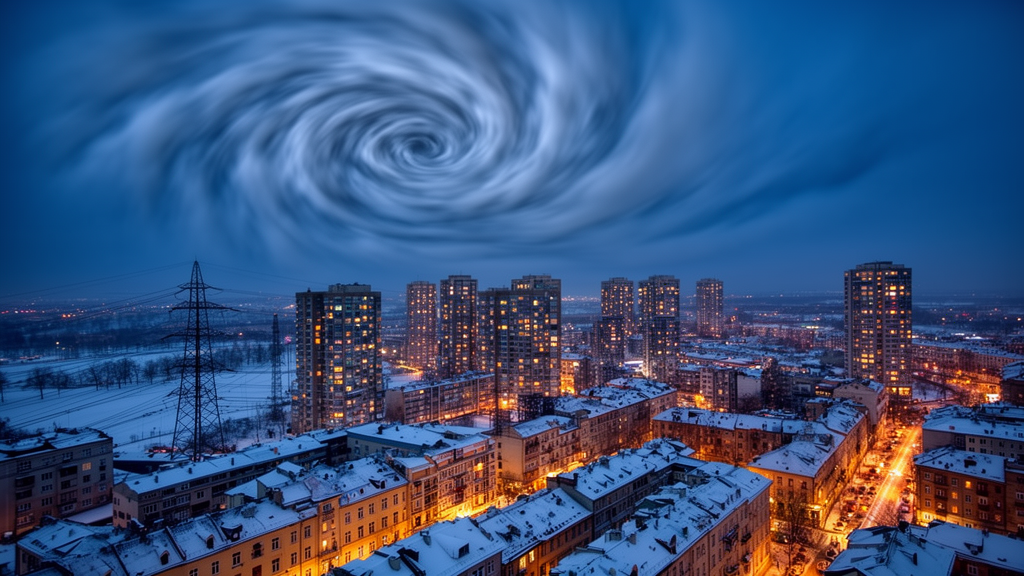
High above the Arctic, in a layer of the atmosphere that most people never think about, powerful winds circle the pole each winter in a structure known as the stratospheric polar vortex. When those winds are strong and steady, they tend to keep frigid polar air locked over the high latitudes. But roughly once every two years, the vortex can temporarily collapse in a dramatic event called a sudden stratospheric warming, or SSW. New research led by the University of Exeter shows that these disruptions high in the stratosphere can serve as an early warning signal for something very tangible on the ground: spikes in electricity demand across northern and central Europe that can push power systems toward their limits.
The study, published in the journal Meteorological Applications under the title The influence of sudden stratospheric warmings on extreme European electricity demand, found that SSWs raise the likelihood of extreme electricity demand, defined as demand at least 20 percent above the average, by a factor of 1.5 to 3 in northern and central Europe. The mechanism is straightforward once the physics is understood. During an SSW, temperatures in the stratosphere over the pole rise sharply as the normal westerly winds weaken or even reverse. This upheaval aloft can disturb the jet stream and the pressure patterns below it, allowing cold Arctic air near the surface to spill southward into Europe and North America in the weeks that follow.
Crucially, that surface cold does not arrive immediately. The chain of events that links the stratosphere to the ground typically unfolds over a period of a few weeks after the polar winds shift. That delay is what gives SSWs their potential value as a forecasting tool. Governments, grid operators and energy suppliers do not learn of the elevated risk only when the cold snap arrives; they can receive a signal weeks in advance, giving them time to secure fuel supplies, arrange additional generation capacity and prepare public communications before demand surges.
The clearest recent illustration came in February 2018, when the polar vortex split in two. Dr Regan Mudhar, who led the new study and is now based at the University of Lausanne, recalled the sequence of events. These events do not always affect surface temperatures, he noted, but the 2018 split was followed by severe cold weather in the United Kingdom and much of northern Europe, the episode popularly remembered as the Beast from the East. The frigid conditions that swept across the continent disrupted transport, closed schools and workplaces, and drove heating demand sharply upward, straining energy systems in several countries.
To move beyond anecdote, the research team analysed the relationship between SSWs and extreme electricity demand across Europe, with heating demand as the key driver of the connection. The analysis revealed a clear statistical link: in the weeks following stratospheric warming events, the probability that electricity demand would reach extreme levels increased substantially in the northern and central parts of the continent. Because heating is such a dominant component of winter energy consumption, the coldest post-SSW periods translate directly into the highest stress on power networks, particularly where electricity and heating are tightly coupled.
One of the most important findings of the study is that the size of the demand response varies considerably from country to country. Scandinavian nations, which are largely well adapted to extreme cold thanks to decades of investment in insulation, district heating and cold-resilient infrastructure, saw a comparatively smaller increase in energy usage when temperatures fell after SSWs. Their systems are engineered with severe winters in mind, so an additional degree of cold produces a more modest increment in consumption. France, by contrast, experienced a much steeper increase in demand. The country operates a highly electrified energy system, with electric heating widespread in homes and businesses, meaning that cold weather feeds almost immediately into electricity consumption rather than being partly absorbed by gas or other fuels.
This national variation carries a pointed lesson for countries in the middle of energy transitions. Dr Hannah Bloomfield of Newcastle University, a co-author of the study, observed that the United Kingdom is relatively well adapted to cold weather at present because of its reliance on gas central heating, which decouples much of the winter heating burden from the electricity grid. However, she cautioned, as the country moves toward net-zero emissions, a great deal of that traditional gas heating must be electrified, for example through the replacement of gas boilers with heat pumps. Once that shift occurs, periods of cold weather combined with low wind will become increasingly challenging for keeping the lights on at a low cost to consumers, because the same meteorological episode will simultaneously drive up electricity demand and potentially suppress wind generation.
The compounding nature of that risk is what makes the stratospheric signal so valuable. A sudden stratospheric warming does not merely raise the chance of cold temperatures; in a decarbonised system it could coincide with the worst possible combination of high demand and reduced renewable output. Anticipating such episodes weeks ahead would allow grid operators to raise reserve margins, coordinate interconnector flows between countries, top up stored energy and schedule maintenance away from the vulnerable window. In effect, the stratosphere offers a long-range heads-up that no conventional weather forecast at the surface can match, because the disturbance originates tens of kilometres above the Earth and its influence propagates downward over time.
The findings also sit within a broader conversation about climate change and extreme events. Dr Mudhar emphasised that the world is, and will continue to be, warmed by greenhouse gas emissions, but SSWs will very likely still happen, bringing cold weather with them. A warming climate does not eliminate the possibility of severe cold snaps in Europe; the stratospheric circulation will continue to vary, and when it breaks down, the familiar pattern of polar air escaping southward can still unfold. This means that although cutting emissions remains crucial for mitigating climate change, it is equally important, in his view, to consider how prepared societies are for extreme events of this kind as they transition toward renewable energy sources. Adaptation and mitigation, in other words, must proceed together.
The research was funded by the Natural Environment Research Council through its GW4+ Doctoral Training Partnership, and it adds a distinctive strand to the growing field of research that connects stratospheric dynamics to societal impacts on the ground. For energy planners, the message is that the atmosphere provides warnings in layers: the first sign of a potentially costly cold spell may appear not in a ten-day forecast but in the behaviour of winds circling the pole at altitudes where airliners rarely venture. Learning to read that signal, and building it into the operational planning of electricity systems that are becoming more weather-dependent by the year, could mean the difference between a manageable cold snap and a genuine energy crisis the next time the polar vortex decides to fall apart.
Subject of Research: The influence of sudden stratospheric warmings on extreme European electricity demand
Article Title: Stratospheric winds can warn of extreme energy demand in Europe
Article References: Stratospheric winds can warn of extreme energy demand in Europe. (n.d.). Original publication
Image Credits: AI Generated
DOI: Not provided
Keywords: stratospheric polar vortex, sudden stratospheric warming, electricity demand, extreme cold, Europe, energy security, heat pumps, net-zero transition, renewable energy, weather forecasting, Beast from the East, University of Exeter
Cite Scienmag News
Russell Cooper. (October 9, 2026). Polar Vortex Breakdowns Warn of Extreme Energy Demand in Europe Weeks Ahead. Scienmag. https://scienmag.com/polar-vortex-breakdowns-warn-of-extreme-energy-demand-in-europe-weeks-ahead/
Russell Cooper. "Polar Vortex Breakdowns Warn of Extreme Energy Demand in Europe Weeks Ahead." Scienmag, 9 October 2026, https://scienmag.com/polar-vortex-breakdowns-warn-of-extreme-energy-demand-in-europe-weeks-ahead/. Accessed 9 October 2026.
Russell Cooper. "Polar Vortex Breakdowns Warn of Extreme Energy Demand in Europe Weeks Ahead." Scienmag. October 9, 2026. https://scienmag.com/polar-vortex-breakdowns-warn-of-extreme-energy-demand-in-europe-weeks-ahead/


