


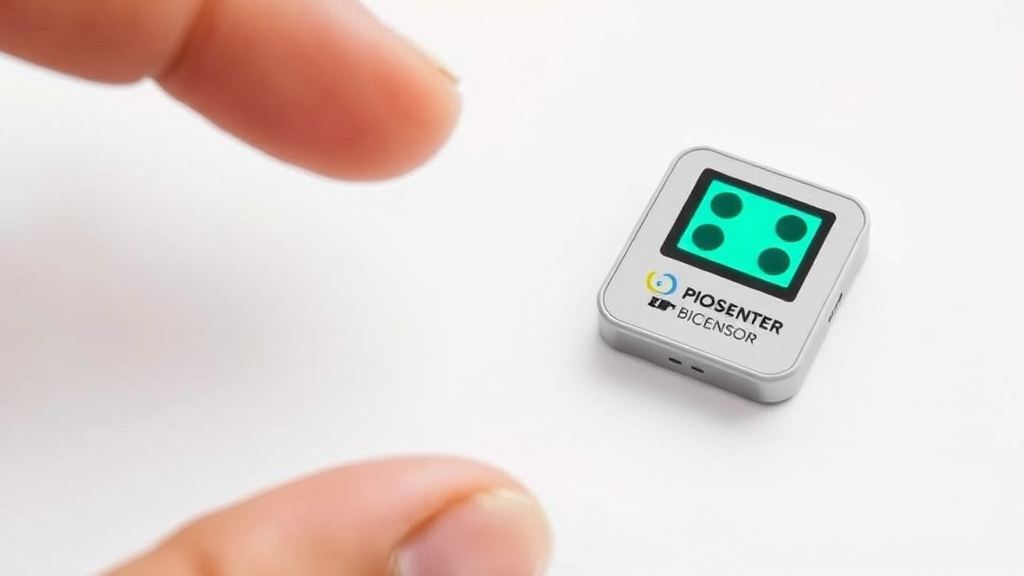
For hundreds of millions of people worldwide, the most dangerous thing in their home is one they cannot see. Microscopic house dust mites thrive in bedding, carpets, and upholstered furniture, and their fecal pellets carry a potent allergen called Der p 1 that is a leading trigger of asthma and allergic rhinitis. Now, researchers in South Korea have built a compact electrochemical immunosensor that can detect this allergen at levels far below what conventional laboratory tests can manage, and they have validated it on real dust collected from an ordinary house. The work, published in Advances in Industrial and Engineering Chemistry, marks the first time a point-of-care biosensing device has been developed specifically to screen residential environments for contamination by the house dust mite allergen Der p 1.
The significance of the target molecule is difficult to overstate. Of the more than 50,000 mite species identified to date, two dominate human sensitization: Dermatophagoides pteronyssinus and Dermatophagoides farinae. Der p 1, a cysteine protease of roughly 25 kilodaltons found primarily in mite fecal pellets, is the signature allergen of D. pteronyssinus. Its protease activity does more than provoke the immune system; it actively disrupts the epithelial barrier lining the airways, easing the passage of other allergens into underlying tissue and amplifying inflammatory responses. In South Korea, Der p 1 is the dominant sensitizing allergen, implicated in positive skin test reactions in approximately 70 to 80 percent of patients with allergic rhinitis.
Health agencies have long recognized that quantifying exposure matters. The World Health Organization and other environmental health bodies have proposed thresholds for group 1 mite allergens: dust concentrations above 2 micrograms per gram increase the risk of sensitization, while levels above 10 micrograms per gram are associated with acute asthma attacks. Turning those thresholds into practical household guidance, however, requires a test that ordinary people, clinicians, or environmental inspectors can run quickly and affordably. The standard tool, the enzyme-linked immunosorbent assay, or ELISA, is sensitive and specific, but it demands multi-step protocols, three to four hours of assay time, and centralized laboratory analyzers equipped with optical readers. That profile suits reference laboratories, not living rooms.
The research team, Eun-Sook Choi, Jung-Hee Kim, and Eunjoo Kim of the Daegu Gyeongbuk Institute of Science and Technology, turned instead to electrochemical biosensing built on disposable screen-printed electrodes. Their sensor chip is a modest piece of hardware: a ceramic substrate measuring just 3.38 by 1.02 centimeters carrying a 4-millimeter gold working electrode alongside auxiliary and silver reference electrodes, all printed on the same surface. Gold screen-printed electrodes are inexpensive enough to be mass produced and used once, which is exactly what a disposable point-of-care diagnostic requires. What transforms the chip from a bare conductor into an allergen detector is a carefully engineered sequence of surface chemistry.
The first step is the formation of a self-assembled monolayer using 11-mercaptoundecanoic acid, an alkanethiol whose sulfur head group binds tightly to gold while its tail presents terminal carboxylic acid groups to the solution. The team incubated the electrodes with 10 millimolar 11-MUA for two hours at room temperature, then rinsed away unbound molecules. Carboxyl groups alone cannot grip a protein, so the researchers activated them with the standard EDC/NHS coupling chemistry, converting the acids into reactive NHS esters. A solution of anti-Der p 1 antibody was then applied, and the primary amine groups on the antibody formed stable amide bonds with the activated surface. Finally, bovine serum albumin was used to block any remaining nonspecific binding sites, ensuring that only genuine antibody-antigen interactions would register on the sensor.
Characterizing each step of this construction was essential, and the team used two complementary electrochemical techniques. Cyclic voltammetry, scanning from -0.6 to +0.7 volts at 100 millivolts per second in a ferricyanide/ferrocyanide redox probe, showed a dramatic drop in peak current after the 11-MUA layer formed, consistent with an insulating alkanethiol film impeding electron transfer. Interestingly, the subsequent activation, antibody attachment, and blocking steps produced only minor further changes in the voltammograms. Electrochemical impedance spectroscopy told a more nuanced story. The bare electrode showed a small semicircle in the Nyquist plot, indicating low charge-transfer resistance, but the 11-MUA layer replaced this with a large semicircle, a hallmark of a strong insulating barrier. Activation with EDC/NHS partially reduced the resistance, and the stepwise immobilization of antibody and BSA produced further measurable increases, confirming that each biomolecular layer had successfully assembled on the surface.
The density of the self-assembled monolayer proved to be a critical design variable. The team compared electrodes treated with 10, 20, and 40 millimolar 11-MUA and found that 10 millimolar gave the highest peak current and the lowest charge-transfer resistance, below 10 kilo-ohms. At 20 and 40 millimolar the monolayer appeared to saturate, forming an excessively resistive film that would mask the small electrical changes produced when allergen molecules bind. The moderate coverage achieved at 10 millimolar struck the ideal balance: enough functional groups to anchor plenty of antibody, but enough residual conductivity to transduce binding events into clear signals. This optimization underscores a principle familiar to biosensor engineers, that more surface chemistry is not always better chemistry.
With the platform tuned, the sensitivity results were striking. Exposed to Der p 1 concentrations of 0, 1, 10, and 100 femtograms per milliliter, the sensor’s charge-transfer resistance rose in a clean, concentration-dependent fashion, from 5,449 ohms for the blank to 8,661 ohms at the highest dose. The correlation coefficient of 0.9866 confirmed a highly linear analytical response at concentrations measured in quadrillionths of a gram per milliliter. The calculated limit of detection was 0.063 picograms per milliliter. Specificity was tested against influenza A hemagglutinin, a heavily glycosylated protein chosen as a challenging negative control because it is itself a recognized indoor airborne biomarker. Across the same concentration range, the HA protein produced almost no signal change, while Der p 1 generated a pronounced, dose-dependent response distinguishable even at 10 femtograms per milliliter, validating that the measured signals arise from genuine antibody-antigen recognition rather than nonspecific adsorption.
The decisive test came with real-world samples. The researchers collected dust from five locations in a house in Asan City, sieved it to remove fibers and large particles, and extracted allergens by agitating 100-milligram portions in phosphate-buffered saline with Tween 20 for two hours, followed by centrifugation. When the same extracts were analyzed by the biosensor and by a commercial Der p 1 ELISA kit, the biosensor detected the allergen in every sample. Most tellingly, it identified Der p 1 in several samples where ELISA returned negative results or values below its own limit of detection of 0.78 nanograms per milliliter, a threshold roughly 12,000 times higher than the biosensor’s. In the sample with the highest allergen burden, the two methods agreed well, demonstrating that the biosensor remains accurate across the clinically relevant concentration range and not merely at trace levels.
The implications extend well beyond one Korean household. A disposable, rapidly read electrochemical chip that flags femtogram-level allergen contamination could become a routine tool for exposure assessment, helping allergy patients and clinicians connect symptoms to specific environmental triggers, guiding cleaning and ventilation strategies, and supporting indoor air quality certification. The authors note that while electrochemical biosensors for the related allergen Der p 2 have been reported previously, none had been applied to real indoor dust samples, and no Der p 1-specific biosensor had existed before this work. The assay itself is fast: individual measurements required incubations of only five to ten minutes at 37 degrees Celsius using square-wave voltammetry or impedance readout on a compact portable analyzer. If such platforms reach commercial deployment, the invisible geography of allergen risk inside a home could be mapped in minutes rather than dispatched to a laboratory for an afternoon, giving asthma and allergy sufferers something they have never had before, a real-time answer to the question of what is in the air they breathe.
Subject of Research: Development of an electrochemical immunosensor for point-of-care detection of the house dust mite allergen Der p 1 in indoor dust
Article Title: Detection of airborne Der p 1 allergen for indoor air quality evaluation using a biosensor platform
Article References: Choi, E.-S., Kim, J.-H., & Kim, E. (2025). Detection of airborne Der p 1 allergen for indoor air quality evaluation using a biosensor platform. Advances in Industrial and Engineering Chemistry, 1(1), Article 37. https://doi.org/10.1007/s44405-025-00038-5
Image Credits: AI Generated
DOI: 10.1007/s44405-025-00038-5
Keywords: Der p 1, house dust mite, electrochemical immunosensor, screen-printed electrode, indoor air quality, allergen detection, ELISA, point-of-care diagnostics, asthma, allergic rhinitis, self-assembled monolayer, biosensor
Cite Scienmag News
Sylvia Mullen. (September 22, 2026). Pocket-Sized Biosensor Detects Dust Mite Allergen in Minutes. Scienmag. https://scienmag.com/pocket-sized-biosensor-detects-dust-mite-allergen-in-minutes/
Sylvia Mullen. "Pocket-Sized Biosensor Detects Dust Mite Allergen in Minutes." Scienmag, 22 September 2026, https://scienmag.com/pocket-sized-biosensor-detects-dust-mite-allergen-in-minutes/. Accessed 5 October 2026.
Sylvia Mullen. "Pocket-Sized Biosensor Detects Dust Mite Allergen in Minutes." Scienmag. September 22, 2026. https://scienmag.com/pocket-sized-biosensor-detects-dust-mite-allergen-in-minutes/


