


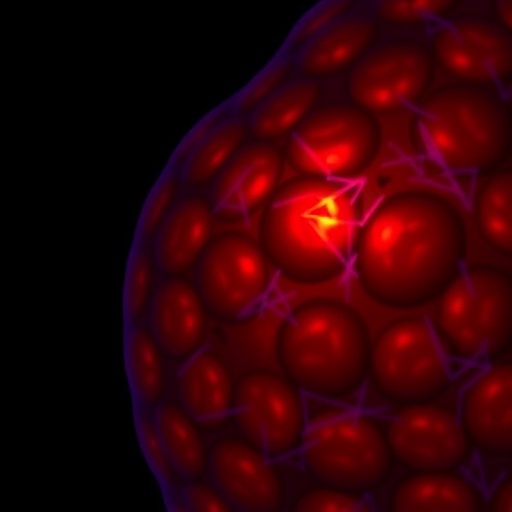
A newly published study in Nature unveils a critical nexus between PLD4 deficiency and aberrant immune activation, shedding light on the molecular underpinnings of systemic lupus erythematosus (SLE). Researchers have discovered that loss-of-function mutations in the phospholipase D4 (PLD4) gene provoke hyperactivation of the STING-dependent signaling cascade, particularly the type I interferon (IFN) pathway, which is recognized as a hallmark in autoimmune pathogenesis.
The investigation builds upon previous findings that pinpointed the cGAS–STING axis as central to innate immune sensing, especially in contexts where cytosolic DNA triggers inflammatory responses. Through ingenious use of CRISPR gene-editing, the team engineered THP-1 monocytic cells deficient in PLD4, enabling precise interrogation of downstream signaling events. Immunoblot analyses revealed that in the absence of PLD4, STING undergoes pronounced phosphorylation, indicative of its activation, with consequent amplification of IFN-stimulated gene expression.
Intriguingly, the study demonstrates that PLD4 deficiency leads to lysosomal sequestration of mitochondrial DNA (mtDNA), culminating in its cytoplasmic leakage. This aberrant presence of mtDNA in the cytosol serves as a potent ligand for the cGAS sensor, funneling signals into the STING pathway. The result is a pathological overproduction of type I IFNs, which are well known to fuel autoimmunity through sustained immune cell activation and tissue damage.
To validate the causative role of STING activation, the researchers treated PLD4 knockout cells with H-151, a specific small-molecule inhibitor targeting STING. Remarkably, this intervention reversed the heightened type I IFN signaling, as measured by reductions in phosphorylated STING levels and downstream gene expression profiles. Complementary application of C-176, another STING antagonist, corroborated these findings, confirming that the exaggerated inflammatory milieu in PLD4 deficiency is contingent upon functional STING signaling.
Further experimentation with double knockout models targeting both PLD4 and STING1 genes solidified this mechanistic link. Both quantitative PCR and western blot assays revealed that abolishing STING expression partially or fully rescues the aberrant activation of type I IFN pathways. However, the NF-κB signaling cascade, another pivotal inflammatory route, exhibited only modest normalization, suggesting divergent regulatory layers within the inflammatory network triggered by PLD4 loss.
This dichotomy between the complete restoration of IFN signaling and partial recovery of NF-κB activation highlights the complexity of immune dysregulation in SLE. While the cGAS–STING axis dominates the type I IFN response, other molecular players likely contribute to NF-κB-driven inflammation, inviting future research to unravel these intricacies.
The broader implications of these findings extend far beyond basic immunology, as PLD4 mutations have been genetically linked to human lupus phenotypes, marked by chronic systemic inflammation and multi-organ involvement. By delineating the pathogenic cascade from mitochondrial DNA mislocalization through STING hyperactivation to type I IFN overproduction, this study provides a plausible molecular framework connecting genetic deficiency to clinical autoimmunity.
Moreover, these insights open promising therapeutic avenues. Targeting the STING pathway with pharmacological inhibitors such as H-151 may offer a novel strategy to mitigate lupus manifestations, possibly circumventing the broad immunosuppression associated with current treatments. Such targeted modulation could restore immune equilibrium while minimizing adverse effects, representing a paradigm shift in autoimmune disease management.
The methodologies employed by the research team reflect cutting-edge approaches in cellular immunology. Use of monoclonal THP-1 cell lines offers a controlled environment to dissect cell-intrinsic signaling alterations, while genetic double knockout techniques lend causality to observed phenomena. Integrated transcriptomic and proteomic analyses further substantiate the molecular changes unleashed by PLD4 loss.
This work also underscores the pivotal role of mitochondrial integrity and lysosomal dynamics in immune homeostasis. The accumulation of mitochondrial DNA within lysosomes and its leakage into the cytoplasm reveal novel mechanisms by which organelle dysfunction may precipitate sterile inflammation. Such insights align with emerging fields exploring mitochondrial contributions to inflammatory diseases.
From a systems perspective, the delineation of PLD4 as a gatekeeper curbing cGAS–STING engagement spotlights the delicate balance of intracellular nucleic acid sensing. Aberrations in this system lead to uncontrolled immune activation reminiscent of viral infection responses, but detrimental when chronic and self-directed as in lupus.
The interplay between type I IFN responses and autoimmune pathology has long been appreciated, but these findings refine the molecular players orchestrating this relationship. By clarifying PLD4’s role, the research bridges genetic susceptibility and aberrant innate immune activation, providng a cohesive narrative with potential clinical translational impact.
As autoimmune diseases continue to challenge clinicians worldwide, with limited mechanistic understanding hindering therapeutic innovation, this study represents a beacon illuminating the molecular architecture of lupus. Future research will likely focus on translating these molecular insights into biomarkers and targeted therapies to improve patient outcomes.
In summary, the elucidation of PLD4 deficiency driving mitochondrial DNA-induced STING pathway hyperactivation redefines our understanding of systemic lupus erythematosus pathophysiology. This groundbreaking work paves the way for novel interventions aimed at restoring immune tolerance and heralds a new era of precision medicine in autoimmunity.
Cite Scienmag News
Juliet Wilcox. (September 10, 2025). PLD4 Mutations Trigger Systemic Lupus Erythematosus. Scienmag. https://scienmag.com/pld4-mutations-trigger-systemic-lupus-erythematosus/
Juliet Wilcox. "PLD4 Mutations Trigger Systemic Lupus Erythematosus." Scienmag, 10 September 2025, https://scienmag.com/pld4-mutations-trigger-systemic-lupus-erythematosus/. Accessed 3 September 2026.
Juliet Wilcox. "PLD4 Mutations Trigger Systemic Lupus Erythematosus." Scienmag. September 10, 2025. https://scienmag.com/pld4-mutations-trigger-systemic-lupus-erythematosus/


