


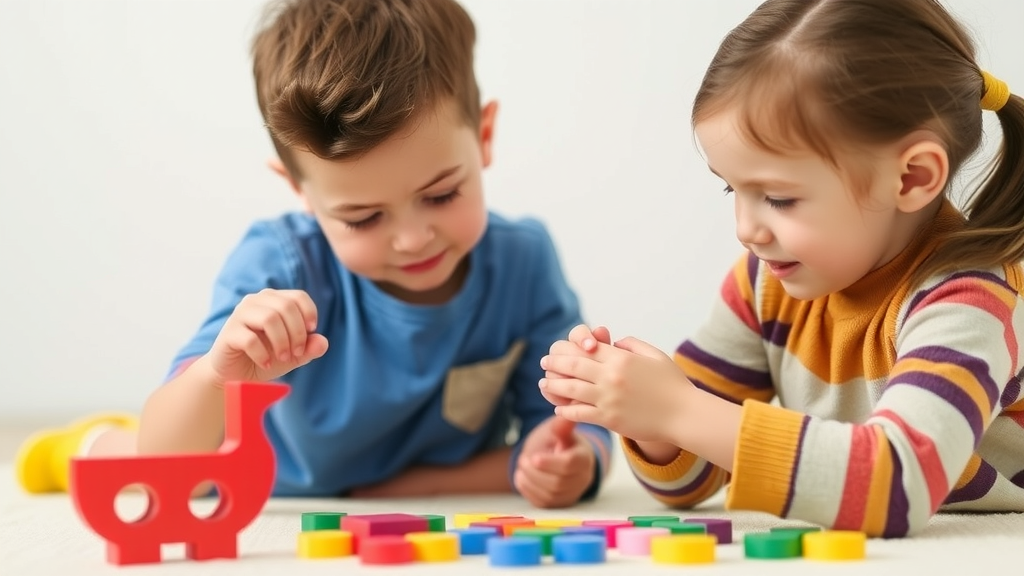
Childhood is built on play, and for decades therapists have argued that play itself can be the medium through which the most vulnerable children learn to connect, communicate and regulate their emotions. A sweeping new scoping review published in the journal Frontiers of Digital Education now brings together the accumulated evidence on one of the most influential of these approaches, child-centered play therapy, and its application to children with autism spectrum disorder. The review, conducted by Jingying Chen, Suyun Tang and Guangshuai Wang of the National Engineering Research Center for Educational Big Data at Central China Normal University in Wuhan, concludes that this deceptively simple, non-directive method has shown significant potential across the core domains of autism, with benefits that extend well beyond the therapy room into everyday life.
Child-centered play therapy, or CCPT, has deep roots in the person-centered psychotherapy tradition pioneered in the mid-twentieth century. Rather than directing the child toward specific therapeutic exercises, the therapist follows the child’s lead, providing a carefully prepared environment of toys and materials, unconditional positive regard, empathic attunement and clearly communicated limits. Within this accepting relationship, the child is free to express inner experiences, rehearse social exchanges and develop self-regulation at their own pace. The approach rests on the premise that children possess an inherent directional tendency toward growth, and that a facilitative relationship, rather than didactic instruction, is the engine of therapeutic change. For children with autism spectrum disorder, a neurodevelopmental condition characterized by differences in social communication and the presence of restricted, repetitive patterns of behavior, this philosophy presents both a natural fit and a distinct set of clinical challenges.
The scoping review synthesizes a body of research indicating that CCPT can produce positive effects in four principal domains: social interaction, speech and communication, stereotyped repetitive behaviors, and emotional regulation. Studies examining long-term follow-up, the authors emphasize, suggest that these gains are not confined to the therapeutic setting. A central finding of the review is that the effects of CCPT can be generalized to daily life, meaning improvements observed in the playroom appear to carry over into classrooms, family routines and peer relationships. This generalization question is critical in autism intervention research, where skills acquired in structured settings frequently fail to transfer to the noisy, unpredictable environments of ordinary childhood.
The evidence base the review draws upon is methodologically varied, spanning randomized controlled trials, single-case experimental designs, pilot studies and school-based programs. Among the studies informing the synthesis are trials that have measured the neural correlates of therapeutic change, including a randomized controlled trial published in Research in Autism Spectrum Disorders that used electroencephalography to capture brain activity changes following CCPT intervention in children with autism. Other work has documented improvements in joint attention, symbolic play, therapeutic alliance and emotional assets in autistic children receiving child-centered approaches. Single-subject pilot studies have reported gains in emotion regulation when CCPT was combined with rhythmic relating techniques, and school-based integrative programs have measured benefits not only for students with autism but also for the classroom instructors who support them. Meta-analytic work on play therapy more broadly has established a statistical foundation for the field’s central claim that relationship-based play interventions produce measurable treatment outcomes in children.
Perhaps the most forward-looking dimension of the review concerns the intersection of CCPT with intelligent digital technologies. The authors argue that technologies grounded primarily in virtual reality and artificial intelligence have demonstrated significant potential to achieve personalized play therapy for children with autism throughout the therapeutic process. The technical rationale is grounded in the well-documented heterogeneity of the autism spectrum. No two autistic children present identical profiles of strengths and difficulties, and one-size-fits-all protocols have long frustrated clinicians. Virtual reality environments can be parameterized to match an individual child’s sensory sensitivities, attentional capacity and developmental level, while AI-driven systems can adapt scenarios in real time based on the child’s responses. Prior research reviewed in the article documents VR-based social skills training, serious games targeting perspective-taking, Kinect-based educational games supporting motor skills, and smartglasses-based socioemotional coaching aids, alongside robot-assisted diagnostic systems and machine learning models for the perception of affect and engagement during therapy sessions.
Underpinning this technological vision is an increasingly sophisticated sensor and analytics infrastructure. Computer vision analysis has been used to quantify autism risk behaviors from naturalistic video, eye-tracking scan paths have been investigated as screening biomarkers with machine learning classification, automated facial expression measurement has matured in longitudinal developmental samples, and natural language processing has been applied both to clinical speech analysis and to the mining of large-scale textual data. Multimodal child-robot interaction studies have explored how robots can build social bonds with autistic children, and audio-based emotion estimation has been tested in interactive robotic therapy. The review positions these tools not as replacements for the human therapist but as instruments that can enrich the child-led play process with objective, continuous measurement, allowing clinicians to see patterns in engagement, affect and communication that the human eye alone cannot reliably detect.
Synthesizing these strands, the review proposes that in the age of artificial intelligence the developmental trajectory of the field points toward a two-dimensional paradigm the authors describe as child-led plus data-driven CCPT. In this framework, the child remains the initiator and director of therapeutic play, preserving the philosophical core of the child-centered tradition, while data-driven decision-making operates in parallel, informing therapists about when to intervene, which materials to offer and how to individualize the session. The architecture supporting this paradigm is described as hierarchical, with dynamic feedback mechanisms that allow information captured during play to flow upward into clinical decision-making and for therapeutic adjustments to flow back down into the play environment. In practical terms, sensors embedded in a playroom or a VR scenario might register shifts in a child’s gaze, vocalization patterns or physiological engagement, feeding an adaptive system that quietly reshapes the difficulty, pacing or social demands of the activity while the child continues to lead.
The clinical significance of such a framework is considerable. Autism interventions have historically traded off between ecological fidelity and measurement precision: naturalistic, relationship-based approaches honor the child’s autonomy but resist quantification, while highly structured, data-heavy programs can feel mechanical and may not generalize. A child-led, data-driven hybrid attempts to dissolve that trade-off. The review’s emphasis on long-term generalization reinforces this point, since the ultimate aim of any autism intervention is durable, real-world functioning rather than performance on clinic-based assessments. Findings from EEG studies, behavioral observations and family-reported outcomes converge on the idea that relationship quality, therapeutic alliance and the child’s own sense of agency are the active ingredients that make transfer to daily life possible, and technology, in this conception, serves those ingredients rather than supplanting them.
As a scoping review, the study maps the terrain rather than settling every question, and the authors acknowledge implicitly the heterogeneity of study designs, outcome measures and intervention intensities across the literature it surveys. Yet the synthesis arrives at a clear directional claim: CCPT has demonstrated meaningful potential for children with autism across social, communicative, behavioral and emotional domains, and its future lies in intelligent integration with virtual reality and artificial intelligence. The work was supported by the National Natural Science Foundation of China, the Natural Science Foundation of Hubei Province, the Key Project of the Hubei Province Education and Science Plan and the China Postdoctoral Science Foundation. For clinicians, educators and families navigating the crowded landscape of autism interventions, the message is one of measured optimism: the oldest therapeutic instinct, following the child’s lead in play, may be most powerful when augmented with the newest tools of computational science, and the combination may finally deliver what the field has long sought, personalized therapy whose benefits endure in the ordinary, unscripted moments of a child’s daily life.
Subject of Research: Child-centered play therapy as an intervention for children with autism spectrum disorder, enhanced by intelligent digital technologies
Article Title: Impact of Child-Centered Play Therapy on Children with Autism Spectrum Disorder: A Scoping Review
Article References: Chen, J., Tang, S., & Wang, G. (2026). Impact of Child-Centered Play Therapy on Children with Autism Spectrum Disorder: A Scoping Review. Frontiers of Digital Education, 3(3), Article 24. https://doi.org/10.1007/s44366-026-0098-7
Image Credits: AI Generated
DOI: 10.1007/s44366-026-0098-7
Keywords: child-centered play therapy, autism spectrum disorder, play therapy, virtual reality, artificial intelligence, personalized intervention, emotional regulation, social interaction, scoping review, intelligent digital technology, developmental psychology, behavioral therapy
Cite Scienmag News
Glenn Wilkins. (September 20, 2026). Play Therapy Shows Lasting Benefits for Children with Autism, Landmark Review Finds. Scienmag. https://scienmag.com/play-therapy-shows-lasting-benefits-for-children-with-autism-landmark-review-finds/
Glenn Wilkins. "Play Therapy Shows Lasting Benefits for Children with Autism, Landmark Review Finds." Scienmag, 20 September 2026, https://scienmag.com/play-therapy-shows-lasting-benefits-for-children-with-autism-landmark-review-finds/. Accessed 4 October 2026.
Glenn Wilkins. "Play Therapy Shows Lasting Benefits for Children with Autism, Landmark Review Finds." Scienmag. September 20, 2026. https://scienmag.com/play-therapy-shows-lasting-benefits-for-children-with-autism-landmark-review-finds/


