

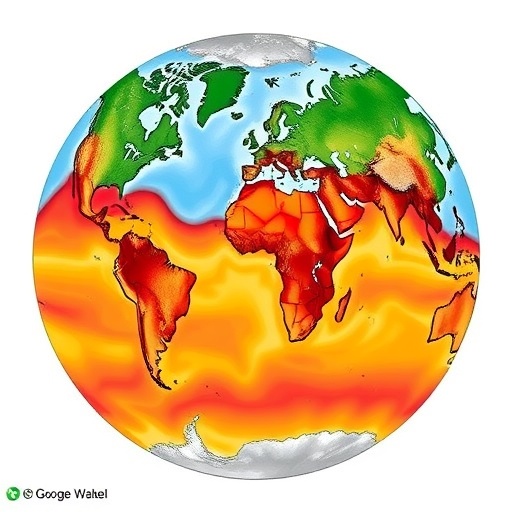
The intricate relationship between carbon emissions and climatic patterns has become increasingly evident in recent studies, posing a profound challenge for understanding earth’s climatic past and future. One of the standout contributions to this discourse comes from research conducted by Mather, Müller, and Dutkiewicz, elucidating how carbon emissions along divergent plate boundaries significantly influence the transitions between icehouse and greenhouse climates. Their findings add an essential layer of complexity to our understanding of geological processes and their direct implications on contemporary climate change.
Divergent plate boundaries, where tectonic plates move apart, create scenarios for magma to rise from the mantle and produce new crust. During this process, significant volcanic activity is unleashed, leading to the emission of carbon dioxide and other greenhouse gases into the atmosphere. This research underscores the importance of these geological features not merely as static formations but as dynamic entities capable of modulating climate on a global scale. Consequently, the implications of these emissions extend beyond immediate environmental impacts, potentially altering the planet’s climate systems for aeons.
The study meticulously details the interplay between tectonic activity and climatic shifts throughout Earth’s history. It poses a hypothesis that the carbon released during periods of heightened volcanic activity along divergent plate boundaries may have played a critical role in ushering in warmth during otherwise cooler epochs. This challenges the traditional notion of fixed climatic states, positioning the geology of the planet as a significant player in the climate narrative.
A pivotal focus of the research was the geochemical analysis of carbon isotopes. By examining the isotopic composition of carbon emissions during various geological periods, the researchers were able to reconstruct temperature profiles and environmental conditions that prevailed over millions of years. This isotopic evidence reveals the complexities of carbon cycling through geological time and invites deeper consideration of how anthropogenic activities replicate or amplify these natural processes.
The implications of these findings resonate profoundly in today’s context of accelerating climate change. As human activities contribute to unprecedented levels of anthropogenic carbon emissions, understanding the historical precedents of carbon fluxes via geological processes becomes crucial. Mather and colleagues argue that recognizing the impact of these emissions is fundamental to forming more effective climate action strategies. Their work serves as a potent reminder of the interconnectedness of geological and climatic processes, emphasizing the significance of sustainable practices in mitigating future climate extremes.
Furthermore, the research discusses the concept of feedback loops in the climate system. As carbon emissions alter global temperatures, they may, in turn, affect oceanic basins and continental ice sheets, resulting in additional releases of greenhouse gases. These feedback mechanisms often lead to exacerbated climate scenarios that make prediction and management all the more challenging. By linking geological phenomena with climatic repercussions, the study underscores the need for multidisciplinary approaches that integrate geology, oceanography, and climate science.
The study also delves into the potential future ramifications of continued carbon emissions from both natural and anthropogenic sources. With the ongoing threat of climate change, the potential for diverse geological processes to contribute to carbon delivery into the atmosphere could further amplify warming trends. This scenario feeds into discussions surrounding the urgency of addressing emissions, utilizing historical data to inform present and future climate policies.
Additionally, the researchers highlight the role of divergent plate boundaries in influencing sea level changes. As the oceanic crust is formed, its thermal structure has implications for local sea levels. This goes hand-in-hand with broader climatic shifts, as warmer ocean temperatures can lead to thermal expansion of seawater and melting of ice sheets, further altering coastlines and increasing vulnerability to storm surges.
The analytical framework established in this work opens the door for future studies that can better quantify the various interactions at play between geological processes and atmospheric conditions. Researchers are called to build upon Mather et al.’s findings to develop models that encompass a wider array of geological factors and their associated climatic influences. The advent of advanced computational methods and data frameworks presents opportunities to simulate complex earth systems, enhancing our predictive capabilities concerning climate dynamics.
Data from this research shed light on the historical precedents of climate change wrought by natural emissions, framing the modern climate change narrative within a broader geohistorical context. Such historical frameworks are invaluable for understanding the resilience of ecosystems and their capacity to adapt to changing climatic conditions. This perspective not only enriches the scientific dialogue but can also empower policymakers with evidence-based arguments for immediate and sustained climate action.
Overall, the research conducted by Mather and his team represents a crucial step towards unraveling the intricacies surrounding carbon emissions and their role in regulating Earth’s climate systems. By bridging the gap between geological insights and climatic realities, their findings contribute to a more comprehensive understanding of our planet’s health and the urgent need for informed climate strategies. The narrative forged by geological and climatic interactions propels the scientific inquiry into unexplored territories, ensuring the significance of these studies adheres to the forefront of climate science discussions.
In conclusion, Mather, Müller, and Dutkiewicz’s groundbreaking research stands as a clarion call for recognizing geological processes as essential components of the climate equation. By illustrating how divergent plate boundaries can modulate climatic states, this work highlights the importance of interdisciplinary research in tackling the multifaceted challenges posed by climate change. As scientists and societies grapple with the complexities of global warming, embracing the lessons embedded in Earth’s geological history could play a transformative role in shaping sustainable futures.
Subject of Research: Carbon emissions along divergent plate boundaries and their influence on icehouse-greenhouse climates.
Article Title: Carbon emissions along divergent plate boundaries modulate icehouse-greenhouse climates.
Article References:
Mather, B.R., Müller, R.D., Dutkiewicz, A. et al. Carbon emissions along divergent plate boundaries modulate icehouse-greenhouse climates.
Commun Earth Environ 7, 48 (2026). https://doi.org/10.1038/s43247-025-03097-0
Image Credits: AI Generated
DOI: https://doi.org/10.1038/s43247-025-03097-0
Keywords: Carbon emissions, divergent plate boundaries, icehouse-greenhouse climates, climate change, geological processes.


