


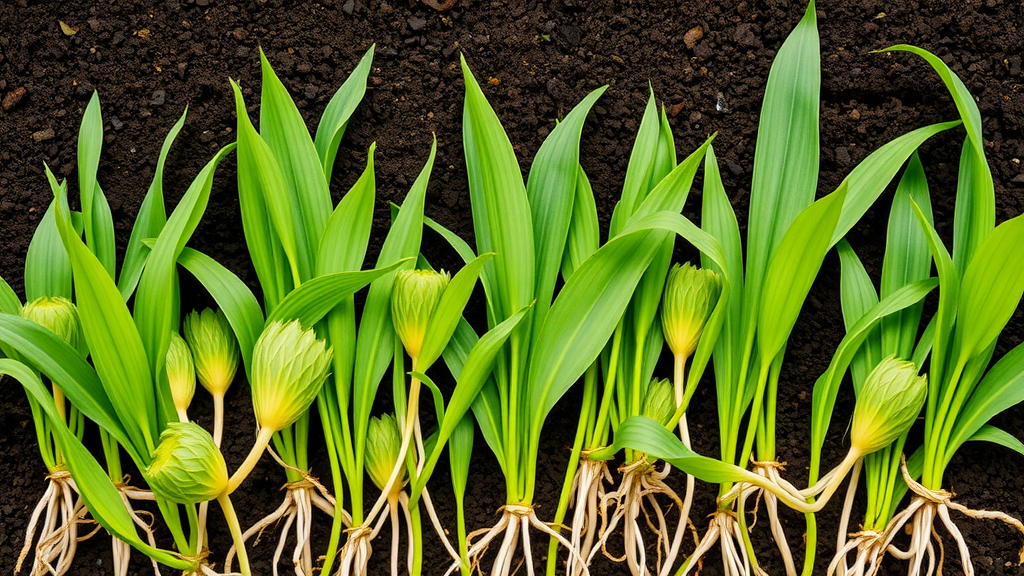
Every year, vast quantities of nitrogen fertilizer applied to pastures and croplands are transformed by soil microbes into nitrate, a form of nitrogen that slips easily through soil into waterways and feeds the production of nitrous oxide, a greenhouse gas nearly 300 times more potent than carbon dioxide. For decades, farmers have fought this transformation with synthetic nitrification inhibitors, chemicals such as dicyandiamide and 3,4-dimethylpyrazole phosphate that can cut nitrate leaching by nearly half. But these products are expensive, short-lived in soil, difficult to apply and have raised concerns about residues ending up in food. Now a team of New Zealand researchers has taken a closer look at a humble pasture herb, ribwort plantain (Plantago lanceolata), and found that its chemistry is far more complex and its nitrification-slowing power more intriguing than the field trials alone had suggested.
The study, published in the journal Plant and Soil, set out to answer three linked questions: which metabolites in plantain are associated with biological nitrification inhibition, whether those compounds actually reach the soil around the roots, and how much the answer depends on the type of soil a plant grows in. Biological nitrification inhibition, or BNI, describes the ability of plant roots to release compounds that suppress the microbes responsible for converting ammonium into nitrite and then nitrate. The phenomenon is well documented in tropical grasses such as Brachiaria humidicola and in crops like sorghum, but the specific chemistry behind BNI in temperate pasture plants has remained stubbornly elusive.
The researchers began by growing six plantain cultivars in hydroponic systems, collecting the root exudates and testing them against Nitrosospira multiformis, an ammonia-oxidizing bacterium, in a plate-based bioassay that tracks nitrite production every fifteen minutes. The exudates reduced nitrification by anywhere from 14 to 66 percent depending on the cultivar and replicate, with the commercially promoted cultivar Agritonic generally sitting at the high end. That variability itself is telling: it means the BNI capacity of plantain is not a fixed trait but something that shifts with plant physiology, and it gave the team a natural gradient to work with when hunting for the chemical signatures of inhibition.
Using ultra-high performance liquid chromatography coupled with high-resolution mass spectrometry, the team profiled thousands of metabolites in leaves, roots and exudates. The headline compounds of past plantain research, the iridoid glycoside aucubin and the phenylethanoid glycoside verbascoside, were indeed abundant, sometimes reaching 55 and 200 milligrams per gram of tissue respectively. But here came the surprise: neither aucubin nor verbascoside correlated with the strength of nitrification inhibition. Instead, the best chemical predictors of high BNI activity were compounds that had received far less attention, including plantamajoside, another caffeoyl phenylethanoid glycoside, two unusual riboflavin sulfates, the iridoids asperuloside and pectolinarin, and a guanidine alkaloid called plantagoguanidinic acid that had never before been linked to nitrogen cycling in soil.
The identification of plantagoguanidinic acid may prove to be the most consequential finding. This molecule shares structural features with synthetic pyrazole-based nitrification inhibitors, which are thought to work by chelating metal cations such as copper, iron and zinc. Those metals are obligate cofactors for ammonia monooxygenase, the enzyme that performs the first, rate-limiting step of nitrification, and for hydroxylamine oxidoreductase, which carries out the second. The riboflavin sulfates add a second thread to the chelation hypothesis: related compounds are known to accumulate in iron-starved sugar beet roots, where they help the plant sequester iron. In other words, some of the very chemistry plantain uses to scavenge scarce metals for itself may inadvertently starve nitrifying microbes of the metals they need.
To test whether these laboratory signals translate into real soil effects, the researchers grew Agritonic plantain and One50 perennial ryegrass in four contrasting New Zealand soils: an allophanic Andisol and a gley from the Waikato region, and pallic soils from Manawatū and Canterbury. After ninety days of growth in rhizopots, they measured the potential nitrification rate of the root-associated soil using a shaken-slurry assay. Plantain lowered the potential nitrification rate by 11 to 41 percent relative to fallow soil across all four soil types. More striking still, ryegrass, included as a presumed low-BNI comparison, lowered it by 0 to 39 percent, and in the two pallic soils the reduction under ryegrass was statistically indistinguishable from that under plantain.
That result upends a comfortable assumption. Chlorogenic acid, a long-recognized nitrification inhibitor first identified in climax ecosystems half a century ago, was the signature metabolite of the ryegrass root profile, and it, like the caffeic acid moiety in plantamajoside and verbascoside, can scavenge nitric oxide, an obligate intermediate in the oxidation of ammonia to nitrate. If ryegrass carries meaningful BNI capacity, the ecological calculus of mixed pastures changes: the benefit of adding plantain to a sward may depend less on plantain’s unique chemistry than on how any deep-rooted herb reshapes the rhizosphere, and on which soil it is growing in.
Soil type, in fact, emerged as the dominant force shaping the microbial story. Bacterial community structure, measured by sequencing the 16S rRNA gene, separated cleanly by soil type in ordination analyses, with no detectable treatment effect within soils. The proportions of ammonia-oxidizing bacteria to ammonia-oxidizing archaea, tracked through quantitative PCR of the amoA gene, were likewise governed almost entirely by soil: the allophanic soil favored bacteria, while the pallic soils favored archaea. Only the archaeal communities showed a statistically significant response to the plants themselves, differing under plantain compared with ryegrass and fallow, driven largely by the Waikato gley soil. The relative abundance of Candidatus Nitrosocosmicus, a dominant ammonia-oxidizing archaeon, roughly doubled in the allophanic soil in the presence of plantain.
Why would plantain suppress nitrification more strongly in the pallic soils than in the carbon-rich allophanic soil? The researchers propose several non-exclusive mechanisms. Chelation of copper and iron by exuded metabolites is supported by a striking correlation: the reduction in potential nitrification rate under plantain tracked the proportion of Mehlich 3-extractable copper and iron in the soil with R-squared values of 0.88 and 0.97 respectively. Scavenging of nitric oxide by caffeoyl compounds offers a second route, and one that different studies suggest hits ammonia-oxidizing archaea harder than bacteria, which would explain why the archaea-dominated pallic soils responded more strongly. High organic matter and allophanic clay in the Waikato soil may also simply adsorb and degrade the inhibitory compounds before they can act.
The authors are careful about what their data can and cannot claim. The metabolite measurements in rhizosphere soil varied over five orders of magnitude, so no individual compound reached statistical significance, and the bioassay itself is notoriously variable. They also entertain the alternative that root-derived carbon simply stimulated microbial growth and nitrogen immobilization, though the pattern of microbial biomass across treatments argues against that being the main driver. What the study firmly establishes is that measuring only aucubin, catalpol and verbascoside in plantain shoots is a poor proxy for nitrification inhibition, that plantamajoside and the riboflavin sulfates deserve a place in breeding programs as candidate markers, and that no single cultivar will suit every soil and climate. Before these metabolites become screening tools, direct experiments must confirm their mechanisms, but the vision is clear: pastures that quietly police their own nitrogen cycle, root exudate by root exudate, cutting pollution without a single added chemical.
Subject of Research: Biological nitrification inhibition by Plantago lanceolata and Lolium perenne root metabolites across different soil types
Article Title: Plantago lanceolata and Lolium perenne metabolite profiles, their impact on soil microbial community structures and soil biological nitrification inhibition
Article References: Peterson, M., Joyce, N., van Klink, J., Panda, P., Fraser, T., & Anderson, C. (2026). Plantago lanceolata and Lolium perenne metabolite profiles, their impact on soil microbial community structures and soil biological nitrification inhibition. Plant and Soil. https://doi.org/10.1007/s11104-026-09131-0
Image Credits: AI Generated
DOI: 10.1007/s11104-026-09131-0
Keywords: biological nitrification inhibition, Plantago lanceolata, Lolium perenne, root exudates, aucubin, verbascoside, plantamajoside, plantagoguanidinic acid, soil microbiome, ammonia-oxidizing microbes, nitrate leaching, nitrous oxide
Cite Scienmag News
Alan Morgan. (September 25, 2026). Plantain Roots Quiet the Soil Microbes That Turn Fertilizer Into Pollutants. Scienmag. https://scienmag.com/plantain-roots-quiet-the-soil-microbes-that-turn-fertilizer-into-pollutants/
Alan Morgan. "Plantain Roots Quiet the Soil Microbes That Turn Fertilizer Into Pollutants." Scienmag, 25 September 2026, https://scienmag.com/plantain-roots-quiet-the-soil-microbes-that-turn-fertilizer-into-pollutants/. Accessed 5 October 2026.
Alan Morgan. "Plantain Roots Quiet the Soil Microbes That Turn Fertilizer Into Pollutants." Scienmag. September 25, 2026. https://scienmag.com/plantain-roots-quiet-the-soil-microbes-that-turn-fertilizer-into-pollutants/


