


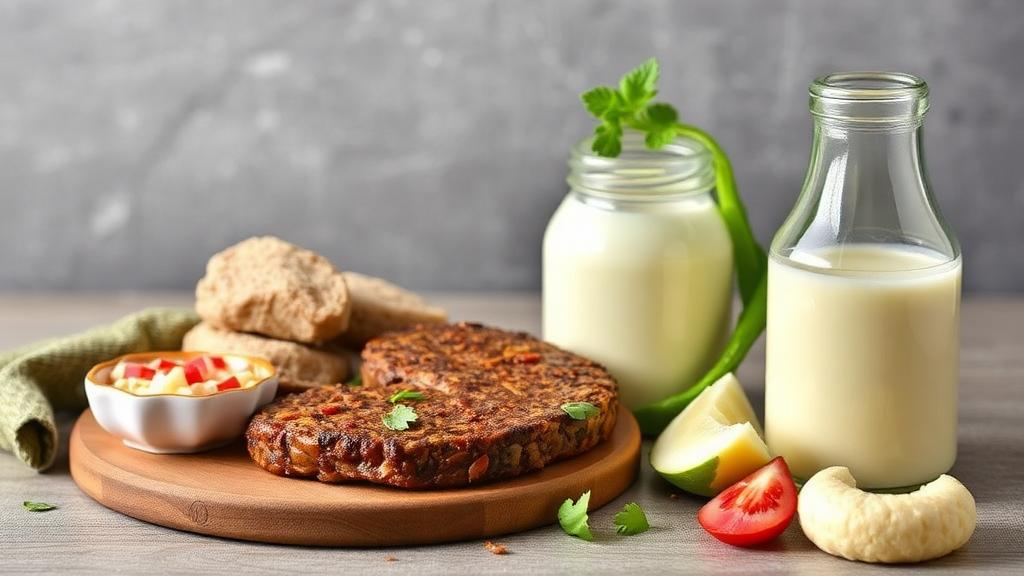
The plant-based aisle has become one of the fastest-moving corners of the European food market, but a sweeping new analysis suggests that shoppers swapping animal products for their vegan lookalikes are getting a far more mixed nutritional deal than the packaging might imply. A team of researchers at the European Commission’s Joint Research Centre in Ispra, Italy, has carried out one of the most comprehensive assessments to date of plant-based packaged foods marketed as analogues to meat, seafood, and dairy products across the European Union, tracking both how the market has grown and what these products actually contain. The study, published in BMC Medicine, reveals a sector that has expanded dramatically over fifteen years, yet one whose nutritional quality swings wildly from category to category and from product to product.
The researchers drew on two of the most extensive food databases available in Europe: Euromonitor’s Passport, which tracks commercial market data, and EuroFIR’s FoodEXplorer, which aggregates compositional food data from national food composition tables across the continent. By combining these sources, the team was able to chart market volumes from 2009 to 2024 and, in parallel, analyse the macronutrient profiles of the products on sale. Nutritional quality was scored using two complementary front-of-pack labelling schemes, the Nutri-Score and the Multiple Traffic Light system, and the researchers additionally assessed which products would be legally eligible to carry nutrition claims under EU Regulation (EC) No 1924/2006. Differences between plant-based analogues and their animal-derived counterparts were tested statistically using the Mann–Whitney U test, a non-parametric method suited to the skewed distributions typical of food composition data.
The headline market finding is unambiguous: plant-based analogues are no longer a niche. Between 2009 and 2024, the market volume of dairy analogues more than tripled, while the market for meat and seafood analogues grew approximately sevenfold. That trajectory reflects a convergence of forces, including rising consumer interest in flexitarian diets, environmental concerns about livestock production, and sustained investment by food manufacturers in improving the taste and texture of products designed to mimic burgers, sausages, milk, and yoghurt. Yet the study’s authors caution that rapid growth has not been accompanied by consistent product quality, and that the term plant-based covers an enormously heterogeneous set of foods.
That heterogeneity is most striking in the macronutrient analysis. Protein content varied widely within every category examined, but the variability was particularly pronounced among analogues to curded dairy products, the plant-based equivalents of cheese. Many of these products provided little to no protein at all, a finding that undercuts a common consumer assumption that a plant-based cheese alternative is nutritionally comparable to the dairy product it replaces. Dairy cheese is a significant protein source in European diets, and the analysis suggests that consumers relying on analogues to fill that role may, depending on the product chosen, receive almost nothing in return. The researchers attribute this variability to formulation: some products are built on protein-rich bases such as pea, soy, or almond concentrates, while others rely heavily on starches, oils, and flavourings.
The Nutri-Score results, which grade foods from A, the healthiest, to E, the least healthy, based on levels of energy, sugars, saturated fat, sodium, protein, fibre, and fruit or vegetable content, revealed consistent but category-dependent patterns. Approximately half of the meat and seafood analogues analysed achieved an A or B rating, placing them among the better-scoring packaged foods. Dairy drink analogues, by contrast, displayed much greater variability, with scores spread across the scale depending on added sugars and fat content. The most troubling result concerned analogues to curded dairy products: every single one scored D or E, the two worst grades. The researchers traced these poor scores to three drivers: high total fat, high saturated fat, and elevated salt levels, a combination that mirrors some of the less healthy characteristics of the cheeses these products imitate.
The Multiple Traffic Light system, which colour-codes fat, saturated fat, sugars, and salt per portion, reinforced the same picture. It also highlighted salt as a recurring concern across several analogue categories. While plant-based products are often perceived as inherently healthier, the processing required to make legumes, grains, and vegetable oils resemble animal products can involve substantial amounts of added sodium, thickeners, and flavour enhancers. The study’s findings suggest that the health halo surrounding plant-based labelling is not always earned by the nutritional composition of the food inside the package.
There were genuine positives, however. More than 60 percent of the meat and seafood analogues qualified for legally defined claims of high protein and low saturated fat, indicating that a majority of products in this fast-growing category do deliver on at least two of the nutritional attributes consumers most often seek. Across the board, the comparison with animal products showed a consistent pattern: plant-based analogues contained more dietary fibre and less total and saturated fat than the animal foods they replace. Fibre is essentially absent from meat, dairy, and seafood, so any product built from plants carries an automatic advantage on that front, and the lower saturated fat content aligns with long-standing dietary guidance linking saturated fat intake to cardiovascular disease risk.
The less favourable side of the ledger concerned protein and the more variable nutrients. Overall, the analogues contained less protein than their animal counterparts, and their sugar and salt levels were inconsistent, sometimes higher and sometimes lower depending on the product and category. This matters because protein, salt, and added sugars are precisely the nutrients around which public health advice in Europe is most actively framed. A consumer who replaces a portion of meat with a low-protein, high-salt analogue may be making a trade that is beneficial for fibre and saturated fat but detrimental elsewhere in their diet. The authors emphasise that the nutritional contribution of any analogue depends heavily on product formulation and on the dietary context in which it is consumed, rather than on the plant-based label itself.
For the researchers, the policy implications are clear. The plant-based analogue market is expanding and is likely to continue doing so as Europe pursues more sustainable food systems, but the sector’s contribution to healthy diets is not guaranteed by growth alone. The study concludes that reformulation could substantially enhance the role these products play, particularly by raising protein content in underperforming categories such as cheese analogues and by reducing salt, saturated fat, and total fat where front-of-pack scores are poor. Because the analysis shows that quality is formulation-dependent rather than intrinsic to the category, targeted reformulation is technically feasible, and the eligibility of many products for nutrition claims suggests manufacturers already have the tools to differentiate better products on shelf.
The study also fills an important evidence gap. Although plant-based analogues have attracted considerable attention in national surveys and single-market studies, EU-wide data on their market evolution and nutritional quality had remained limited. By systematically combining commercial market intelligence with compositional data and validated front-of-pack scoring systems, the Joint Research Centre team has produced the kind of baseline that regulators, public health authorities, and manufacturers can use to monitor the sector as it matures. As the authors note, plant-based analogues are rising in market share, but whether they become a reliable pillar of healthy and sustainable diets will depend on the choices made now about what goes into them.
Subject of Research: Market trends and nutritional quality of plant-based packaged food analogues to animal products in the European Union
Article Title: Plant-based packaged foods as analogues to animal products: market trends and nutritional quality analysis
Article References: Kokkorou, M., Hoffzimmer, A., Dias, J., Grammatikaki, E., Wollgast, J., & Maragkoudakis, P. (2026). Plant-based packaged foods as analogues to animal products: market trends and nutritional quality analysis. BMC Medicine. https://doi.org/10.1186/s12916-026-05207-x
Image Credits: AI Generated
DOI: 10.1186/s12916-026-05207-x
Keywords: plant-based analogues, packaged foods, nutritional quality, Nutri-Score, EU market, market trends, dairy analogues, meat analogues, protein content, sustainable diets, food reformulation, BMC Medicine
Cite Scienmag News
Daisy Hatcher. (October 5, 2026). Plant-Based Meat and Dairy Alternatives Boom, but Nutrition Varies Widely Across Europe. Scienmag. https://scienmag.com/plant-based-meat-and-dairy-alternatives-boom-but-nutrition-varies-widely-across-europe/
Daisy Hatcher. "Plant-Based Meat and Dairy Alternatives Boom, but Nutrition Varies Widely Across Europe." Scienmag, 5 October 2026, https://scienmag.com/plant-based-meat-and-dairy-alternatives-boom-but-nutrition-varies-widely-across-europe/. Accessed 5 October 2026.
Daisy Hatcher. "Plant-Based Meat and Dairy Alternatives Boom, but Nutrition Varies Widely Across Europe." Scienmag. October 5, 2026. https://scienmag.com/plant-based-meat-and-dairy-alternatives-boom-but-nutrition-varies-widely-across-europe/


