


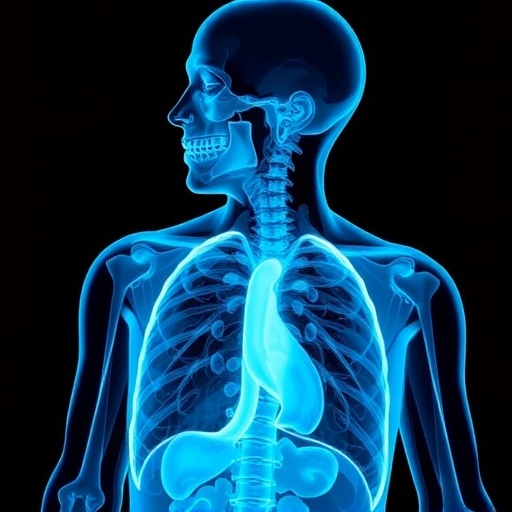
In the relentless battle against non-small cell lung cancer (NSCLC), radiotherapy (RT) stands as a indispensable weapon. However, like many potent treatments, it carries with it a shadow — radiation-induced lung injury (RILI), a complication afflicting nearly one-third of patients who undergo thoracic RT. RILI manifests as inflammation and fibrosis in lung tissue, often resulting in significant morbidity and a decrease in quality of life. Despite its prevalence and clinical significance, the medical community has yet to converge on a standardized pharmacologic therapy for RILI, leaving patients and clinicians alike seeking better solutions.
Emerging from ongoing research horizons is pirfenidone, a drug initially developed for idiopathic pulmonary fibrosis, which offers a beacon of hope. Known for its antifibrotic, anti-inflammatory, and antioxidant properties, pirfenidone has demonstrated promise in preclinical models of RILI. However, translating compelling laboratory results into clinical application is a critical step. Recently, a retrospective pilot study explored whether pirfenidone could safely and effectively mitigate the lung damage caused by thoracic radiation in NSCLC patients, marking a significant stride towards potential new therapies.
This investigation analyzed 33 patients diagnosed with Grade 2 or higher RILI, a classification suggesting moderate to severe lung injury with discernible symptoms and radiologic changes. Each participant was treated with a regimen of pirfenidone at a dosage of 400 mg, taken three times daily. Complementing this therapy was a corticosteroid protocol involving intravenous methylprednisolone administered at doses between 20 to 40 mg daily for a five-day course, followed by a tapering off completed by the fourteenth day. Such combination aimed not only to curb inflammation swiftly but also to harness the antifibrotic effects of pirfenidone for longer-term lung healing.
Assessment of therapeutic response was methodical and comprehensive. Radiological improvements were monitored through monthly high-resolution computed tomography (HRCT), a critical imaging modality that provides detailed visualization of lung architecture and inflammatory changes. Concurrently, patient symptoms were systematically graded according to the Common Terminology Criteria for Adverse Events (CTCAE) version 5.0, a widely accepted framework for classifying treatment-related toxicities. Researchers also examined dose-volume metrics — including V5 and V20, which denote the percentage of lung volume receiving radiation doses above 5 Gy and 20 Gy respectively, as well as mean lung dose — to investigate their potential predictive value in RILI severity and response to pirfenidone.
The findings were encouraging. Radiographic improvement was evident in approximately 79% of patients, a substantial majority experiencing discernible healing of lung tissue inflammation and fibrosis over the course of treatment. Notably, the positive trend in response appeared to strengthen with time, suggesting that pirfenidone’s benefits may accrue progressively with sustained administration. Such outcomes underscore the drug’s capability to counteract the complex pathophysiological processes underlying RILI, which involve cellular oxidative stress, inflammatory cascades, and fibrotic remodeling.
Safety, an essential consideration in oncologic therapy, revealed a favorable profile for pirfenidone. No adverse events of Grade 3 or higher — corresponding to severe or life-threatening effects — were directly attributable to the drug. Only a single case of transient Grade 3 thrombocytopenia emerged, but this was linked to prior chemotherapy exposure rather than pirfenidone usage, affirming the drug’s tolerability in this patient cohort. This aspect carries crucial weight, as the delicate balance between efficacy and toxicity often dictates the viability of new treatments in cancer care settings.
Intriguingly, four patients within the study cohort presented with overlapping pulmonary syndromes — both RILI and immune-related pneumonitis, a complication increasingly recognized with the rise of immunotherapies. These patients also exhibited clinical improvement, hinting at pirfenidone’s potential utility beyond classical RILI and into the management of complex pulmonary inflammatory conditions where conventional treatments may fall short. Such findings open pathways for future investigation into pirfenidone’s broader therapeutic horizon.
Univariate analyses examining correlations between baseline patient characteristics — such as age, smoking status, tumor staging, and radiation dosimetry — and treatment response failed to identify significant predictors. This suggests that pirfenidone’s efficacy may be relatively independent of these factors, potentially broadening its applicability across diverse patient subgroups. Nonetheless, the need for more robust, prospective data is clear to refine indications and optimize patient selection.
The retrospective nature of this pilot study carries inherent limitations, including potential biases and the absence of a control group. However, as an initial clinical exploration, it provides vital real-world evidence supporting pirfenidone’s benefit in a difficult-to-treat adverse effect of NSCLC therapy. Its results lay the groundwork for larger-scale, controlled trials that could definitively establish the drug’s role and influence clinical guidelines in managing RILI.
Radiation-induced lung injury poses a significant barrier to the optimization of thoracic radiotherapy in lung cancer due to its impact on lung function and patient survival. Developing effective management strategies is paramount in oncology practice. Pirfenidone’s ability to attenuate fibrogenesis and control inflammation aligns mechanistically with the pathophysiology of RILI, positioning it as a promising candidate within the therapeutic arsenal.
Moreover, the integration of pirfenidone into treatment protocols could potentially improve patients’ tolerance to radiotherapy dose intensification strategies aimed at enhancing tumor control. By minimizing pulmonary toxicity, such combination approaches might afford greater therapeutic indices and improve overall outcomes in NSCLC management. The ripple effects could extend to health economics by reducing hospitalizations, treatment interruptions, and long-term respiratory morbidity.
The study also highlights the critical role of advanced imaging techniques like HRCT in monitoring radiation-related lung changes and guiding therapeutic decisions. Coupling such diagnostic precision with innovative pharmacotherapies paves the way for personalized medicine approaches, tailoring interventions based on dynamic patient responses rather than static clinical parameters alone.
In an era where lung cancer treatment is evolving rapidly, integrating systemic agents, immunotherapy, and radiotherapy requires simultaneous vigilance against complications like RILI. The intersection of these modalities presents a complex therapeutic landscape, wherein novel interventions like pirfenidone could serve as vital adjuncts to maintain lung health and ensure uninterrupted cancer care.
Ultimately, the findings from this pilot study echo a broader narrative in oncology: repurposing existing drugs with well-established safety profiles to address unmet clinical needs. As pirfenidone transitions from bench to bedside in managing RILI, it exemplifies translational medicine’s potential to rapidly transform patient care pathways.
With compelling preliminary evidence now in hand, the oncology research community eagerly anticipates further prospective controlled trials to validate and refine pirfenidone’s application in radiation-induced lung injury. Such efforts will be critical in solidifying its place in clinical practice and enhancing the quality of life for patients confronting the dual challenges of lung cancer and its treatment-associated toxicities.
Cite Scienmag News
Nathaniel Bowman. (September 2, 2025). Pirfenidone Shows Promise for Radiation Lung Injury. Scienmag. https://scienmag.com/pirfenidone-shows-promise-for-radiation-lung-injury/
Nathaniel Bowman. "Pirfenidone Shows Promise for Radiation Lung Injury." Scienmag, 2 September 2025, https://scienmag.com/pirfenidone-shows-promise-for-radiation-lung-injury/. Accessed 4 September 2026.
Nathaniel Bowman. "Pirfenidone Shows Promise for Radiation Lung Injury." Scienmag. September 2, 2025. https://scienmag.com/pirfenidone-shows-promise-for-radiation-lung-injury/


