


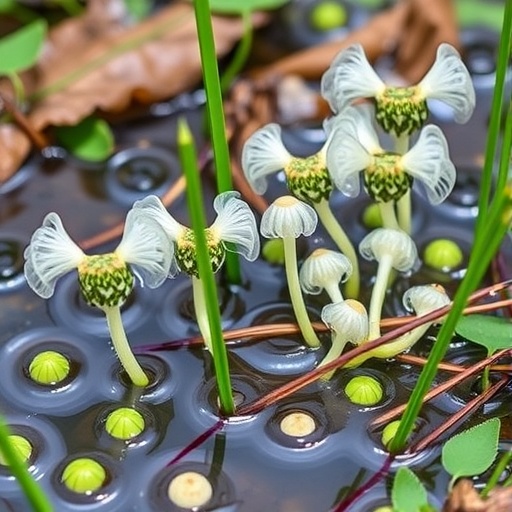
In recent research presented by the American Chemical Society, an innovative approach to mitigate the hazardous effects of per- and polyfluoroalkyl substances, commonly known as PFAS or “forever chemicals,” has been brought to light. These chemical compounds are notorious for their persistence in the environment and human body, leading to alarming health risks. They are resistant to natural degradation processes, accumulating over time. However, this latest study showcases the remarkable potential of the yellow flag iris and a specific type of root fungus as a synergistic solution to cleanse contaminated water.
Wetlands have long been celebrated as nature’s filtration systems, effectively acting as buffers against pollutants by absorbing excess nutrients and transforming harmful substances into harmless ones. This latest investigation emphasizes how wetland plants can be harnessed to combat the ongoing PFAS pollution crisis. Through a series of carefully controlled greenhouse experiments, researchers discovered that the yellow flag iris, when partnered with the arbuscular mycorrhizal fungus Rhizophagus irregularis, exhibits heightened efficiency in PFAS removal from water sources.
The implications of these findings are profound, as they suggest a feasible natural remediation strategy that could be implemented in constructed wetlands to treat wastewater laden with PFAS. Bo Hu, one of the principal researchers involved, expressed excitement regarding these findings. Hu noted that incorporating the symbiotic fungus significantly enhanced the yellow flag iris’s capability to eliminate PFAS, suggesting a holistic approach to environmental restoration efforts. This research aligns with a growing emphasis on sustainable methods to address pollution, particularly in an era where traditional remediation strategies often fall short in efficacy or are prohibitively expensive.
In their experimental setup, the researchers created miniature wetland ecosystems by planting yellow flag irises in specially designed tubes filled with a sand-soil mixture. They meticulously monitored the impact of PFAS exposure by watering these systems with solutions that mimicked contaminated wastewater. As the experiments progressed, it became evident that the presence of Rhizophagus irregularis made a considerable difference. The plants incorporated significantly higher amounts of PFAS in both their shoots and roots compared to those grown without the fungus, demonstrating a clear competitive advantage when it comes to pollutant absorption.
Moreover, plants associated with the fungus not only showed greater retention and removal rates of PFAS but also exhibited enhanced growth and health. This improvement was particularly noteworthy as plants exposed to PFAS typically displayed stunted growth and other physiological stress indicators. The enhanced growth attributed to the fungal partnership is likely due to the fungi stimulating microbial activity in the soil, which in turn aids plant health and productivity.
The results from the water draining out of the experimental wetlands also tell a compelling story. While all outflow samples contained detectable levels of PFAS, those treated with the arbuscular mycorrhizal fungus demonstrated significantly lower concentrations of total PFAS. This reduction underscores the potential of integrating beneficial fungi into constructed wetland systems as a strategy to mitigate the outflow of harmful contaminants into our ecosystems.
As the researchers move forward, they plan to conduct further studies in real-world scenarios, transitioning from contained greenhouse environments to broader applications in natural wetland restoration contexts. Their ambition is to ultimately devise practical frameworks for implementing constructed wetlands that leverage this plant-fungus symbiosis to treat PFAS-contaminated wastewater, thereby providing another tool in the environmental remediation toolkit.
This groundbreaking research resonates within the broader context of environmental science and chemistry, highlighting the pressing need for innovative solutions in the face of persistent pollution challenges. As awareness of PFAS-related health risks continues to rise, the quest for effective removal strategies grows increasingly urgent. This study not only reveals the potential of utilizing natural ecosystems in pollution mitigation but also illuminates the intriguing partnerships that exist between plants and fungi.
The collaborative relationship between yellow flag irises and arbuscular mycorrhizal fungi exemplifies nature’s complex web of interactions that can be harnessed for ecological benefit. As scientists leverage biological systems to tackle chemical contaminants, they tap into an extensive evolution of resilience and adaptability inherent in plant-microbe interactions. In the decades to come, this research could inspire a paradigm shift in how researchers and environmental practitioners approach the management of contaminated water resources.
Ultimately, the human need for clean water intersects with the challenges posed by synthetic chemicals like PFAS. The emergence of green technologies, such as engineered wetlands utilizing plant-fungal symbioses, is a step toward rehabilitating damaged ecosystems and ensuring safe water for future generations. Researchers are optimistic that by demonstrating the efficacy of this approach, they can pave the way for broader adoption and inspire policy changes that favor ecological engineering solutions.
As we advance in our understanding of bioremediation, this research serves as an encouragement for continued exploration into the synergies that exist within ecosystems. The yellow flag iris and its fungal counterpart hold promise not just for wastewater treatment but as a model for future innovations in environmental recovery practices. Nature, equipped with its ingenious designs, often harbors the answers to the pressing problems we face, waiting for inquisitive minds to uncover and adapt these solutions for the betterment of our planet.
Keywords
Environmental science, PFAS, arbuscular mycorrhizal fungi, yellow flag iris, pollution remediation, bioremediation, constructed wetlands, ecological engineering, wastewater treatment.
Cite Scienmag News
Roger Howard. (October 14, 2025). Pilot Study Reveals Wetland Plant-Fungus Partnership Effectively Eliminates ‘Forever Chemicals’. Scienmag. https://scienmag.com/pilot-study-reveals-wetland-plant-fungus-partnership-effectively-eliminates-forever-chemicals/
Roger Howard. "Pilot Study Reveals Wetland Plant-Fungus Partnership Effectively Eliminates ‘Forever Chemicals’." Scienmag, 14 October 2025, https://scienmag.com/pilot-study-reveals-wetland-plant-fungus-partnership-effectively-eliminates-forever-chemicals/. Accessed 4 September 2026.
Roger Howard. "Pilot Study Reveals Wetland Plant-Fungus Partnership Effectively Eliminates ‘Forever Chemicals’." Scienmag. October 14, 2025. https://scienmag.com/pilot-study-reveals-wetland-plant-fungus-partnership-effectively-eliminates-forever-chemicals/


