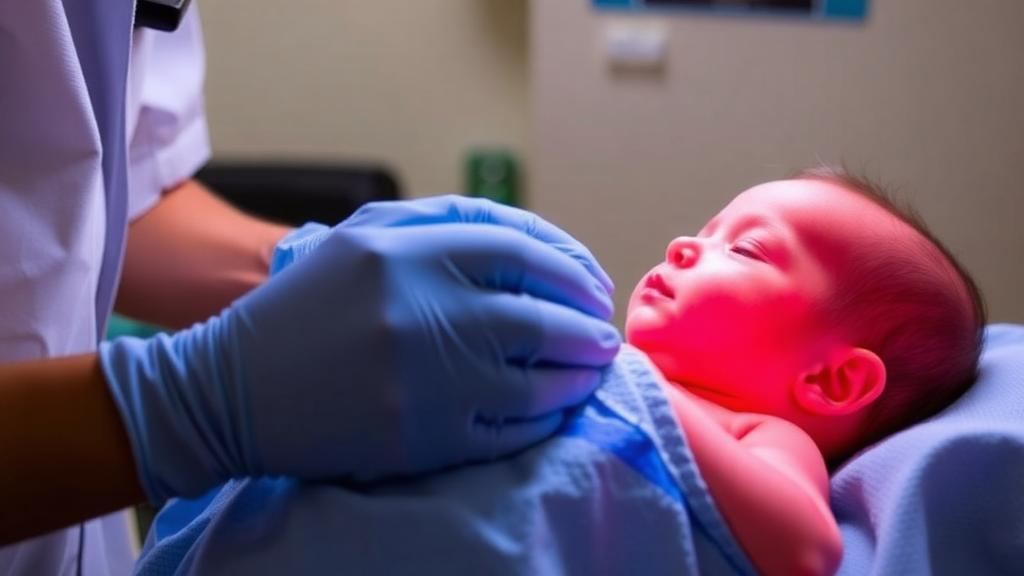
Jaundice remains a prevalent condition in the first week of life, affecting approximately 60% of full-term infants and 80% of preterm infants. While phototherapy has been the standard non-invasive treatment for managing hyperbilirubinemia since the 1950s, its impact on neonatal physiology extends beyond bilirubin reduction. A recent pilot study published in the Egyptian Pediatric Association Gazette investigates whether this common treatment is associated with measurable changes in calcium-phosphate metabolism, bone mineral density, and body composition during the early neonatal period. The research aims to clarify the potential metabolic consequences of phototherapy in full-term newborns, addressing a gap in understanding how light exposure influences skeletal and mineral homeostasis.
The study was a prospective case-control design that included 40 full-term neonates aged between two and eight days. The participants were divided into two groups of 20: a case group exposed to phototherapy for non-hemolytic jaundice and a control group of apparently healthy infants who did not receive the treatment. The researchers utilized dual X-ray absorptiometry (DXA) scans at baseline and one month later to assess bone mineral density and body composition. Additionally, venous blood samples were collected at baseline and after 48 hours of phototherapy to measure serum levels of calcium, magnesium, phosphorus, vitamin D, parathyroid hormone, and alkaline phosphatase. This comprehensive approach allowed for a detailed examination of both immediate biochemical changes and longer-term skeletal effects.
The primary outcomes of the study focused on the change in bone mineral density, particularly in the lumbar spine, and the change in serum calcium levels. The results indicated that the incidence of hypocalcemia increased from 15% before phototherapy to 21.1% after treatment, although this difference was not statistically significant. There was no significant difference in median serum magnesium, alkaline phosphatase, or vitamin D levels between the pre- and post-phototherapy periods. However, a significant decrease in mean serum phosphorus was observed in the follow-up laboratory tests for both the study and control groups, which the authors attributed to physiological changes in the early neonatal period rather than a direct effect of the treatment.
Regarding skeletal health, the DXA scans revealed a significant decrease in bone mineral density in the arms and the lumbar spine (L1–L4) following phototherapy in the case group. In contrast, the control group showed insignificant changes in these specific bone density measurements. The study noted that while tissue mass, fat mass, and lean mass increased significantly in the legs, trunk, and total body for both groups, the specific decline in BMD in the phototherapy group suggests a potential association between the treatment and bone mineral loss. The authors emphasized that these findings are exploratory and should be interpreted as associations rather than direct causal relationships, given the small sample size and the pilot nature of the study.
The discussion section of the paper explores potential mechanisms behind the observed changes. The authors suggest that the decrease in bone mineral density may be related to physiological osteopenia that occurs in newborns, which could be aggravated by phototherapy. They propose that light exposure might suppress the pineal gland’s secretion of melatonin, leading to increased cortisol levels. Cortisol is known to stimulate bone mineral resorption and block calcium absorption, which could ultimately reduce bone cell growth and lower bone mineral density. This hormonal pathway provides a plausible biological explanation for the observed skeletal changes, although the study did not directly measure cortisol levels to confirm this hypothesis.
The study also examined the impact of phototherapy on serum calcium levels, finding no significant difference between pre- and post-treatment values in the case group. However, total serum calcium levels decreased in 47.4% of the cases after phototherapy. This observation aligns with some previous studies that reported reductions in serum calcium following treatment, while others found no significant changes. The authors noted that hypocalcemia is an uncommon but possible adverse event of phototherapy, with an incidence of 8.7% among full-term neonates in previous literature. The proposed mechanisms for this include suppression of parathyroid hormone secretion and increased urinary calcium excretion, which can disrupt calcium homeostasis in the neonate.
Limitations of the study include its small sample size and the fact that it was conducted at a single center. The researchers also noted that ionized calcium was not measured, which could have provided more precise data on calcium status. Additionally, nutritional confounding was difficult to control, as the case group was hospitalized with limited access to direct breastfeeding, whereas the control group was predominantly breastfed. These factors could influence the interpretation of the results, particularly regarding changes in body composition and serum levels. The authors recommend that these findings be confirmed by larger prospective studies to establish a clearer understanding of the long-term effects of phototherapy on neonatal bone health and metabolism.
The use of DXA in neonates presents specific methodological challenges due to the small body size, rapid postnatal growth, and limited availability of standardized reference data. However, previous studies have demonstrated the feasibility and reproducibility of DXA in newborns, supporting its use in this context. The inclusion of total body less head and regional body-composition measurements in this study provided additional information on physiological changes in lean and fat mass accompanying early postnatal growth. This comprehensive approach allowed for a more nuanced assessment of the potential site-specific changes in bone mineralization, offering valuable insights for future research and clinical practice.
In conclusion, this pilot study suggests that phototherapy is associated with a decrease in arm and lumbar spine bone mineral density in full-term neonates, without a significant change in serum calcium. While the findings are exploratory, they highlight the need for further investigation into the metabolic and skeletal effects of phototherapy. The study underscores the importance of continued research to elucidate the complex interactions between light exposure, hormonal regulation, and bone health in the early neonatal period.
Subject of Research: Effect of phototherapy on calcium metabolism and bone mineral density in full-term neonates (Pilot study)
Article Title: Effect of phototherapy on calcium metabolism and bone mineral density in full-term neonates (Pilot study)
Article References: Abdelhamid Khamis, H., M. Aboelenin, H., R. Bassiouny, M., & M. El-Farahaty, R. (2026). Effect of phototherapy on calcium metabolism and bone mineral density in full-term neonates (Pilot study). Egyptian Pediatric Association Gazette, 74(1), Article 119. https://doi.org/10.1186/s43054-026-00619-z
Image Credits: AI Generated
DOI: 10.1186/s43054-026-00619-z
Keywords: Effect, phototherapy, calcium, metabolism, bone, mineral, density, full-term, neonates, Pilot, scientific research
Cite Scienmag News
Harold Sullivan. (October 29, 2026). Pilot Study Links Neonatal Phototherapy to Bone Density Drops. Scienmag. https://scienmag.com/pilot-study-links-neonatal-phototherapy-to-bone-density-drops/
Harold Sullivan. "Pilot Study Links Neonatal Phototherapy to Bone Density Drops." Scienmag, 29 October 2026, https://scienmag.com/pilot-study-links-neonatal-phototherapy-to-bone-density-drops/. Accessed 30 October 2026.
Harold Sullivan. "Pilot Study Links Neonatal Phototherapy to Bone Density Drops." Scienmag. October 29, 2026. https://scienmag.com/pilot-study-links-neonatal-phototherapy-to-bone-density-drops/