


Anaerobic bacteria, ancient life forms that evolved in oxygen-free environments, are once again making headlines by revealing a novel pigment with profound implications for bioenergy and medicine. These microorganisms, which thrive in habitats devoid of oxygen such as the deep ocean floor or the human gut, possess enzymes exquisitely sensitive to oxygen — an adaptation emblematic of life before Earth’s atmosphere became oxygen-rich. Their ability to thrive where aerobic organisms cannot has positioned them as biochemical powerhouses, inspiring research that might unlock their hidden potential for humanity’s benefit.
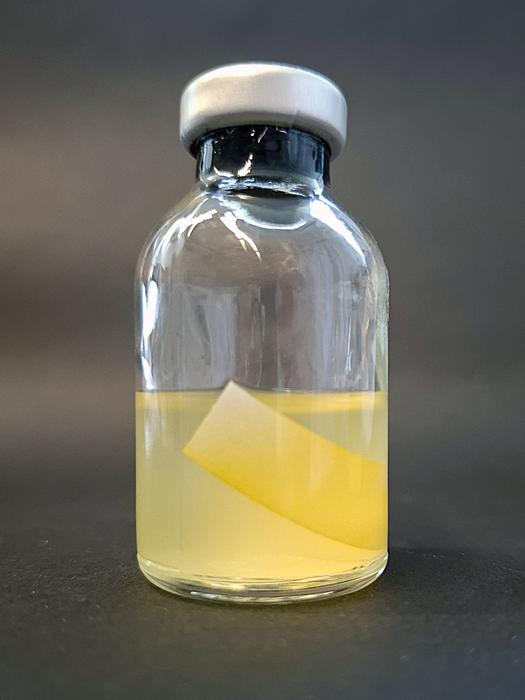
One of the most intriguing anaerobic microorganisms is Clostridium thermocellum, well known for its unique capacity to degrade cellulose, the tough polysaccharide that forms the structural framework of plant cell walls. This bacterium transforms cellulose into fermentable sugars, pivotal substrates for biofuel production such as ethanol. A striking feature of C. thermocellum is its production of a conspicuous yellow pigment, termed Yellow Affinity Substance (YAS). This pigment demonstrates a preferential binding to cellulose fibers, raising the possibility that it acts as a molecular guide, steering cellulose-degrading enzymes directly to their substrate and enhancing the breakdown efficiency.
The molecular mystery of YAS has eluded scientific scrutiny for nearly a century, but recent collaborative research efforts by scientists at the Leibniz Institute for Natural Product Research and Infection Biology – Hans Knöll Institute (Leibniz-HKI) and the Max Planck Institute for Chemical Ecology have finally cracked the code. Through advanced spectroscopic techniques—including nuclear magnetic resonance (NMR) spectroscopy, mass spectrometry (MS), and isotope labeling experiments—researchers have elucidated the chemical nature and structure of YAS. Their analyses reveal that YAS is not a single compound but a composite of molecules called celluxanthenes, a newly characterized class of arylpolyene alkaloids.
The identification of the biosynthetic gene cluster responsible for celluxanthene production marks a significant step forward, made possible through targeted genetic manipulation. By pinpointing the genetic and enzymatic machinery orchestrating the synthesis of these pigments, scientists now have a blueprint for biosynthetic engineering aimed at enhancing or repurposing these compounds. This discovery not only demystifies the pigment’s molecular identity but also opens pathways to exploit its properties in applied sciences.
Perhaps most compelling is the unexpected biological activity displayed by celluxanthenes. These pigments exhibit mild antibiotic effects against Gram-positive bacteria, including some strains that pose serious clinical challenges due to antibiotic resistance. This finding introduces the tantalizing possibility that celluxanthenes serve a defensive ecological role, protecting cellulose—C. thermocellum’s vital nutrient source—from microbial competitors. Such ecological insights merge seamlessly with biotechnological opportunities for developing new antimicrobials derived from anaerobic microbial metabolites.
The implications of this research extend beyond microbiology and natural product chemistry; they ripple into renewable energy technologies. By leveraging the efficiency of C. thermocellum and its celluxanthene pigments, we can advance biofuel production processes. Cellulose, an abundant and renewable resource, has long been recognized as a challenging substrate. Enhancing enzymatic degradation via molecular constructs such as celluxanthenes could significantly optimize the conversion of plant biomass into biofuels, supporting a sustainable energy future.
These breakthroughs are a central achievement of the AnoxyGen project, an initiative driven by Christian Hertweck at Leibniz-HKI. Awarded an ERC Advanced Grant, Hertweck’s team is developing innovative molecular biology techniques to awaken dormant biosynthetic pathways in anaerobic bacteria—pathways that have remained inaccessible under conventional laboratory conditions. This approach marks a paradigm shift, enabling the discovery and exploitation of novel natural products with untapped pharmaceutical and industrial utility.
A noteworthy challenge has always been that many biosynthetic gene clusters encoded in microbial genomes remain silent or “cryptic” when cultured in vitro. The AnoxyGen team’s synthetic biology toolkit focuses on activating these pathways, thereby unlocking the hidden chemical diversity stored within anaerobic microbes. This strategy not only expands the chemical space of bioactive compounds but also enriches the arsenal available for combating microbial resistance and addressing environmental challenges.
Moreover, this research is embedded within the broader scientific context of the “Balance of the Microverse” Cluster of Excellence. This consortium probes the complex signaling and interspecies communication mechanisms within microbial communities, illuminating how intermicrobial dialogues regulate ecological balance on Earth. The discovery of celluxanthenes and their proposed roles exemplify these intricate biochemical conversations and hint at the vast reservoir of bioactive metabolites awaiting discovery in the microbial world.
In conclusion, the characterization of celluxanthenes underscores the untapped scientific and technological wealth harbored by anaerobic bacteria. Beyond their fundamental ecological roles, these microorganisms and their metabolites offer promising avenues in antibiotic development and renewable energy production. As synthetic biology and microbial ecology continue to intersect, the prospects for sustainable solutions to pressing global challenges become increasingly attainable.
The groundbreaking structural and functional insights into celluxanthenes not only solve a century-old biochemical puzzle but also chart a course toward practical applications that could revolutionize fields ranging from medicine to bioenergy. The adaptive ingenuity of anaerobic bacteria, once relegated to the shadows of oxygen-dependent life, now stands poised to illuminate a future powered by microbial innovation.
News Publication Date: 10-Jun-2025
Web References: DOI: 10.1002/anie.202503697
Cite Scienmag News
Drew Townsend. (June 30, 2025). Pigments with Expanded Capabilities Unveiled. Scienmag. https://scienmag.com/pigments-with-expanded-capabilities-unveiled/
Drew Townsend. "Pigments with Expanded Capabilities Unveiled." Scienmag, 30 June 2025, https://scienmag.com/pigments-with-expanded-capabilities-unveiled/. Accessed 4 September 2026.
Drew Townsend. "Pigments with Expanded Capabilities Unveiled." Scienmag. June 30, 2025. https://scienmag.com/pigments-with-expanded-capabilities-unveiled/


