A real-world cohort study of 269 patients with cervical intraepithelial neoplasia grade 1, or CIN1, found that most of those with baseline human papillomavirus infection had a negative HPV test three months after completing 5-aminolevulinic acid photodynamic therapy, or ALA-PDT. The treatment was associated with no serious adverse events, although the results do not establish that ALA-PDT caused the improvements or support routine treatment for a condition that is usually managed by observation. Among 266 HPV-positive patients, 155, or 58.27%, were HPV-negative at the predefined three-month assessment. Among 247 patients with repeat cytology results, 205, or 83.00%, had negative for intraepithelial lesion or malignancy, abbreviated NILM.
The retrospective study, conducted at Peking University Shenzhen Hospital in China from July 2021 through July 2025, included patients who had histologically confirmed CIN1 and sought active treatment after individualized clinical decision-making. Observation remained the guideline-supported approach for most people with CIN1 because the lesions often regress without intervention and the risk of progression to high-grade disease is relatively low. The researchers could not determine from routine records why each patient chose ALA-PDT rather than surveillance, so factors such as persistent infection, repeated abnormalities, surveillance burden and patient preference could not be separated. The study therefore describes outcomes in a selected treatment-seeking population rather than testing whether treatment benefits CIN1 generally.
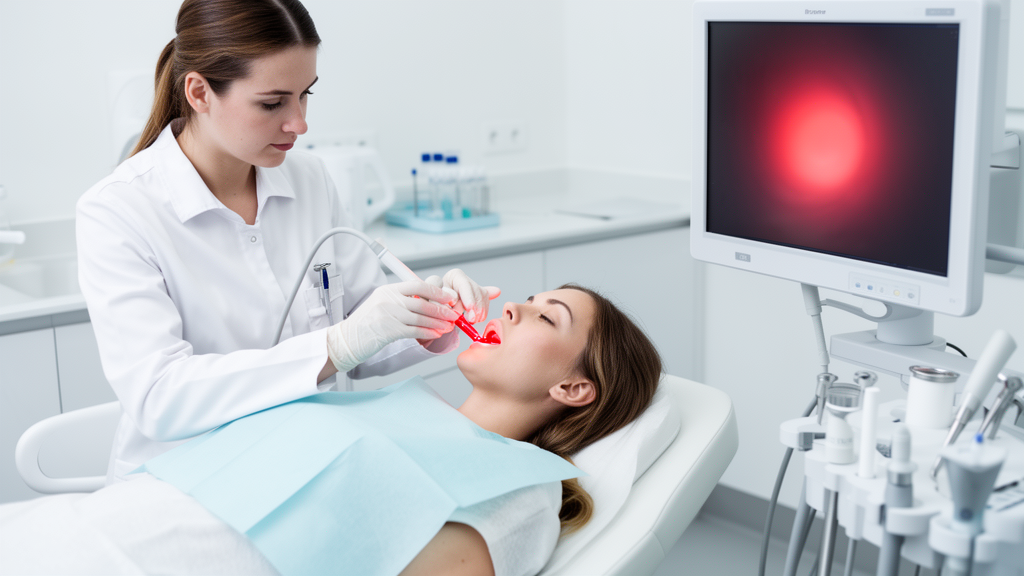
All 269 patients completed six ALA-PDT sessions spaced seven to 14 days apart. Before each session, clinicians removed cervical mucus and vaginal secretions, applied 0.5 mL of a sterile-water preparation containing 20% 5-aminolevulinic acid, and left it in place for three hours. The cervical canal and ectocervix were then illuminated at a wavelength of 630 nanometres, with an irradiance of 100 milliwatts per square centimetre for 25 minutes, delivering a reported total light dose of 150 joules per square centimetre. The light field was confined to the treatment area where possible to limit photodynamic effects on adjacent vaginal tissue, and the procedures were performed and monitored by experienced gynecological specialists.
The treatment regimen was based on institutional experience and previously reported photodynamic therapy schedules for cervical intraepithelial lesions because no standardized ALA-PDT protocol exists for CIN1. The approach is non-excisional: it uses a photosensitizer, light and the resulting reactive oxygen species to damage abnormal epithelial cells without surgically removing cervical tissue. That distinction may be relevant to patients concerned about the obstetric consequences of cervical excision, but the present study did not measure fertility or pregnancy outcomes and therefore cannot establish any such advantage. It also did not include an untreated comparison group, preventing the investigators from separating treatment effects from the spontaneous clearance and regression commonly seen in CIN1.
Baseline HPV testing identified 266 HPV-positive patients and three HPV-negative patients. At three months, all 266 initially positive patients underwent repeat testing, and 155 had converted to HPV-negative. A subset received another assessment at six months, while others had no further HPV test; combining available follow-up results, 170 of 266, or 63.91%, were HPV-negative at their last assessment. This later figure is descriptive rather than a fixed-time endpoint because follow-up availability varied and some patients stopped testing after reassuring results. Exploratory subtype analyses showed HPV16 clearance in 34 of 52 patients, or 65.38%, and HPV18 clearance in 21 of 22 patients, or 95.45%, at three months. The small HPV18 subgroup and incomplete six-month follow-up prevent strong comparisons between genotypes.
Cytological results also improved over the short follow-up period. Before treatment, 138 of 266 patients with baseline ThinPrep cytologic test results had NILM, representing 51.88%. At three months, 205 of 247 patients with available results had NILM, representing 83.00%. The proportion classified as atypical squamous cells of undetermined significance fell from 26.69% at baseline to 9.31% at three months, while low-grade squamous intraepithelial lesions declined from 20.30% to 7.69%. Three baseline results in the combined ASC-H, HSIL and AGC categories had no corresponding abnormalities at three months. These shifts are observations from a selected subgroup with available follow-up, not the results of a formal paired statistical comparison.
Safety findings were reassuring within the limits of the study’s size and retrospective design. No serious adverse events occurred during treatment or follow-up. Mild reactions after the first session included increased vaginal discharge, foul-smelling discharge and mild lower abdominal pain. All symptoms improved with symptomatic management, including antibiotics or analgesics when needed, and none led patients to stop or interrupt the six-session schedule. Topical cervical application also limits systemic photosensitizer exposure compared with systemic photodynamic therapy used in other cancers, potentially reducing systemic photosensitivity risk. Safety was nevertheless assessed in one center and under one standardized protocol, and the results do not establish that the risk would be identical in broader clinical populations.
Researchers proposed several possible mechanisms for the observed HPV clearance, while emphasizing that they remain incompletely understood. Photodynamic therapy generates reactive oxygen species that can cause oxidative damage in abnormal epithelial cells. Other evidence suggests that the treatment may alter local immune responses, including increased CD8-positive T-cell infiltration and activation of tissue-resident memory T cells that could contribute to viral clearance and longer-term immune surveillance. A previous report also described increased anti-HPV16 antibody responses after ALA-PDT in patients with CIN2 or CIN3. The present cohort did not directly test immune changes, quantify viral loads or isolate the contributions of the photosensitizer and light, so none of these mechanisms can be confirmed as the explanation for its results.
Several limitations constrain what the findings mean. The study was retrospective, single-center and subject to selection and information bias; follow-up was incomplete, and some patients discontinued surveillance after favorable results, potentially biasing complete-case analyses. HPV testing was primarily qualitative, limiting assessment of viral-load changes. Repeat histopathology was not routinely performed, so improved cytology cannot be equated with histological regression or documented absence of CIN1. The three baseline HPV-negative patients, some included because of persistent cytological abnormalities, also limited the fixed-time HPV analysis to the 266 positive patients. Most importantly, the absence of an untreated observational control means that spontaneous clearance cannot be separated from an ALA-PDT effect, while the absence of a light-only group leaves the specific photodynamic contribution unmeasured.
For patients with CIN1, the practical message is one of cautious clinical relevance rather than a new standard of care. Photodynamic therapy avoids cervical excision and produced favorable short-term HPV and cytological results with mild observed adverse effects in this selected cohort. Those outcomes make controlled investigation of ALA-PDT in carefully selected, treatment-seeking patients reasonable, especially when persistent infection, repeated abnormalities or surveillance burdens shape clinical decisions. They do not show that ALA-PDT should replace observation, prevent progression or improve fertility and pregnancy outcomes. Prospective studies using observation as the clinically relevant comparator, standardized follow-up and repeat histopathology will be needed to determine whether the intervention offers benefits beyond the natural course of CIN1.
Subject of Research: Real-world HPV and cytological outcomes after ALA-PDT for cervical intraepithelial neoplasia grade 1
Article Title: Real-world clinical outcomes of 5-aminolevulinic acid photodynamic therapy in patients with cervical intraepithelial neoplasia grade 1
Article References: Fan, T., Geng, L., Gao, G., Long, Z., Liu, D., Wang, Y., & Li, C. (2026). Real-world clinical outcomes of 5-aminolevulinic acid photodynamic therapy in patients with cervical intraepithelial neoplasia grade 1. Frontiers in Oncology, 16, Article 1896229. https://doi.org/10.3389/fonc.2026.1896229
Image Credits: AI Generated
DOI: 10.3389/fonc.2026.1896229
Keywords: CIN1, ALA-PDT, HPV clearance, cervical precancer, photodynamic therapy, ThinPrep cytology, retrospective cohort, treatment safety, Real-world, clinical, outcomes, aminolevulinic
Cite Scienmag News
Ophelia Keating. (October 25, 2026). Photodynamic therapy shows promising HPV results in real-world CIN1 cohort. Scienmag. https://scienmag.com/photodynamic-therapy-shows-promising-hpv-results-in-real-world-cin1-cohort/
Ophelia Keating. "Photodynamic therapy shows promising HPV results in real-world CIN1 cohort." Scienmag, 25 October 2026, https://scienmag.com/photodynamic-therapy-shows-promising-hpv-results-in-real-world-cin1-cohort/. Accessed 25 October 2026.
Ophelia Keating. "Photodynamic therapy shows promising HPV results in real-world CIN1 cohort." Scienmag. October 25, 2026. https://scienmag.com/photodynamic-therapy-shows-promising-hpv-results-in-real-world-cin1-cohort/