


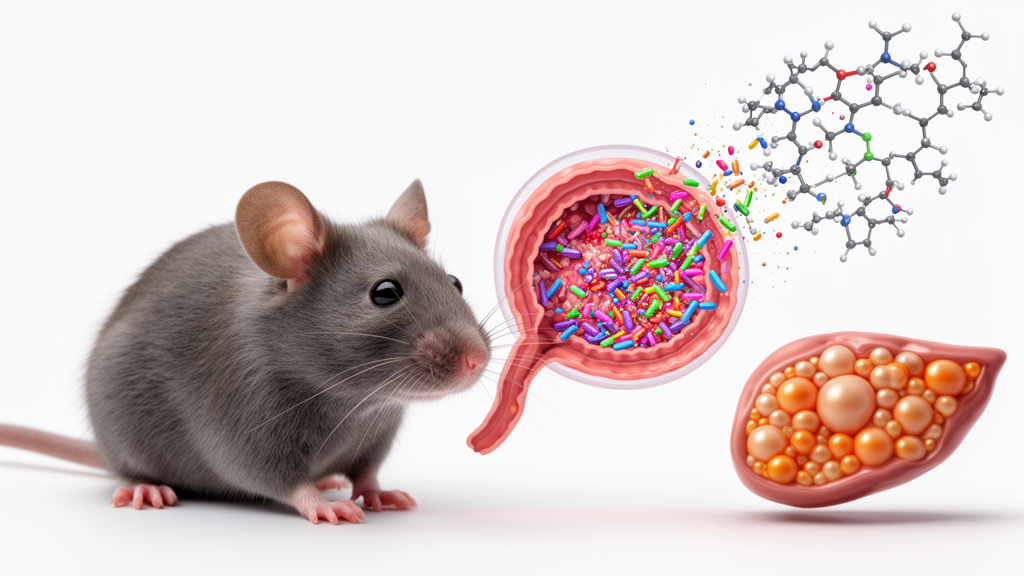
Per- and polyfluoroalkyl substances, the persistent industrial chemicals known as PFAS, have been linked in a new mouse study to fatty liver disease through an unexpected route: disruption of the gut microbiome. The findings suggest that these widespread environmental contaminants may promote liver disease partly by interfering with gut bacteria that normally help protect the liver.
PFAS are a large family of synthetic chemicals used for decades in products ranging from nonstick cookware and water-repellent fabrics to food packaging and firefighting foams. Their strong carbon-fluorine bonds make them extremely resistant to degradation, earning them the nickname “forever chemicals.” They are now detected in water supplies, soil, wildlife, and human blood worldwide, and epidemiological studies have associated PFAS exposure with elevated cholesterol, liver injury, immune dysfunction, and certain cancers.
To investigate how PFAS might contribute to metabolic liver disease, researchers exposed mice to representative PFAS compounds and tracked changes in liver fat accumulation, metabolic markers, and the composition of the gut microbiome. The animals developed hallmark features of fatty liver disease, including increased hepatic lipid buildup and inflammation-related signaling.
Analysis of the gut microbiome revealed that PFAS exposure substantially altered the community of bacteria residing in the intestines. Certain bacterial groups that are typically associated with healthy metabolic function declined, while other taxa expanded. The researchers found that these microbial shifts correlated with changes in bile acid metabolism, a key pathway through which gut bacteria communicate with the liver and regulate fat processing.
Bile acids are synthesized in the liver from cholesterol and then modified by gut bacteria before being reabsorbed and returned to the liver. This enterohepatic circulation allows gut microbes to influence hepatic lipid metabolism, glucose regulation, and inflammatory signaling. The study found that PFAS exposure disrupted this normal bile acid cycling, altering the balance of bile acid species that reach the liver and thereby contributing to abnormal fat accumulation in hepatic tissue.
When the researchers transferred gut bacteria from PFAS-exposed mice to germ-free mice, the recipients developed liver changes resembling those seen in the exposed animals, providing evidence that the altered microbiome itself can transmit the disease-promoting effects. Conversely, interventions aimed at supporting beneficial gut bacteria partially mitigated the liver abnormalities in PFAS-exposed mice, suggesting that microbial pathways mediate a meaningful portion of the toxicity.
The findings add to growing evidence that the gut-liver axis is a critical mediator of how environmental chemicals affect metabolic health. Previous research has shown that other pollutants, including certain pesticides and plasticizers, can also reshape gut microbial communities in ways that promote metabolic dysfunction. The new work extends this framework to PFAS, one of the most pervasive classes of environmental contaminants.
The researchers caution that mouse studies do not directly establish the same mechanisms in humans, and that human PFAS exposure typically involves complex mixtures of many different compounds at varying doses. Nevertheless, the identification of a microbiome-mediated pathway opens potential avenues for intervention. Strategies such as dietary modifications, probiotics, or targeted microbial therapies might one day help reduce the liver-related health burden of PFAS exposure, particularly in heavily affected communities.
With PFAS contamination now recognized as a global public health challenge, understanding the full range of biological pathways through which these chemicals cause harm is increasingly urgent. This study highlights that the trillions of microbes inhabiting the human gut may be an important and previously underappreciated target of PFAS toxicity, and that protecting microbial health could become part of the broader strategy for mitigating the consequences of environmental chemical exposure.
The disconnect between the two topics is notable: while the PFEx chemistry article deals with designed P(V)-F electrophiles, the PFAS liver study concerns environmental organofluorine persistence. Both hinge on the carbon-fluorine and phosphorus-fluorine bonds, but their fates in biological systems could not be more different. PFEx reagents are engineered to react selectively and then be metabolized or excreted, whereas PFAS compounds owe their environmental longevity to the extraordinary strength of their C-F bonds, which resist enzymatic and chemical degradation. This contrast underscores a broader theme in modern fluorine chemistry: the same bond motif can be either a liability or an asset depending on molecular context, design intent, and the biological environment in which it finds itself.
From a medicinal chemistry standpoint, the latent electrophilicity of P(V)-F functionalities offers a conceptual advantage over classical covalent warheads. Traditional covalent inhibitors, such as acrylamides reacting with cysteine residues, rely on electrophiles that are continuously reactive, raising concerns about off-target modification of unrelated proteins. PFEx chemistry, by contrast, exploits a proximity-driven mechanism in which the P-F bond remains largely inert until brought into close apposition with a nucleophilic residue by specific molecular recognition. This environment-dependent activation mirrors strategies seen in nature, where enzymes position substrates precisely to achieve selectivity that would be impossible with freely diffusing reactive species. The result is a class of chemical tools whose reactivity is gated by binding events rather than by bulk concentration alone.
The genetic code expansion work described in the source is particularly significant for the field of covalent biology. By incorporating phosphoramidofluoridate-containing unnatural amino acids such as PFY and PFK at defined positions within proteins, researchers can in principle direct covalent bond formation to specific interaction interfaces without requiring metal catalysts or external activation. This catalyst-free feature is operationally important for live-cell experiments, where metal catalysts like those used in CuAAC can be cytotoxic or interfere with cellular processes. The ability to perform such modifications both in vitro and in mammalian cells suggests that PFEx-based UAAs could become standard tools for mapping protein-protein interactions, stabilizing transient complexes, or creating covalent analogs of otherwise reversible binding events.
The breadth of nucleophilic residues that PFEx can engage, including lysine, histidine, tyrosine, and cysteine, distinguishes it from SuFEx-based approaches that have historically been more limited in the range of amino acid side chains they can modify stably. Lysine residues are abundant on protein surfaces but often poorly targeted by existing covalent chemistries; histidine and tyrosine are similarly underrepresented in the covalent inhibitor literature. Expanding the residue palette available for site-specific covalent modification opens new possibilities for targeting proteins that lack cysteine or other conventionally druggable nucleophiles near their active sites, potentially broadening the scope of the covalent drug discovery enterprise.
The application of fluorophosphonate-based electrophiles in activity-based protein profiling represents a complementary strategy to genetic code expansion. Rather than installing reactive handles at predetermined sites, ABPP uses broad-spectrum probes to survey entire proteomes for enzymes whose active sites are catalytically competent to activate the P-F bond. This approach has been particularly productive for serine hydrolases, a large enzyme family implicated in lipid metabolism, inflammation, and neurodegeneration. By combining ABPP with quantitative mass spectrometry, researchers can identify which members of this family are active in specific cell types or disease states, providing functional information that transcriptomics alone cannot supply. The mechanistic overlap between fluorophosphonate reactivity and PFEx chemistry suggests that insights gained from decades of ABPP probe design could inform the next generation of PFEx-based chemical biology tools.
Looking forward, several challenges remain before PFEx chemistry reaches routine adoption. The hydrolytic stability of P(V)-F bonds under ambient conditions is a strength for storage and handling but raises questions about long-term fate in biological systems and the environment. Understanding how phosphoramidofluoridate linkages are processed by cellular machinery, whether they are recognized by phosphatases or other hydrolases, and whether their breakdown products are benign will be essential for translational applications. Additionally, comparative studies systematically evaluating PFEx against SuFEx and other covalent chemistries in terms of proteome-wide selectivity, immunogenicity, and pharmacokinetic behavior are still limited. As the field matures, such head-to-head evaluations will be necessary to define the optimal applications for each chemistry and to guide rational probe and therapeutic design.
The convergence of PFEx chemistry with genetic code expansion, activity-based profiling, and proximity-induced target binding reflects a broader trend in chemical biology toward precision covalent interventions. Rather than relying on stochastic encounters between reactive groups and protein surfaces, the field is increasingly designing systems in which covalent bond formation is contingent on specific molecular recognition events. This paradigm, sometimes described as proximity-induced covalent inhibition, has already yielded clinical successes with targeted covalent inhibitors and is likely to benefit from the unique reactivity profile that P(V)-F electrophiles provide. As synthetic methods for preparing diverse PFEx-enabled building blocks improve and as our understanding of their biological behavior deepens, these tools are positioned to contribute meaningfully to both fundamental discovery and therapeutic development.
Subject of Research: Health
Article Title: Phosphorus fluoride exchange (PFEx): a new frontier in bioconjugation, enzyme inhibition, proximity-induced target-binding and fluorescence probes
Article References: Gupta, V., Roy, N., Newaskar, V., & Guchhait, S. K. (2026). Phosphorus fluoride exchange (PFEx): a new frontier in bioconjugation, enzyme inhibition, proximity-induced target-binding and fluorescence probes. Frontiers in Chemical Biology, 5, Article 1879339. https://doi.org/10.3389/fchbi.2026.1879339
Image Credits: AI Generated
DOI: 10.3389/fchbi.2026.1879339
Keywords: PFAS, fatty liver disease, gut microbiome, liver disease, environmental health, toxicology, Phosphorus, fluoride, exchange, PFEx, frontier, bioconjugation
Cite Scienmag News
Morgan Morrow. (October 17, 2026). PFAS Exposure Linked to Fatty Liver Disease Through Gut Microbiome Disruption, Mouse Study Finds. Scienmag. https://scienmag.com/pfas-exposure-linked-to-fatty-liver-disease-through-gut-microbiome-disruption-mouse-study-finds/
Morgan Morrow. "PFAS Exposure Linked to Fatty Liver Disease Through Gut Microbiome Disruption, Mouse Study Finds." Scienmag, 17 October 2026, https://scienmag.com/pfas-exposure-linked-to-fatty-liver-disease-through-gut-microbiome-disruption-mouse-study-finds/. Accessed 17 October 2026.
Morgan Morrow. "PFAS Exposure Linked to Fatty Liver Disease Through Gut Microbiome Disruption, Mouse Study Finds." Scienmag. October 17, 2026. https://scienmag.com/pfas-exposure-linked-to-fatty-liver-disease-through-gut-microbiome-disruption-mouse-study-finds/


