


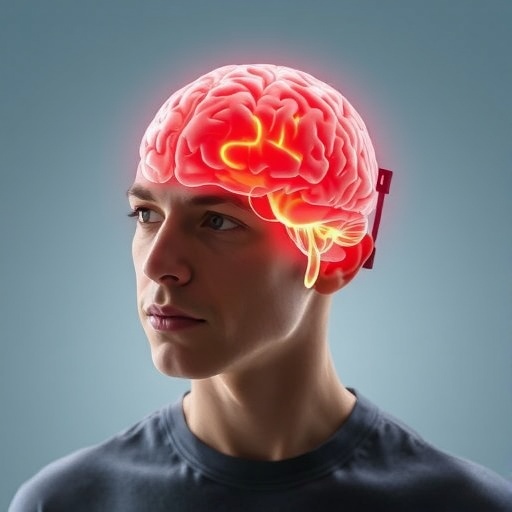
Schizophrenia, a multifaceted psychiatric disorder, imposes a significant burden on individuals and healthcare systems worldwide. Despite decades of research and numerous pharmacological advancements, cognitive deficits and negative symptoms—two of the most debilitating aspects of the condition—remain stubbornly resistant to conventional treatments. However, an innovative brain stimulation technique is poised to shift this paradigm. A new randomized controlled trial protocol published in BMC Psychiatry introduces individualized transcranial temporal interference stimulation (tTIS) as a promising non-invasive intervention aimed at ameliorating these challenging symptoms.
Unlike traditional brain stimulation methods that often target superficial cortical areas, tTIS leverages high-frequency electrical interference patterns to modulate activity deep within the brain with unprecedented precision. This cutting-edge technology can selectively influence structures implicated in schizophrenia’s pathophysiology, such as the nucleus accumbens (NAc), a key player in reward processing and motivation. The study specifically targets the right NAc to assess whether modulating this deep brain region can alleviate cognitive impairments and the pervasive negative symptoms seen in schizophrenia patients.
The significance of this approach lies in its ability to circumvent several limitations of past neuromodulation techniques. Conventional transcranial direct current stimulation (tDCS) and transcranial magnetic stimulation (TMS) typically affect more superficial brain regions and often lack the spatial resolution required to engage critical subcortical nuclei. By contrast, tTIS employs two high-frequency electrical currents with slightly different frequencies, which intersect to produce an interference pattern at a targeted depth, thereby stimulating neuronal populations without affecting overlying cortex. This refined control potentially allows for more effective and side-effect-free therapeutic interventions.
This landmark study plans to recruit 76 individuals diagnosed with schizophrenia who exhibit pronounced cognitive deficits and negative symptoms. These participants will be randomly assigned to receive either active tTIS or a sham (placebo) stimulation, ensuring rigorous double-blind conditions. Importantly, all subjects will maintain stable antipsychotic medication regimens throughout the study to isolate the effects of the brain stimulation intervention from pharmacotherapy changes.
The intervention consists of ten weekday sessions, each lasting 30 minutes, designed to deliver tailored stimulation based on each participant’s neuroanatomy. Advances in neuroimaging and computational modeling enable customized electrode placement to optimize current distribution and focality. This individualized approach is critical given the variability in brain anatomy and the complex network dysfunctions underlying schizophrenia.
Outcomes will be evaluated at four time points—baseline (prior to treatment), immediately post-intervention, and at two and four weeks following the final session. The primary endpoint centers on cognitive improvement, assessed using the MATRICS Consensus Cognitive Battery (MCCB), a comprehensive and widely-validated neuropsychological test battery specifically designed for schizophrenia research. Given cognition’s central role in determining functional outcomes, any positive findings could dramatically alter treatment approaches.
Secondary measures will probe a broad array of symptom domains, including positive and negative symptoms, mood disturbances such as depression and anxiety, sleep quality, and overall quality of life. The study also incorporates resting-state functional magnetic resonance imaging (rs-fMRI) to elucidate the neural mechanisms underpinning clinical changes, potentially correlating alterations in network connectivity or activity with symptomatic improvements.
If successful, this trial would constitute the first rigorous randomized controlled evidence supporting tTIS as a viable therapy to target cognitive deficits and negative symptoms in schizophrenia. Such evidence is desperately needed since these symptom clusters are notoriously resistant to existing pharmacological treatments, which primarily address positive symptoms like hallucinations and delusions.
Moreover, the implications extend beyond schizophrenia. The ability to modulate deep brain regions non-invasively with high specificity opens new horizons for treating other neuropsychiatric and neurological disorders characterized by dysfunctional subcortical circuits. Disorders ranging from depression and obsessive-compulsive disorder to Parkinson’s disease could potentially benefit from adaptations of tTIS protocols.
The upcoming trial also reflects a broader shift in psychiatric research, increasingly prioritizing individualized, circuit-based interventions informed by neurobiological insights rather than symptom-driven, one-size-fits-all treatments. This precision approach aims to enhance therapeutic efficacy while minimizing side effects, an especially urgent goal for patients with severe mental illness.
This initiative received ethical approval and plans to commence patient recruitment in late May 2025 at sites registered with the Chinese Clinical Trial Registry (ChiCTR2500102724). Researchers express optimism that the study’s findings will illuminate not only the clinical benefits but also the neural dynamics of tTIS, contributing critical data to the rapidly evolving field of neuromodulation.
In summary, individualized transcranial temporal interference stimulation represents a frontier technology with the potential to transform the landscape of schizophrenia treatment. By precisely targeting deep brain structures implicated in cognition and motivation, this method seeks to fill an unmet clinical need: the effective and safe amelioration of cognitive and negative symptoms that have long defied intervention.
As neuroscience and engineering converge to develop such innovative tools, the hope is that patients previously left behind by traditional therapies will gain new avenues toward recovery, improved function, and ultimately, a better quality of life.
Cite Scienmag News
Glenn Wilkins. (August 4, 2025). Personalized Brain Stimulation Tackles Schizophrenia Symptoms. Scienmag. https://scienmag.com/personalized-brain-stimulation-tackles-schizophrenia-symptoms/
Glenn Wilkins. "Personalized Brain Stimulation Tackles Schizophrenia Symptoms." Scienmag, 4 August 2025, https://scienmag.com/personalized-brain-stimulation-tackles-schizophrenia-symptoms/. Accessed 3 September 2026.
Glenn Wilkins. "Personalized Brain Stimulation Tackles Schizophrenia Symptoms." Scienmag. August 4, 2025. https://scienmag.com/personalized-brain-stimulation-tackles-schizophrenia-symptoms/


