


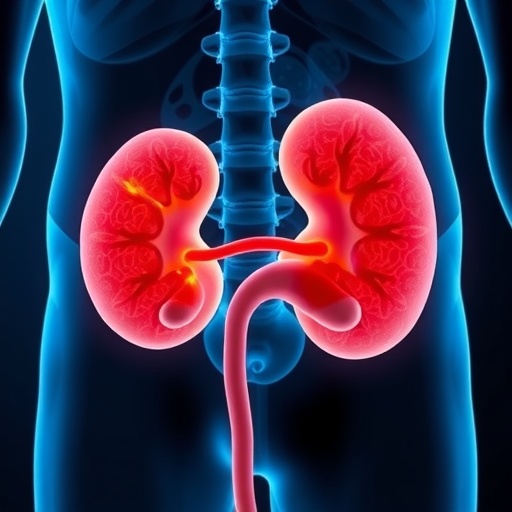
Obesity, a condition that continues to escalate globally, is characterized by excessive fat accumulation with far-reaching implications for cardiovascular and metabolic health. Yet, it is increasingly recognized that obesity is not a monolithic disorder; rather, it presents in diverse forms shaped by the distribution and function of distinct fat depots. In groundbreaking new research published in the International Journal of Obesity, Chen et al. take a pivotal step in unraveling this complexity by spotlighting a previously underappreciated fat depot—perirenal fat—and its critical role alongside hepatic fat in dictating the heterogeneity of obesity outcomes. This study not only deepens our understanding of the biological underpinnings of obesity but also opens avenues for more precise risk stratification and targeted therapeutic interventions.
Traditional perspectives on obesity have largely emphasized the quantity of total body fat, often measured by body mass index (BMI). However, mounting evidence suggests that where fat is stored matters profoundly for metabolic health. Visceral adiposity, or fat surrounding internal organs, has long been implicated in adverse cardiometabolic profiles, yet the complexity of visceral fat compartments has remained insufficiently characterized. Chen and colleagues dive into this intricacy by systematically dissecting the contributions of multiple visceral fat depots to metabolically unhealthy obesity. Their investigative lens centers on perirenal fat—a layer of adipose tissue enveloping the kidneys—a site historically overlooked in obesity research despite its strategic anatomical and functional status.
Perirenal fat, by virtue of its unique localization adjacent to the kidneys and rich vascularization, may interact with renal physiology in ways that influence systemic metabolic and cardiovascular processes. Chen et al.’s approach involved detailed imaging analyses and metabolic phenotyping to quantify perirenal fat volume and explore its associations with markers of metabolic dysfunction. Their findings reveal that elevated perirenal fat is strongly correlated with insulin resistance, dyslipidemia, and markers of systemic inflammation independent of overall visceral fat volume. This suggests that perirenal fat exerts distinct pathogenic effects that contribute to the unhealthy metabolic profile observed in a subset of individuals with obesity.
Beyond perirenal fat, the study also underscores the interplay between hepatic fat accumulation—or fatty liver disease—and systemic metabolic health. Fatty infiltration of the liver, a hallmark of nonalcoholic fatty liver disease (NAFLD), has emerged as a key driver of insulin resistance and cardiovascular risk. The researchers elegantly demonstrate that the confluence of increased hepatic fat and perirenal fat composes a fat distribution pattern highly predictive of metabolically unhealthy obesity phenotypes. Such a phenotype is characterized by pronounced metabolic dysfunction despite similar BMI levels, highlighting the inadequacy of BMI alone as a clinical tool for metabolic risk assessment.
An intriguing aspect uncovered by Chen et al. is the heterogeneity within the obesity population concerning fat distribution patterns. While some individuals accumulate fat predominantly in subcutaneous depots, others exhibit increased visceral fat, especially in the perirenal region, compounded by hepatic steatosis. This divergence explains the paradox of “metabolically healthy obesity” versus “metabolically unhealthy obesity”—two contrasting clinical presentations with vastly different prognoses. Their data suggest that targeting perirenal and hepatic fat may yield superior clinical insights compared to assessments focusing on total visceral or subcutaneous fat alone.
Mechanistically, the study hints at multifaceted pathways by which perirenal fat engenders metabolic dysfunction. The adipose tissue surrounding the kidney secretes adipokines and pro-inflammatory cytokines which may alter local renal hemodynamics and systemic vascular resistance. Such changes could exacerbate hypertension and chronic kidney disease risk, frequently comorbid with metabolic syndrome. Moreover, perirenal fat may impair renal sodium handling and promote sympathetic nervous system activity, further intertwining it with cardiometabolic pathophysiology. These hypotheses lay fertile ground for future translational studies to decipher molecular mediators linking perirenal adiposity to systemic disease.
Clinically, these findings possess substantial implications. Currently, risk stratification paradigms often overlook the heterogeneity of fat depots in patients with obesity, relying predominantly on anthropometric indices. Incorporating targeted imaging approaches that quantify perirenal and hepatic fat could enhance the precision of metabolic risk prediction and enable early intervention in high-risk individuals. Such refined phenotyping could inform tailored therapeutic strategies, including lifestyle modification, pharmacological treatment, or potentially interventional procedures aimed at reducing deleterious fat depots.
Furthermore, the study challenges researchers and clinicians to reconsider the conceptual framework for obesity-related complications. By illuminating the distinct roles of perirenal and hepatic fat, Chen and team provide compelling evidence that not all fat depots are created equal in their contribution to disease. This paradigm shift urges a move away from one-size-fits-all approaches toward personalized medicine based on comprehensive adipose tissue profiling. It also prompts a reevaluation of current clinical guidelines regarding screening and management of obesity.
Of particular interest is how technological advances in imaging are enabling these insights. The application of high-resolution magnetic resonance imaging (MRI) and computed tomography (CT) techniques to visualize and quantify adipose tissue compartments at an unprecedented granularity has been pivotal. Chen et al.’s methodical use of such imaging modalities allowed precise delineation of perirenal fat boundaries and volumetric assessments, overcoming previous technical barriers. As imaging technology continues to evolve, its integration into routine clinical practice could revolutionize obesity management.
The study also highlights the importance of intertwining metabolic data with imaging findings. Participants underwent comprehensive metabolic testing, including insulin sensitivity assays and inflammatory marker profiling, establishing robust links between anatomical fat distribution and functional metabolic states. This integrative approach strengthens causal interpretations and enhances clinical relevance, positioning the findings to inform holistic approaches to patient care.
Another dimension explored includes the potential genetic and environmental determinants influencing where fat accumulates. Although not the core focus, Chen et al. acknowledge that individual variability in fat deposition patterns likely arises from complex gene-environment interplay. Future investigations into molecular drivers underlying perirenal fat expansion hold promise for identifying novel therapeutic targets and elucidating mechanisms of differential fat depot plasticity.
In summary, this groundbreaking study identifies perirenal fat as a neglected but influential fat depot contributing to the heterogeneity of obesity and its metabolic sequelae. Alongside hepatic fat accumulation, perirenal adiposity delineates clinically relevant subtypes of metabolically unhealthy obesity. These insights challenge existing paradigms, underscore the necessity for refined phenotyping, and chart new directions for obesity research and clinical management. As obesity continues to impose a gargantuan health burden worldwide, understanding the intricate biology of fat distribution offers hope for more effective, personalized interventions aimed at mitigating its devastating consequences.
The research conducted by Chen and colleagues marks a significant stride in obesity science, encouraging a deeper appreciation of fat depot heterogeneity and its systemic impacts. Industry stakeholders, clinicians, and researchers alike stand to benefit from these revelations, which may usher in a new era of precision medicine in obesity care. Moving forward, the integration of imaging biomarkers, metabolic profiling, and genetic insights will be indispensable to fully unravel the complexities of adipose tissue biology and optimize therapeutic outcomes.
Ultimately, the elucidation of perirenal fat’s role in metabolically unhealthy obesity underscores a broader principle in medical science: the importance of looking beyond traditional metrics to capture nuanced biological phenomena. Such an approach promises to transform diagnostics, prognostics, and treatments for obesity and associated cardiometabolic diseases, reshaping the landscape of public health for years to come.
Cite Scienmag News
Daisy Hatcher. (August 26, 2025). Perirenal Fat: Key Player in Obesity Diversity. Scienmag. https://scienmag.com/perirenal-fat-key-player-in-obesity-diversity/
Daisy Hatcher. "Perirenal Fat: Key Player in Obesity Diversity." Scienmag, 26 August 2025, https://scienmag.com/perirenal-fat-key-player-in-obesity-diversity/. Accessed 4 September 2026.
Daisy Hatcher. "Perirenal Fat: Key Player in Obesity Diversity." Scienmag. August 26, 2025. https://scienmag.com/perirenal-fat-key-player-in-obesity-diversity/


