


A team of researchers in India has developed a green, low-cost way to supercharge zinc oxide nanoparticles with a common biocompatible polymer, producing a dual-purpose agricultural tool that both accelerates plant growth and strikes down a broad range of disease-causing bacteria. The study, published in the journal Discover Biotechnology, describes how zinc oxide nanoparticles synthesized from the leaves of the medicinal plant Tephrosia purpurea were coated with polyethylene glycol, or PEG, and then put through a battery of tests measuring their antibacterial potency and their ability to promote seedling development in two important legume crops. The results point toward a sustainable alternative to conventional chemical pesticides and fertilizers at a time when agriculture is under mounting pressure from drug-resistant pathogens and climate-driven stress.
Zinc oxide nanoparticles have long attracted attention for their remarkable physical and chemical properties, including semiconductivity, large surface area, and photocatalytic activity. In biomedical research, they are valued for their ability to generate reactive oxygen species, molecules that can damage and destroy microbial cells and even trigger apoptosis in cancer cells. In agriculture, these same properties make zinc oxide nanoparticles promising agents for killing or suppressing harmful microorganisms, while the zinc they release can serve as an essential micronutrient for plants. Previous studies have suggested that nano-scale zinc oxide can stimulate root growth, diversify microbial populations in the rhizosphere, and improve soil structure and fertility, positioning the material as a candidate for sustainable crop protection strategies aimed at securing global food supplies under changing climatic conditions.
The central challenge the researchers set out to address was stability. Nanoparticles tend to clump together, or agglomerate, which reduces their effective surface area and undermines their biological activity. Polymers offer a well-established solution: long-chain molecules such as polyethylene glycol and polyvinylpyrrolidone wrap around nanoparticles and create a physical barrier known as steric hindrance, in which spatial repulsion between polymer chains prevents particles from adhering to one another. PEG was chosen for this study because of its high solubility, non-antigenicity, low toxicity toward non-target organisms, and proven biocompatibility. Notably, PEG 400, the low molecular weight grade used in the formulation, is considered less toxic than its heavier counterparts and is even used in eye drops. Earlier work has also shown that PEG can confer antioxidant properties on zinc oxide and limit oxygen valences at surface defects on the nanoparticles, and that zinc oxide nanoparticles are generally not toxic to human cells, making them attractive antibacterial agents that spare mammalian tissue.
The synthesis itself followed environmentally friendly principles. The team optimized reaction conditions, settling on a zinc sulfate concentration of 0.01 molar, one milliliter of Tephrosia purpurea leaf extract, a pH of 12, a temperature of 40 degrees Celsius, and a reaction time of two hours. Under these conditions, phytochemicals in the leaf extract, chiefly flavonoids and their derivatives such as flavones, flavanones, prenylated flavonoids, rotenoids, and chalcones, reduced the metallic precursor into nano-scale particles, visible as a dark white precipitate. The particles were collected by centrifugation, washed with deionized water and methanol, and dried at 60 degrees Celsius. To produce the PEGylated version, 100 milligrams of the nanoparticles were suspended in a 10 percent aqueous PEG 400 solution and stirred for 24 hours at ambient temperature, then centrifuged, washed five times to remove excess polymer, and dried.
A suite of characterization techniques confirmed the success of the synthesis and the coating. Ultraviolet-visible spectroscopy showed a characteristic absorption peak at 240 nanometers for the zinc oxide nanoparticles, along with a peak at 350 nanometers attributable to phytochemical constituents, and a notable spectral shift after PEGylation that demonstrated specific interaction between the polymer and the nanoparticles. Fourier-transform infrared spectroscopy identified absorption bands corresponding to hydroxyl, carbonyl, and alkyl groups from the plant phytochemicals acting as capping agents, as well as the signature peaks of PEG functional groups, including carbon-oxygen and carbon-carbon stretches, confirming conjugation between the polymer and the metal oxide. X-ray diffraction revealed a pure hexagonal wurtzite crystal structure with no impurity peaks, and application of the Debye-Scherrer formula yielded a crystallite size of 21.32 nanometers. Scanning electron microscopy showed spherical particles of roughly 30 to 40 nanometers for the bare nanoparticles, while the PEGylated particles appeared as larger, well-distributed core-shell structures of 60 to 70 nanometers, the extra size reflecting the polymer coating.
The antibacterial performance of the two formulations was then compared using agar well diffusion and microbroth dilution assays against five pathogenic strains: Escherichia coli, Enterobacter sp., Pseudomonas sp., Klebsiella sp., and Staphylococcus aureus. The PEGylated nanoparticles outperformed the uncoated particles against every strain, with percentage increases in inhibition of 34.52 percent against E. coli, 48.88 percent against Enterobacter, 34.14 percent against Pseudomonas, 27.27 percent against Klebsiella, and 50 percent against Staphylococcus aureus. The largest zones of inhibition were recorded against Klebsiella sp. at 14.0 millimeters and Enterobacter sp. at 13.4 millimeters, compared with 11.0 and 9.0 millimeters for the uncoated nanoparticles. All differences were statistically significant at p less than 0.01. Minimum inhibitory concentration testing reinforced the picture: the PEGylated nanoparticles suppressed all five strains at concentrations below 100 micrograms per milliliter, lower than what was required for the uncoated particles, with tetracycline serving as the positive control.
The mechanism behind this enhanced potency lies in the interplay between the nanoparticles and the polymer coating. Zinc oxide nanoparticles kill bacteria through structural disintegration of the cell membrane and the generation of reactive oxygen species, which leads to cell death. PEGylation appears to amplify this effect because the polymer’s membrane chemistry enables a controlled or sustained release of the nanoparticles, allowing them to continuously combat pathogenic cells rather than delivering a single burst of activity. The findings are consistent with earlier reports of enhanced antibacterial activity in PEGylated iron oxide nanoparticles and with studies of PEGylated zinc oxide nanoparticles dispersed in peritoneal dialysis fluid, suggesting that polymer-mediated stabilization is a general strategy for boosting the antimicrobial performance of metal oxide nanomaterials.
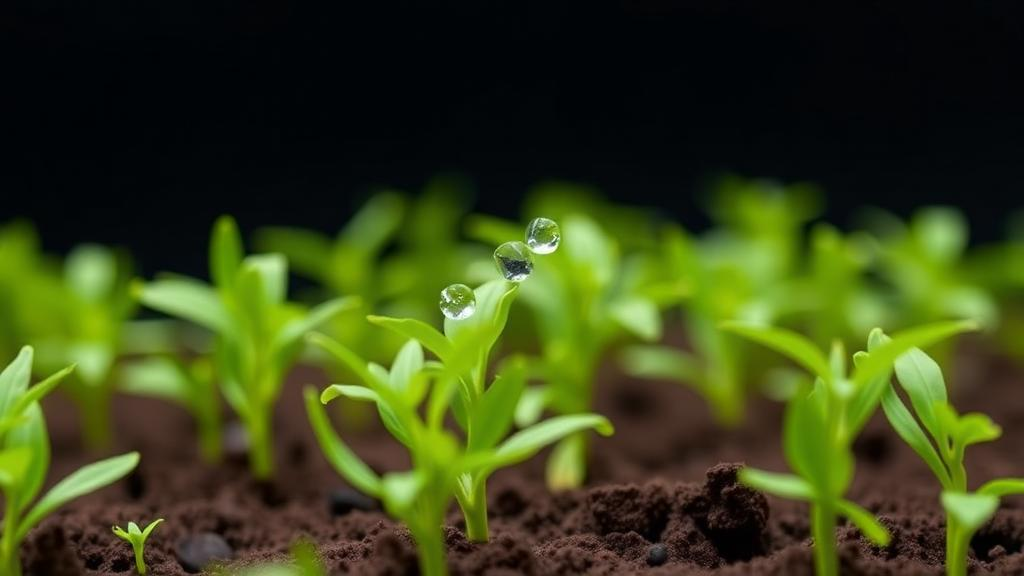
Equally striking were the plant growth results. In seed priming assays with black gram, seeds immersed in a PEGylated nanoparticle suspension reached a germination index of 100 percent, compared with 94 percent for uncoated nanoparticles and 90 percent for the water-treated control. Seedling length told an even more dramatic story, measuring 3.0 centimeters in the control group, 4.0 centimeters with uncoated nanoparticles, and 8.0 centimeters with the PEGylated formulation. In pot culture experiments, red cowpea and butter bean plants were sprayed with nanoparticle suspensions starting 20 days after seed emergence, and growth was tracked over the following weeks. Cowpea shoot length increased from 19.0 centimeters to 30.0 centimeters by day 35 under PEGylated treatment, while butter bean shoot length rose from 18 centimeters to 29.3 centimeters over the same period. Foliage density in butter beans climbed from 4.0 leaves per plant to 9.0, with statistically significant differences favoring the PEGylated formulation at every measured time point.
The researchers attribute the growth promotion to the sustained, controlled release of nanoparticles from the PEG matrix. Once released, the nano-scale particles, with their large specific surface area, high solubility, and rapid dissolution, are readily absorbed by plant leaf cells and tissues, where the zinc they deliver meets nutritional needs and triggers developmental responses. PEGylated zinc oxide nanoparticles are thought to act through a combination of improved nutrient uptake, regulation of plant hormones, alleviation of stress, and enhancement of microbial activity in the rhizosphere, a multifaceted mode of action that makes them a promising tool for sustainable agriculture, particularly under challenging environmental conditions.
The authors caution that several hurdles remain before such formulations can be deployed at scale. Scaling up nanoparticle synthesis while ensuring reproducible properties is a major industrial challenge, and long-term stability and biocompatibility in diverse environmental conditions have yet to be fully established. A complete understanding of how PEG-doped nanoparticles interact with biological systems is essential to rule out adverse effects in agricultural and healthcare applications. Future work, the team suggests, should focus on optimizing synthesis for higher yield and functionality, exploring biocompatible coatings beyond PEG for more targeted delivery, and conducting comprehensive environmental impact and lifecycle assessments. If those challenges can be met, PEGylated zinc oxide nanoparticles could emerge as a versatile, dual-functioning platform, one that nourishes crops while disarming the bacterial pathogens that threaten them, offering a sustainable bridge between nanotechnology and global food security.
Subject of Research: Green synthesis of PEGylated zinc oxide nanoparticles for antibacterial activity and plant growth promotion
Article Title: Sustainable formulation of PEGylated zinc oxide nanoparticles to enhance plant growth and combat bacterial pathogens
Article References: Krishnaveni, P., Anjali, P., Renuka, S., Deivakumari, M., Saranya, V. P., Namasivayam, S. K. R., Samrat, K., & Nachiyar, C. V. (2025). Sustainable formulation of PEGylated zinc oxide nanoparticles to enhance plant growth and combat bacterial pathogens. Discover Biotechnology, 2(1), Article 19. https://doi.org/10.1007/s44340-025-00027-w
Image Credits: AI Generated
DOI: 10.1007/s44340-025-00027-w
Keywords: zinc oxide nanoparticles, PEGylation, green synthesis, Tephrosia purpurea, antibacterial activity, plant growth promotion, seed germination, sustainable agriculture, nanotechnology, reactive oxygen species, Vigna unguiculata, Phaseolus lunatus
Cite Scienmag News
Alan Morgan. (September 30, 2026). PEG-Coated Zinc Oxide Nanoparticles Boost Crop Growth and Kill Bacterial Pathogens. Scienmag. https://scienmag.com/peg-coated-zinc-oxide-nanoparticles-boost-crop-growth-and-kill-bacterial-pathogens/
Alan Morgan. "PEG-Coated Zinc Oxide Nanoparticles Boost Crop Growth and Kill Bacterial Pathogens." Scienmag, 30 September 2026, https://scienmag.com/peg-coated-zinc-oxide-nanoparticles-boost-crop-growth-and-kill-bacterial-pathogens/. Accessed 17 October 2026.
Alan Morgan. "PEG-Coated Zinc Oxide Nanoparticles Boost Crop Growth and Kill Bacterial Pathogens." Scienmag. September 30, 2026. https://scienmag.com/peg-coated-zinc-oxide-nanoparticles-boost-crop-growth-and-kill-bacterial-pathogens/


