


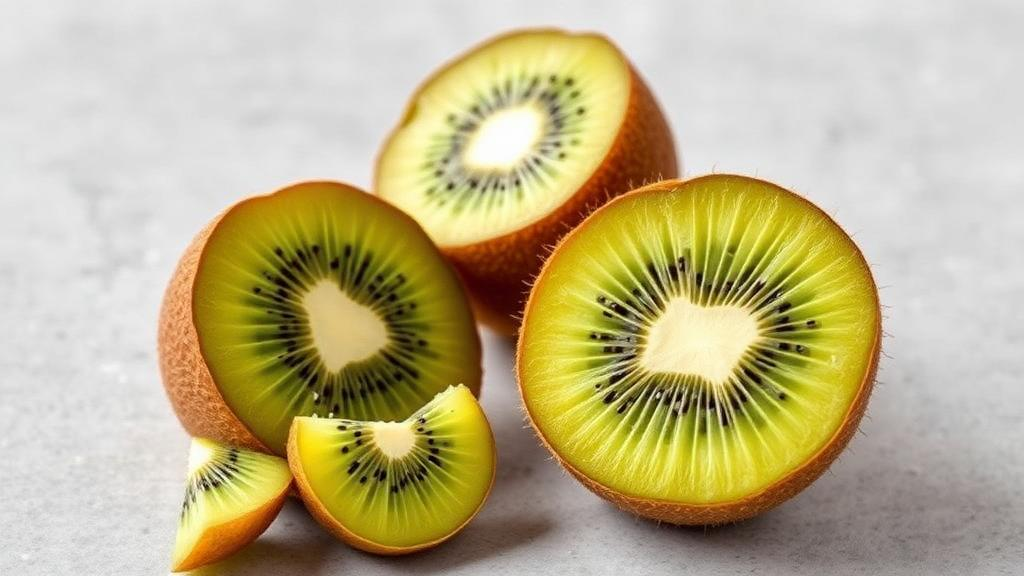
Kiwifruit wine has quietly become one of the most interesting case studies in modern fruit fermentation science. Global production of the fruit now exceeds 4.43 million tons a year, with China supplying more than half of that total, and yet kiwifruit remains notoriously fragile after harvest. It is a climacteric fruit, meaning it softens rapidly once picked, which leads to substantial postharvest losses and puts real pressure on supply chains. Turning surplus fruit into wine solves several problems at once: fermentation extends shelf life, generates a diverse array of flavor metabolites, and lifts the commercial value of a crop that might otherwise rot. But a new study published in Food Chemistry: X reveals that one of the most consequential decisions in kiwi winemaking is also one of the least studied: whether the fruit is peeled, and whether the wine is fermented as clear juice or as a pulp-rich mash.
Researchers from Zhejiang University set out to systematically test how this so-called fermented fruit state shapes both the flavor quality of kiwi wine and the accumulation of methanol, the primary hazardous byproduct in fruit wines. Methanol in fruit wine originates almost entirely from the enzymatic breakdown of pectin, the gelling polysaccharide that gives fruit its structure. Pectin methylesterase, or PME, cleaves methyl ester groups from pectin molecules, releasing methanol in the process. At sub-toxic concentrations methanol already degrades flavor purity, and at elevated levels it poses serious health risks, including blindness and death. Because kiwifruit is unusually rich in pectin, particularly in its peel and pulp tissues, the question of how much solid fruit material to include during fermentation is not merely a matter of taste. It is a safety question.
The team, led by Jiahui Shao and Huan Cheng, worked with three commercial cultivars representing the three main flesh-color backgrounds of the genus Actinidia: Hongyang, a red-fleshed variety; Jinyan, yellow-fleshed; and Xuxiang, green-fleshed. All fruit was harvested from Cangxi County in Sichuan Province and sorted to a uniform firmness of 3 to 5 newtons using a texture analyzer. Each cultivar was then fermented under four conditions: peeled juice fermentation, peel-involved juice fermentation, peeled pulp maceration, and peel-involved pulp maceration. That produced a twelve-treatment factorial experiment, with three independent fermentation replicates for each combination. All treatments received identical pectinase pretreatment, potassium metabisulfite, sucrose adjustment to 23 degrees Brix, and inoculation with Saccharomyces cerevisiae at 23 degrees Celsius for eight days, ensuring that any differences could be attributed to the fruit state rather than fermentation efficiency.
The analytical arsenal deployed on the resulting wines was formidable. Headspace solid-phase microextraction coupled with gas chromatography-mass spectrometry identified 130 volatile compounds across all samples, including 39 alcohols, 42 esters, 13 acids, 5 aldehydes, 6 ketones, and 6 terpenes. Odor activity value analysis, which divides a compound’s concentration by its sensory perception threshold, pinpointed 12 aroma-active compounds with values above 1.0. Isoamyl acetate emerged as the single dominant contributor to the fruity character of the wines, while 3-methyl-1-butanol, with odor activity values ranging from 11.45 to 45.36, drove the alcoholic and cheese-like notes. Electronic nose and electronic tongue instruments provided complementary fingerprinting, and a trained fifteen-member sensory panel rated each wine on a nine-point intensity scale after a month of training.
The flavor results told a clear story. Pulp maceration generally increased the proportion of esters, the class of compounds responsible for fruity and floral aromas, with pulp-fermented wines reaching ester proportions of 20.13 to 56.37 percent compared with 13.46 to 52.23 percent in juice-fermented wines. Ethyl caprylate, a compound associated with fruity sweetness, was notably more abundant in pulp treatments. Pulp fermentation also raised total phenolic content, which ranged from 2657 to 5053 milligrams of gallic acid equivalents per liter in pulp wines versus 2053 to 4384 in juice wines, along with total flavonoids. But these gains came at a cost. The electronic tongue and sensory panel both detected elevated bitterness and sourness in the maceration wines, particularly in the green-fleshed Xuxiang samples, which consistently showed the highest phenolic and flavonoid levels. Phenolics interact with bitter taste receptors and bind salivary proteins, producing astringency, so richer is not always better.
Peel contact produced more cultivar-dependent effects. In juice fermentation, peel involvement slightly raised phenolic content, consistent with the well-known enrichment of polyphenols in fruit skins. In pulp maceration, however, peeled samples sometimes showed higher measurable phenolics than their peel-involved counterparts, likely because oxidative enzymes released during maceration polymerized the phenolics or bound them to proteins and polysaccharides, rendering them undetectable by the assay. Flavonoids, by contrast, were enhanced by peel presence in both fermentation systems. The hierarchical clustering of odor activity values showed a clean separation between peeled and peel-involved treatments across all cultivars, confirming that peel contact fundamentally reshapes the aroma profile rather than simply amplifying it.
The methanol data revealed the darker side of the trade-off. Methanol concentrations were lowest in peeled juice fermentation and rose with both peel involvement and pulp maceration in most cases. Across cultivars, Hongyang wines showed the lowest levels, from 96.57 to 156.33 milligrams per liter, while Jinyan wines were highest at 142.71 to 215.03 milligrams per liter, and Xuxiang fell in between. All values remained below the benchmarks set by the International Organisation of Vine and Wine, which caps methanol at 400 milligrams per liter for red wines and 250 for white and rosé wines, but the Jinyan peel-involved pulp maceration treatment came uncomfortably close to the 250 milligram threshold. The mechanistic explanation lies in the pectin chemistry: water-soluble pectin consumption and total pectin degradation were both greatest in the peel-involved pulp treatments, providing more substrate for PME-mediated demethylation.
Correlation and regression analyses sharpened the picture further. Apparent PME activity at the fermentation endpoint correlated moderately but significantly with methanol content, with a Pearson coefficient of 0.55 across 36 samples, and partial least squares regression identified total pectin consumption and PME activity as the most important predictors, with PME earning a variable importance in projection score of 1.18. Polygalacturonase and pectin lyase, the two enzymes that cleave the pectin backbone, showed only weak and non-significant direct associations with methanol, suggesting their role is indirect: they dismantle cell walls and expose pectin substrates, which PME then demethylates. Intriguingly, pectin lyase activity was negatively correlated with water-soluble pectin consumption, the strongest association in the entire correlation matrix at r equals minus 0.71, possibly because the enzyme releases soluble fragments from insoluble cell wall pectin, replenishing rather than depleting that pool.
To reconcile the competing objectives of aroma enrichment and methanol control, the researchers applied an entropy-weighted TOPSIS analysis, integrating total odor activity, sensory fruity and floral intensity, bitterness, and methanol concentration into a single score. The result was striking: the red-fleshed Hongyang wine fermented with both peel and pulp achieved the highest composite score of 0.6836, combining a fruity profile with comparatively low methanol. For Jinyan, peeled treatments ranked highest, and juice fermentation may be preferable when methanol reduction is the priority. For Xuxiang, the bitterness associated with maceration suggests that sensory balance should guide the decision. The overarching lesson is that there is no universal recipe. The optimal fermented fruit state depends on the cultivar, and winemakers seeking to capture the full aromatic potential of kiwifruit must weigh the enzymatic consequences of every gram of peel and pulp they leave in the tank. Future work, the authors note, should track pectin fractions, enzyme activities, and methanol dynamically throughout fermentation, and disentangle the contributions of endogenous fruit enzymes from the commercial pectinase added during pretreatment.
Subject of Research: Effects of peel presence and pulp maceration on flavor quality and methanol accumulation in kiwifruit wine fermentation across three flesh-colored cultivars
Article Title: Fermented fruit state shapes flavor quality and methanol accumulation in kiwi wine: A comparative study of three flesh-colored kiwifruit cultivars
Article References: Shao, J., Huang, S., Lou, Y., Chen, S., Ye, X., & Cheng, H. (2026). Fermented fruit state shapes flavor quality and methanol accumulation in kiwi wine: A comparative study of three flesh-colored kiwifruit cultivars. Food Chemistry: X, Article 104583. https://doi.org/10.1016/j.fochx.2026.104583
Image Credits: AI Generated
DOI: 10.1016/j.fochx.2026.104583
Keywords: kiwifruit wine, methanol, pectin, pectin methylesterase, fermentation, flavor chemistry, aroma compounds, pulp maceration, peel contact, phenolics, cultivar comparison, food safety
Cite Scienmag News
Bethany Barker. (October 7, 2026). Peel and Pulp Decisions Reshape Kiwi Wine Flavor and Methanol Risk. Scienmag. https://scienmag.com/peel-and-pulp-decisions-reshape-kiwi-wine-flavor-and-methanol-risk/
Bethany Barker. "Peel and Pulp Decisions Reshape Kiwi Wine Flavor and Methanol Risk." Scienmag, 7 October 2026, https://scienmag.com/peel-and-pulp-decisions-reshape-kiwi-wine-flavor-and-methanol-risk/. Accessed 7 October 2026.
Bethany Barker. "Peel and Pulp Decisions Reshape Kiwi Wine Flavor and Methanol Risk." Scienmag. October 7, 2026. https://scienmag.com/peel-and-pulp-decisions-reshape-kiwi-wine-flavor-and-methanol-risk/


