


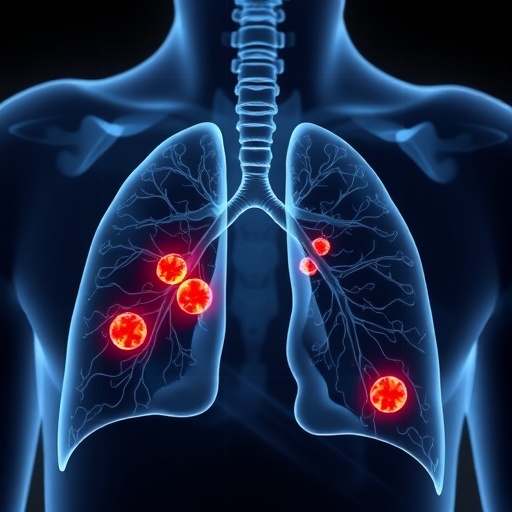
In the realm of pediatric medicine, the management of pulmonary nodules has emerged as a significant challenge for healthcare professionals. These anomalies, which are substantiated by various imaging modalities, pose important diagnostic and management dilemmas as they can represent benign lesions or early indicators of malignancy. As technology advances, particularly in the integration of artificial intelligence (AI), the approach to diagnosing and evaluating these pulmonary nodules has begun to change dramatically.
Pulmonary nodules are defined as small roundish opacities found on chest imaging and are increasingly common in children due to improvements in radiological assessments. Unlike adults, the incidence of cancer in pediatric patients with pulmonary nodules is relatively low; however, precise evaluation is critical. Children often present underlying conditions such as infections or immunodeficiency that may result in pulmonary nodules that can be easily misinterpreted as neoplastic processes. Thus, it is essential that radiologists, pediatricians, and oncologists work collaboratively to differentiate between benign and malignant processes.
The current state of knowledge surrounding pediatric pulmonary nodules is evolving rapidly. A major focus of ongoing research is the development of standardized guidelines for management, which would include recommendations on when to perform follow-up imaging or invasive procedures. Current literature often presents disparate opinions on the requisite action following the discovery of nodules, especially in asymptomatic cases. Since the consequences of misdiagnosis can include unnecessary procedures or late-stage cancer detection, the call for standardized protocols grows louder among pediatric health professionals.
In recent years, artificial intelligence has taken center stage in radiological evaluation. One key advancement lies in machine learning algorithms capable of analyzing vast datasets of radiographic images. These algorithms can identify patterns that may be imperceptible to the human eye, greatly enhancing the accuracy of nodule characterization. For instance, AI can assist in distinguishing between different types of nodules—whether they are infectious, inflammatory, or benign—based on features such as size, shape, and growth rate.
AI applications are not merely a theoretical concept; they have already begun to infiltrate pediatric radiology practices. Numerous studies indicate that AI-enhanced imaging analysis can significantly reduce interpretation time while simultaneously improving diagnostic confidence. This capability is particularly beneficial in pediatrics, where speed can be crucial for timely treatment. Moreover, AI can provide a second opinion, which may serve to mitigate the risk of human error in diagnosis.
Nonetheless, while the integration of AI in measuring and interpreting pulmonary nodules is promising, it does not come without its challenges. The quality of AI’s performance is contingent upon the quality and diversity of the training datasets. If the data used to train these algorithms are biased or lack representation of diverse populations, then AI outputs may also reflect those limitations, potentially impacting patient care. Therefore, rigorous validation across different demographics is essential for the algorithms to be deemed reliable.
Furthermore, as healthcare systems worldwide gear toward digitization, the potential of AI will flourish. The future of pediatric pulmonary nodule analysis cannot be understated in a world increasingly driven by data. With the loyal use of electronic health records and advanced imaging technologies, AI systems will continue to refine their algorithms, resulting in models that become ever more reliable and efficient.
Additionally, the role of telemedicine in the pediatric pulmonary nodule landscape is rapidly evolving. As parents become more vigilant about their children’s health and seek care from multiple providers, telehealth can facilitate expedited assessments. Pediatric practitioners can easily share imaging studies and utilize AI assistive technologies in real-time consultations, fostering timely discussions that reinforce decision-making processes in clinical management.
Collaboration between radiologists and AI specialists is critical in optimizing the pathway from imaging to diagnosis. As pediatric patients often require a multi-faceted approach involving respiratory specialists, oncologists, and interventional teams, the collective efforts of these experts, aided by AI, can usher in new paradigms in care optimization. Integrating inputs from various specialties will ensure that treatment modalities are tailored to the unique needs of pediatric patients.
As we advance deeper into the AI revolution, the emphasis on pediatric-centered care must remain paramount. The pediatric population is not just “small adults”; biological differences impact disease progression, response to treatment, and even how diseases manifest. AI tools developed for adults may need recalibrations to best suit the intricacies of pediatric physiology, emphasizing the need for research focused specifically on children.
In conclusion, the current landscape regarding pediatric pulmonary nodules necessitates a multidisciplinary approach, leveraging advancements in technology and medicine for improved patient outcomes. The collaboration across various specialties, coupled with AI innovations, has the potential to revolutionize how we understand, diagnose, and ultimately treat pediatric pulmonary nodules. However, as we navigate this frontier, the focus must remain on maintaining high standards for accuracy, equity in data representation, and patient-centered care.
As we look forward to the developments that lie ahead, it is clear that the intersection of artificial intelligence and pediatric pulmonary medicine promises an era of more rapid, accurate, and sensitive diagnosis of pulmonary nodules. The implications for treatment strategies could be profound, altering the landscape of pediatric healthcare for generations to come.
Tanimoto, A., Morin, C., Schapiro, A. et al. Pediatric pulmonary nodules: current state of knowledge, AI applications, and future directions.
Pediatr Radiol (2025). https://doi.org/10.1007/s00247-025-06447-4
Cite Scienmag News
Harold Sullivan. (November 12, 2025). Pediatric Lung Nodules: Insights, AI Innovations, Future Prospects. Scienmag. https://scienmag.com/pediatric-lung-nodules-insights-ai-innovations-future-prospects/
Harold Sullivan. "Pediatric Lung Nodules: Insights, AI Innovations, Future Prospects." Scienmag, 12 November 2025, https://scienmag.com/pediatric-lung-nodules-insights-ai-innovations-future-prospects/. Accessed 4 September 2026.
Harold Sullivan. "Pediatric Lung Nodules: Insights, AI Innovations, Future Prospects." Scienmag. November 12, 2025. https://scienmag.com/pediatric-lung-nodules-insights-ai-innovations-future-prospects/


