


As climate change intensifies and drought conditions worsen across large swaths of the United States, the stability of staple crops like wheat is increasingly threatened. Winter wheat, a critical grain used globally in flour production, has seen significant vulnerability to heat and water stress, prompting researchers and producers to seek resilient alternatives that can sustain food security. Among these alternatives, pearl millet has emerged as a promising candidate due to its robust drought resistance and rich nutritional profile. Cultivated for centuries across the challenging environments of Africa and India, pearl millet is a gluten-free grain that thrives where other crops falter, making it an attractive option for reimagining the future of bread and grain products in the United States.
Understanding whether American consumers would accept pearl millet as a substitute for wheat has been a critical question. Collaborative researchers from Drexel University’s Food Lab, the University of Pennsylvania, City University of New York (CUNY), Brooklyn College, and the Monell Chemical Senses Center have undertaken pioneering pilot studies focusing on the sensory qualities and acceptability of fermented pearl millet flour incorporated into bread products. Their research, recently published in the peer-reviewed journal Foods, charts new territory at the intersection of food science, nutrition, and culinary science, shedding light on how fermentation techniques can mediate flavor and nutrition in millet-based foods.
Fermentation, an ancient food preparation method long used worldwide, plays a key role in enhancing the nutritional profile of pearl millet. This grain naturally contains phytic acid, often labeled an “antinutrient” because it binds essential minerals like calcium and iron, limiting their absorption during digestion. By fermenting pearl millet, researchers can significantly reduce phytic acid levels, thereby increasing the bioavailability of vital micronutrients without relying on extensive processing techniques. This approach aligns with consumer trends favoring minimally processed and naturally prepared foods, representing a synthesis of traditional knowledge and modern scientific validation.
The first pilot study engaged 12 adult participants to evaluate flat breads made exclusively from pearl millet fermented for varying durations. Results showed a clear inverse relationship between fermentation time and phytic acid concentration: the longer the fermentation, the lower the antinutrient content. However, this nutritional benefit came with a sensory trade-off. Extended fermentation led to a noticeable decline in taste acceptability, underscoring the delicate balance between enhancing nutrition and maintaining palatability — a crucial factor in product adoption and sustained consumer demand.
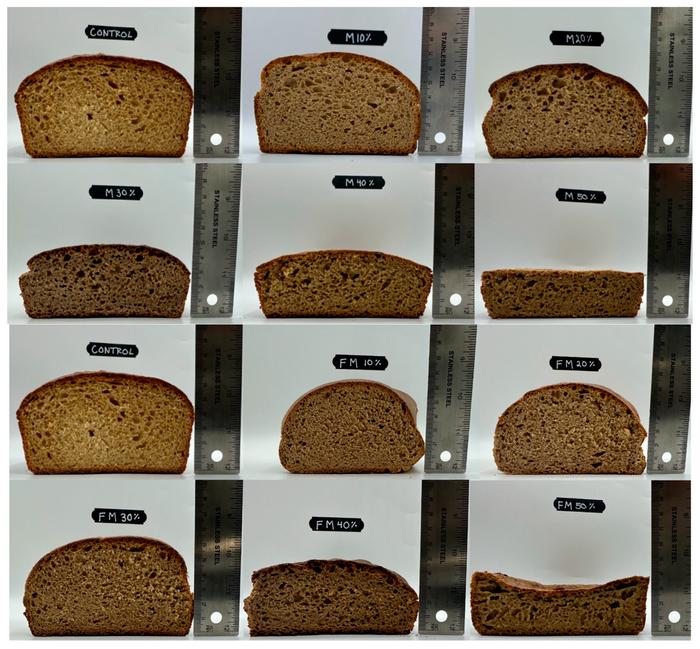
Building upon these insights, the second pilot study expanded the scope to sandwich-style whole grain breads, testing the impact of substituting wheat flour with different proportions of fermented pearl millet. In this phase, 30 adult participants assessed bread formulations containing from 0% up to 50% fermented millet flour. The sensory evaluations highlighted a threshold of about 20% substitution, beyond which consumer liking and purchase intent decreased significantly. This finding not only emphasizes the importance of gradual integration of alternative grains in popular food products but also provides a quantifiable benchmark for food manufacturers aiming to innovate without alienating consumers.
Dr. May M. Cheung, lead author and assistant professor at CUNY Brooklyn College, emphasized the role of fermentation in optimizing millet’s nutritional and sensory attributes. Cheung noted that while the fermentation technique is simple and cost-effective, its impacts are profound, enabling nutrient enhancement while preserving acceptable taste profiles. By employing fermentation, the study leverages a biotechnological process that taps into the natural enzymatic breakdown of antinutrients, heralding a pragmatic strategy for improving grains’ nutritional value within the supply chain.
Such interdisciplinary collaboration was crucial to the study’s success. As Jonathan Deutsch, director of Drexel’s Food Lab and co-author of the research, explained, the convergence of food chemistry, cultural food practices, and sensory analysis provided a holistic understanding distinct from traditional food science approaches. The involvement of partners at Monell Chemical Senses Center and the University of Pennsylvania enriched the research with insights into the sensory and perceptual components shaping consumer responses to millet-infused breads, integrating chemistry, neuroscience, and culinary art into the development process.
The implications of this research stretch far beyond bread recipes. Pearl millet’s inherent resilience to environmental stressors and its underutilization in the U.S. diet mirror broader challenges faced by agricultural and food systems under climate change. Incorporating fortified millet products could diversify and stabilize food supplies, reduce dependency on climate-sensitive crops, and promote dietary variety rich in essential nutrients. Additionally, the fermentation method identified is accessible for both industrial scale and small-scale food preparation, offering flexible pathways to scale-up integration.
Researchers anticipate that further refinement of the fermentation process and the development of tailored bread formulations could push consumer acceptance beyond current substitution thresholds. Cheung speculated that populations more accustomed to fermented foods might tolerate even higher levels of millet flour, suggesting cultural familiarity strongly influences sensory acceptance. This points to opportunities for targeted marketing and product adaptation to niche consumer demographics receptive to innovative grain blends.
The study’s outcomes also resonate with broader nutrition science goals. By successfully mitigating the impact of antinutrients like phytic acid, fermented pearl millet enhances mineral uptake, potentially addressing micronutrient deficiencies common in many populations. This aligns with public health strategies aimed at food-based interventions that improve nutritional outcomes without necessitating supplementation or fortification. Thus, the work combines food security, sustainability, and health promotion within a unified framework.
Looking ahead, the ongoing interdisciplinary collaboration between Drexel University, CUNY Brooklyn College, University of Pennsylvania, Monell Chemical Senses Center, and other partners will continue to explore the “sweet spot” — the optimal balance between health benefits and consumer pleasure. Fine-tuning this balance is essential for the successful integration of nutrient-dense but sensory-challenging ingredients into everyday foods, unlocking the potential for millet and other alternative grains to reshape the American food landscape.
The research’s value extends beyond millet to a wider class of climate-resilient, nutrient-rich grains. The demonstrated feasibility of fermentation as a transformative step suggests scalable solutions for enhancing the palatability and nutritional value of various underutilized cereals and pseudocereals. As food systems worldwide grapple with environmental, economic, and health pressures, such innovations offer practical, culturally informed, and scientifically backed pathways toward sustainable diets.
In summary, the study charts a promising course for using traditional food processes like fermentation to revitalize the American grain supply in response to climate-induced agricultural challenges. By balancing flavor, texture, and nutrition, fermented pearl millet bread may soon become more than a curiosity — it might be a cornerstone of resilient and healthful diets adapted for a changing world.
News Publication Date: 3-Mar-2025
Web References:
https://www.mdpi.com/2304-8158/14/5/871
http://dx.doi.org/10.3390/foods14050871
References:
Cheung, M. M., Deutsch, J., Miller, L., Sherman, R., Katz, S. H., & Wise, P. M. (2025). Sensory Properties and Acceptability of Fermented Pearl Millet Among U.S. Consumers. Foods, 14(5), 871.
Keywords
Nutrition, Fermentation, Bread, Food production, Wheat, Taste, Food chemistry
Cite Scienmag News
Alan Morgan. (April 15, 2025). Pearl Millet Emerges as a Healthy, Sustainable, Gluten-Free Alternative to Wheat in the US, According to Taste Research. Scienmag. https://scienmag.com/pearl-millet-emerges-as-a-healthy-sustainable-gluten-free-alternative-to-wheat-in-the-us-according-to-taste-research/
Alan Morgan. "Pearl Millet Emerges as a Healthy, Sustainable, Gluten-Free Alternative to Wheat in the US, According to Taste Research." Scienmag, 15 April 2025, https://scienmag.com/pearl-millet-emerges-as-a-healthy-sustainable-gluten-free-alternative-to-wheat-in-the-us-according-to-taste-research/. Accessed 3 September 2026.
Alan Morgan. "Pearl Millet Emerges as a Healthy, Sustainable, Gluten-Free Alternative to Wheat in the US, According to Taste Research." Scienmag. April 15, 2025. https://scienmag.com/pearl-millet-emerges-as-a-healthy-sustainable-gluten-free-alternative-to-wheat-in-the-us-according-to-taste-research/


