


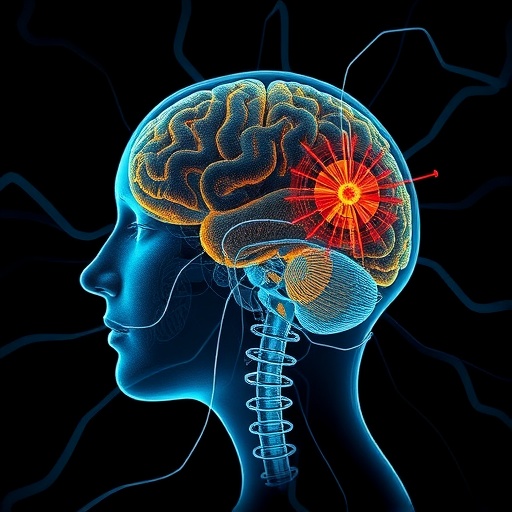
In the relentless pursuit to decipher the enigmatic neural circuitry underlying obsessive-compulsive disorder (OCD), a groundbreaking study published in Translational Psychiatry in 2026 reveals how the directionality of electrical fields generated during transcranial direct current stimulation (tDCS) profoundly influences therapeutic outcomes. This pioneering research, conducted by Gosez, Germaneau, El Houari, and colleagues, represents a monumental leap in personalized neuromodulation by integrating patient-specific brain models to optimize treatment efficacy for OCD, a debilitating neuropsychiatric condition affecting millions worldwide.
OCD is characterized by intrusive, persistent thoughts (obsessions) and repetitive behaviors (compulsions) that significantly impair quality of life. Traditional pharmacotherapies and cognitive-behavioral therapies often yield inconsistent results, prompting the exploration of alternative interventions. Neuromodulation techniques like tDCS, delivering low amplitude electrical currents to the cerebral cortex, have emerged as promising tools. However, the variability in patient response has stymied widespread clinical adoption. This new study challenges the conventional one-size-fits-all paradigm by probing the nuanced relationships between the anatomical and electrical properties of each patient’s brain and their response to stimulation.
The authors adopted an innovative computational modeling framework that incorporates high-resolution magnetic resonance imaging (MRI) data from individual OCD patients to simulate the biophysical distribution of the electric field during tDCS. By doing so, they accurately captured how current flows through complex cortical layers and subcortical structures implicated in OCD pathology, such as the orbitofrontal cortex, anterior cingulate cortex, and basal ganglia. Importantly, their simulations delineated the vectorial properties of the electric field—its amplitude and directionality—demonstrating that these factors critically modulate neuronal excitability and circuit dynamics.
At the heart of their findings is the revelation that the orientation of the electric field relative to cortical columns and fiber tracts determines whether targeted brain regions are excited or inhibited, thereby influencing symptom improvement. Patient-specific models showed that stimulating neural elements along their longitudinal axis enhances synaptic plasticity and network connectivity, fostering therapeutic benefits. Conversely, fields oriented perpendicularly or misaligned with neuronal architecture may attenuate treatment efficacy or even exacerbate symptoms. This insight underscores the need for precision-guided electrode placement tailored to the unique neuroanatomy and conductivity profiles of each individual.
The study meticulously compared clinical outcomes of OCD patients who underwent tDCS sessions informed by their personalized electric field maps versus those treated under conventional protocols. The personalized group exhibited a statistically significant reduction in OCD symptom severity, as measured by standardized clinical scales, alongside improved functional connectivity within cortico-striatal-thalamo-cortical loops. These results suggest that patient-specific modeling not only refines the biophysical targeting of tDCS but also translates to meaningful behavioral and cognitive improvements.
Technically, the researchers harnessed finite element modeling (FEM) to solve the complex Maxwell equations governing electric field propagation in heterogeneous brain tissues. This approach enabled them to incorporate variabilities in skull thickness, cerebrospinal fluid distribution, and white matter anisotropy. By integrating diffusion tensor imaging (DTI) data, they further accounted for directional conductivity along axonal fibers, a critical determinant of current flow. Such rigorous modeling offers unprecedented resolution in predicting the interaction between exogenous electrical stimulation and endogenous neurophysiology.
Beyond the immediate clinical implications, this study heralds a conceptual shift in neuromodulation strategies. Rather than relying solely on empirically derived electrode placements, clinicians and researchers may soon deploy sophisticated simulations to forecast optimal stimulation parameters individualized for each patient’s brain structure and functional pathology. This paradigm could extend beyond OCD to other neuropsychiatric disorders like depression, anxiety, and post-traumatic stress disorder, where heterogeneity in treatment response remains a major obstacle.
Additionally, the authors discuss the mechanistic underpinnings by which electric field directionality influences synaptic plasticity. Efficacy appears linked to modulating long-term potentiation (LTP) and long-term depression (LTD) at glutamatergic synapses within cortico-striatal networks. Fields aligned with dendritic trees preferentially facilitate excitatory inputs, enhancing neural adaptability. These findings dovetail with emerging evidence from cellular and animal models emphasizing the importance of spatial orientation in electrical stimulation-induced plasticity.
The technological advancements in imaging and modeling employed here also open avenues for real-time adaptive neuromodulation. Future devices might incorporate closed-loop feedback systems, dynamically adjusting electric field directionality based on ongoing neural activity and symptom fluctuation, thus maximizing therapeutic precision and minimizing side effects. Such intelligent interventions represent the future frontier of personalized psychiatry.
Importantly, this research navigated the inherent ethical and practical challenges associated with individualized brain stimulation. The authors emphasize ensuring patient safety by rigorously validating computational models against empirical electrophysiological data. Furthermore, they advocate for developing standardized protocols and accessible software tools that enable widespread implementation of patient-specific tDCS modeling in clinical settings.
The collaborative nature of this work, integrating neuroscience, engineering, clinical psychiatry, and computational modeling, epitomizes the interdisciplinary efforts required to tackle complex brain disorders. By bridging these domains, the authors exemplify how convergent science accelerates innovation and translates laboratory insights into tangible patient benefits.
Looking forward, the study’s authors propose expanding their modeling framework to incorporate other neuromodulatory modalities such as transcranial magnetic stimulation (TMS) and deep brain stimulation (DBS), potentially creating a unified platform to guide various brain stimulation therapies under a precision medicine umbrella. They also highlight the value of longitudinal studies tracking how changes in brain morphology and connectivity over time influence optimal stimulation strategies.
In essence, this research not only advances our understanding of the biophysical mechanisms underpinning tDCS in OCD but also sets the stage for a new era of brain stimulation personalized at the individual level. The promise of harnessing electric field directionality to transform therapeutic outcomes could revolutionize the treatment landscape for OCD and beyond, offering hope to patients grappling with treatment-resistant neuropsychiatric illnesses.
The implications of such a patient-specific approach are vast, touching on healthcare economics by potentially reducing trial-and-error treatment costs and enhancing quality of life through more effective symptom control. As this methodology gains traction, it could catalyze the development of customized neuromodulation devices, tailored to each patient’s unique brain blueprint, thereby actualizing the long-sought goal of precision psychiatry.
In sum, Gosez and colleagues’ seminal work represents a quantum leap in neuromodulation research, unraveling the critical role of electric field directionality in shaping treatment outcomes for OCD. By fusing sophisticated modeling with clinical insights, this study charts an inspiring path toward more efficacious, individualized brain stimulation therapies, illuminating new horizons in our battle against complex psychiatric disorders.
Cite Scienmag News
Glenn Wilkins. (June 23, 2026). Patient-Specific tDCS Modeling Predicts OCD Treatment Success. Scienmag. https://scienmag.com/patient-specific-tdcs-modeling-predicts-ocd-treatment-success/
Glenn Wilkins. "Patient-Specific tDCS Modeling Predicts OCD Treatment Success." Scienmag, 23 June 2026, https://scienmag.com/patient-specific-tdcs-modeling-predicts-ocd-treatment-success/. Accessed 3 September 2026.
Glenn Wilkins. "Patient-Specific tDCS Modeling Predicts OCD Treatment Success." Scienmag. June 23, 2026. https://scienmag.com/patient-specific-tdcs-modeling-predicts-ocd-treatment-success/


