

In a groundbreaking new study published in BMC Geriatrics, researchers have unveiled intricate connections linking subjective health perceptions, lifestyle habits, and the concept of successful aging among older adults in South Korea. This research utilizes an advanced path analysis approach to dissect how these variables interplay and differ across various age groups within the elder population. As the world grapples with the complexities of an aging demographic, this study offers vital insights that could reshape elderly healthcare paradigms and public health policies.
Subjective health status—how individuals perceive their own health regardless of clinical diagnosis—has long been recognized as a significant predictor of morbidity and mortality. By incorporating this self-assessment into their statistical model, the authors emphasize the power of personal health perceptions as not merely reflections of physical condition, but as active contributors to lifestyle choices and aging outcomes. Surprisingly, subjective health status exerts a direct influence on the propensity to engage in healthy lifestyle behaviors, which in turn promotes markers of successful aging, such as maintaining functional independence and psychological well-being.
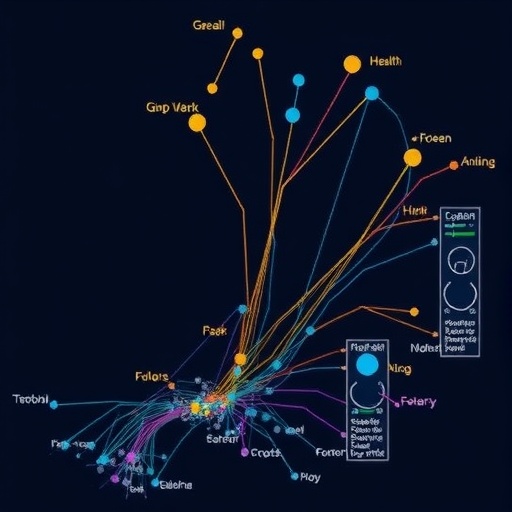
The study hinges on an elaborate path analysis framework, a sophisticated form of structural equation modeling that enables researchers to explore indirect and direct relationships among multiple variables simultaneously. This technique marks a departure from traditional correlation or regression analyses by clarifying causal pathways, allowing for nuanced inferences about how subjective health influences lifestyle and ultimately successful aging. In this context, successful aging is conceptualized not only as the avoidance of disease but also as an active, multifaceted construct encompassing physical, cognitive, and emotional resilience.
One of the pivotal revelations from this research is the age-dependent heterogeneity in these pathways. The study segments older adults into different age brackets, meticulously comparing the strength and direction of relationships between subjective health, lifestyle habits, and aging success within each segment. Results suggest that younger subsets of older adults rely more heavily on lifestyle habits as mediators between health perception and successful aging. Meanwhile, in advanced age groups, subjective health exerts a more direct influence, potentially indicating that as people age, their internal health perception becomes a dominant driver of their aging experience.
Healthy lifestyle behaviors, which the study defines broadly to include physical activity, nutritional habits, smoking cessation, and social engagement, emerge as critical conduits enhancing the effect of subjective health status on aging outcomes. This finding underscores the synergistic interplay where positive health perceptions motivate healthier choices, which then further reinforce an individual’s sense of well-being and functional capability. This bidirectional reinforcement cycle highlights potential intervention points for health promotion programs targeted at older populations.
The research also challenges the monolithic view of aging by illustrating that successful aging is a dynamic state influenced by a constellation of behavioral and psychological factors. This layered understanding encourages practitioners and policymakers to tailor interventions across different stages of older adulthood. For instance, younger older adults might benefit more from programs designed to cultivate sustainable healthy habits, while for the oldest groups, boosting subjective health perception through mental health support and symptom management could yield greater gains.
Data for this study were meticulously collected from a representative sample of Korean older adults, leveraging comprehensive survey tools assessing subjective health status, detailed lifestyle inventories, and standardized measures of successful aging. The demographic and cultural context of Korea offers a valuable lens, given the nation’s rapid aging rates and its unique blend of traditional lifestyles and modernization pressures. Understanding how these factors interact specifically in Korean society may illuminate universal aging mechanisms applicable across other global populations.
Moreover, the study’s incorporation of multi-age path analysis provides a template for future investigations into aging in diverse populations. By teasing apart age-related variations in health behavior dynamics, researchers worldwide can design more personalized, stage-specific aging interventions. This methodological innovation reflects a growing trend in gerontology, emphasizing precision medicine approaches that respect the heterogeneity of aging trajectories.
Beyond its scientific contributions, this research holds profound societal implications. Worldwide, governments face mounting challenges in supporting aging populations while containing healthcare costs. This study suggests that policies fostering positive health perceptions and promoting healthy lifestyle adoption could not only improve individual quality of life but also reduce systemic burdens associated with age-related morbidity. Such policies may include education campaigns, community fitness initiatives, nutrition guidance, and mental health resources optimized for older adults.
The findings also advocate for integrating subjective health assessments into routine clinical practice. Healthcare providers often prioritize objective biomedical markers, yet this study stresses the invaluable prognostic utility of patients’ self-rated health. Incorporating these subjective measures could refine risk stratification, guide personalized counseling, and monitor intervention efficacy over time with greater sensitivity.
Despite its strengths, the study acknowledges certain limitations, including reliance on cross-sectional data, which restrict causal interpretation, and possible cultural specificity to Korean older adults. Future longitudinal research is warranted to validate these pathways, test intervention impacts dynamically, and explore potential biological mechanisms underlying these psychosocial interactions. Nevertheless, the current study sets a high standard for aging research architecture.
In sum, the intricate web connecting subjective health status, healthy lifestyle habits, and successful aging unfolds as a complex, age-dependent pathway offering new hope for enhancing elderly well-being. Through leveraging advanced path analysis and culturally contextualized data, this research illuminates actionable avenues for supporting older adults in maintaining vitality and autonomy. As global societies navigate the demographic shift toward higher elderly proportions, such evidence-based insights guide the creation of smarter, more compassionate aging support systems.
This study represents a beacon in gerontological research, weaving together psychology, behavioral science, and public health to chart a richer understanding of what it means to age successfully. By moving beyond simplistic models and embracing complexity, it paves the way for innovations that honor individual experiences and cultural contexts. The ripple effects of these findings could spark transformative changes in how aging populations are empowered worldwide.
The scientific community eagerly awaits subsequent research building on these findings to refine intervention strategies further and decipher biological underpinnings linking subjective experiences with physical aging processes. Meanwhile, this work stands as a clarion call for holistic approaches that balance mind, body, and lifestyle in pursuit of optimal aging trajectories. With the rapid growth of the global older adult population, harnessing such nuanced understanding is not only timely but imperative to foster societies that value aging as a stage of continued growth and fulfillment.
As technological tools and data analytic methods evolve, cross-disciplinary collaborations will undoubtedly deepen exploration into these complex pathways. Multinational comparisons could also shed light on cultural variability versus universal principles in aging processes. Ultimately, this study underscores that successful aging is a mosaic shaped by multifaceted determinants, each susceptible to thoughtful intervention and compassionate care.
In conclusion, the path analysis conducted by Shin, Gu, Sun, and colleagues offers a vibrant and detailed portrait of aging among Korean older adults. Through unveiling the layered interactions between subjective health perceptions, lifestyle practices, and aging outcomes, it equips stakeholders with novel insights and methodologies. This pivotal work sets a trajectory toward healthier, more empowered elderly populations—transforming how science, medicine, and society approach this inevitable stage of life.
Cite Scienmag News
Beatrice Stafford. (May 5, 2026). Path Analysis of Aging, Health, and Lifestyle in Koreans. Scienmag. https://scienmag.com/path-analysis-of-aging-health-and-lifestyle-in-koreans/
Beatrice Stafford. "Path Analysis of Aging, Health, and Lifestyle in Koreans." Scienmag, 5 May 2026, https://scienmag.com/path-analysis-of-aging-health-and-lifestyle-in-koreans/. Accessed 3 September 2026.
Beatrice Stafford. "Path Analysis of Aging, Health, and Lifestyle in Koreans." Scienmag. May 5, 2026. https://scienmag.com/path-analysis-of-aging-health-and-lifestyle-in-koreans/


