


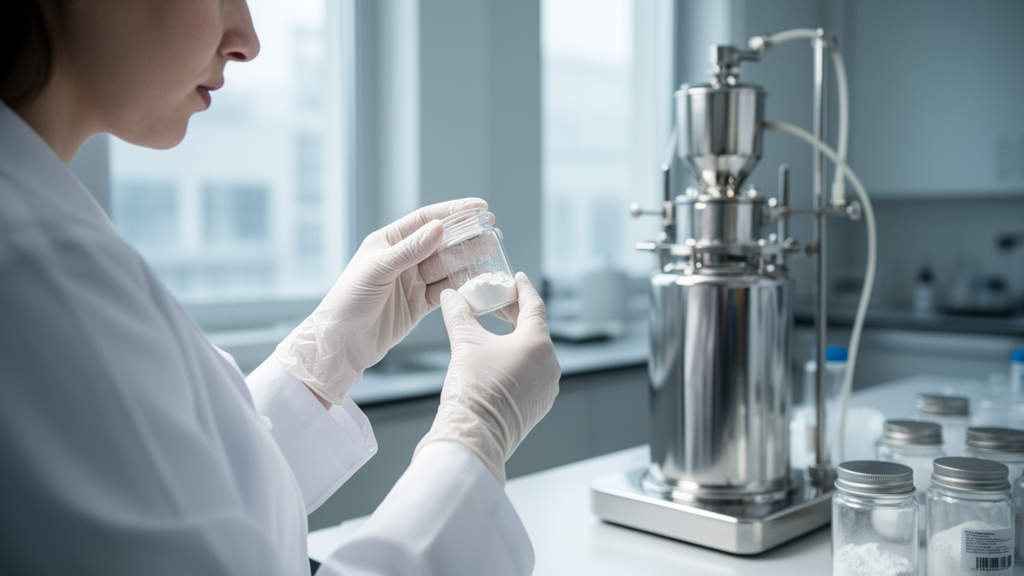
A major new special issue of the Journal of Pharmaceutical Investigation is set to spotlight one of the most consequential yet underappreciated frontiers in modern medicine: the science of turning molecules into medicines. Titled Translational Advances in Pharmaceutical Dosage Form Development Based on Particle Engineering and Formulation Science, the collection will be published in January 2027, with submissions accepted until June 30, 2026. Guest edited by Sung-Joo Hwang of Yonsei University, Min-Soo Kim of Pusan National University, and Heejun Park of Duksung Women’s University, the issue aims to gather research that bridges the long-standing gap between laboratory-scale formulation breakthroughs and the drug products that actually reach patients. For a field that quietly determines whether a promising molecule becomes a life-changing therapy or an expensive failure, the stakes could hardly be higher.
The central problem the special issue addresses is deceptively simple to state and brutally difficult to solve. An estimated large fraction of newly discovered drug candidates are poorly soluble in water, meaning they dissolve so slowly or incompletely in the gastrointestinal tract that the body cannot absorb a therapeutic dose. A molecule may bind its biological target with exquisite precision in a test tube, yet if it cannot dissolve in intestinal fluid and cross into the bloodstream, it is clinically useless. Particle engineering attacks this bottleneck at its physical root. By reducing particles to the micrometer or nanometer scale, scientists dramatically increase the surface area exposed to dissolution media, accelerating the rate at which the drug enters solution. Techniques such as wet milling, high-pressure homogenization, spray drying, and supercritical fluid processing allow formulators to tailor not just size, but shape, surface charge, and solid-state form, each of which influences how a drug behaves inside the body.
Equally important is the control of a drug’s solid state, a theme the issue explicitly highlights under solid-state characterization and control. Many pharmaceutical compounds can exist as crystalline polymorphs, chemically identical structures whose molecules pack together in different geometric arrangements. These arrangements can differ enormously in solubility, stability, and even mechanical properties such as tabletability. The most infamous cautionary tale remains ritonavir, an HIV drug whose late-appearing, more stable polymorph rendered existing formulations ineffective in the late 1990s, forcing a market withdrawal and a costly reformulation. Modern formulators therefore deploy an arsenal of analytical tools, including X-ray powder diffraction, differential scanning calorimetry, dynamic vapor sorption, and solid-state nuclear magnetic resonance, to map every crystalline and amorphous form a molecule can adopt and to ensure the chosen form survives manufacturing, storage, and the journey to the patient.
Amorphous solid dispersions represent one of the most powerful strategies in this arsenal and are likely to feature prominently in the issue. By dispersing a crystalline drug within a polymeric matrix and then locking the mixture into a glassy, disordered state through hot-melt extrusion or spray drying, formulators can achieve apparent solubilities many times higher than the crystal ever allows. The catch is thermodynamics: the amorphous state is inherently unstable, and the drug molecules constantly seek to recrystallize, which would erase the solubility advantage. Decades of research into polymer-drug interactions, molecular mobility, and the role of moisture have produced design principles that now allow these systems to remain stable for years on the shelf. Translating that understanding into robust commercial processes, however, remains an active challenge, particularly for molecules that are simultaneously poorly soluble and chemically unstable.
The special issue’s scope extends well beyond oral tablets and capsules. Advanced formulation strategies for injectable, inhalable, transdermal, and other delivery routes are explicitly listed among its topics, reflecting the reality that each route imposes its own particle-level demands. Inhaled medicines, for example, must deliver particles in a narrow aerodynamic diameter range, roughly one to five micrometers, so that they deposit deep in the lungs rather than sticking in the throat or being exhaled. That requirement has driven sophisticated engineering of carrier particles, engineered agglomerates, and soft spherical agglomerates that flow well through inhaler devices yet disperse efficiently in the turbulent airflow of a breath. Injectable formulations face a different constraint: particles and droplets must be small and uniform enough to pass safely through needles and to avoid triggering immune responses, which has fueled advances in lipid nanoparticles, polymeric microspheres for sustained release, and nanosuspensions for long-acting depot injections.
The lipid nanoparticle platform, thrust into global prominence by mRNA vaccines against COVID-19, exemplifies how particle engineering can enable entirely new therapeutic modalities. These structures, typically under one hundred nanometers, encapsulate fragile genetic cargo and shepherd it into cells, and their design depends on precise control of lipid composition, particle size, surface charge, and manufacturing conditions such as microfluidic mixing rates. The same principles now underpin efforts to deliver gene-editing machinery, siRNA therapeutics, and personalized cancer vaccines. A special issue devoted to translational formulation science arrives at a moment when the pharmaceutical industry is racing to industrialize these platforms, moving from emergency-scale production to routine, quality-controlled manufacturing of nanomedicines across dozens of indications.
Scale-up, in fact, emerges as a defining theme of the issue. A formulation that performs beautifully in a one-liter beaker can fail spectacularly in a thousand-liter vessel, where mixing times, heat transfer, and drying kinetics change in ways that alter particle size distributions and solid-state forms. Translational formulation science seeks predictive models and platform technologies that make the journey from bench to plant less perilous. Continuous manufacturing, in which powder and liquid streams flow through connected unit operations rather than proceeding in discrete batches, is reshaping this landscape. Spray drying, hot-melt extrusion, and continuous granulation lines can now run for days with real-time monitoring, offering smaller footprints, tighter quality control, and faster response to demand surges, advantages that proved decisive during the pandemic vaccine rollout.
Underpinning much of this transformation are the twin frameworks of Quality by Design and Process Analytical Technology, both named explicitly in the issue’s scope. Quality by Design inverts the traditional testing paradigm: instead of checking finished products for defects, manufacturers build deep scientific understanding of how raw material attributes and process parameters determine critical quality attributes, then design formulations and processes that remain within a proven control space. Process Analytical Technology supplies the sensory apparatus, using near-infrared spectroscopy, Raman spectroscopy, laser diffraction, and other inline probes to watch critical parameters evolve in real time during blending, granulation, drying, and coating. Regulators including the United States Food and Drug Administration and the European Medicines Agency have championed these approaches for two decades, and their maturation means that modern dosage form development is as much a data science as a bench science, with multivariate models and digital twins increasingly guiding decisions once left to trial and error.
For the guest editors, the unifying goal is translation, the often tortuous passage from a clever idea in a formulation lab to a stable, manufacturable, regulator-approved product that clinicians can prescribe. The topics gathered for the January 2027 issue trace that passage end to end: particle engineering that rescues insoluble molecules, solid-state science that guarantees stability, delivery technologies matched to the biology of each route, manufacturing innovations that make production economical, and quality frameworks that satisfy regulators without stifling innovation. Researchers working in these areas have until June 30, 2026, to submit their contributions. As drug modalities grow ever more complex, from biologics and RNA therapeutics to cell and gene therapies, the humble question of how to get an active molecule into the right particle, in the right form, at the right place in the body is becoming the decisive question of twenty-first-century pharmacology, and this special issue positions itself at the heart of that conversation.
Subject of Research: Translational pharmaceutical dosage form development based on particle engineering and formulation science
Article Title: Special Issue: Translational Advances in Pharmaceutical Dosage Form Development Based on Particle Engineering and Formulation Science
Article References: Special Issue: Translational Advances in Pharmaceutical Dosage Form Development Based on Particle Engineering and Formulation Science. (n.d.). Original publication
Image Credits: AI Generated
DOI: Not provided
Keywords: particle engineering, formulation science, drug delivery, bioavailability, solid-state characterization, amorphous solid dispersions, lipid nanoparticles, Quality by Design, Process Analytical Technology, continuous manufacturing, scale-up, Journal of Pharmaceutical Investigation
Cite Scienmag News
Denise Maddox. (October 8, 2026). Particle Engineering Takes Center Stage as Pharma Formulation Science Pushes Toward the Clinic. Scienmag. https://scienmag.com/particle-engineering-takes-center-stage-as-pharma-formulation-science-pushes-toward-the-clinic/
Denise Maddox. "Particle Engineering Takes Center Stage as Pharma Formulation Science Pushes Toward the Clinic." Scienmag, 8 October 2026, https://scienmag.com/particle-engineering-takes-center-stage-as-pharma-formulation-science-pushes-toward-the-clinic/. Accessed 8 October 2026.
Denise Maddox. "Particle Engineering Takes Center Stage as Pharma Formulation Science Pushes Toward the Clinic." Scienmag. October 8, 2026. https://scienmag.com/particle-engineering-takes-center-stage-as-pharma-formulation-science-pushes-toward-the-clinic/


