


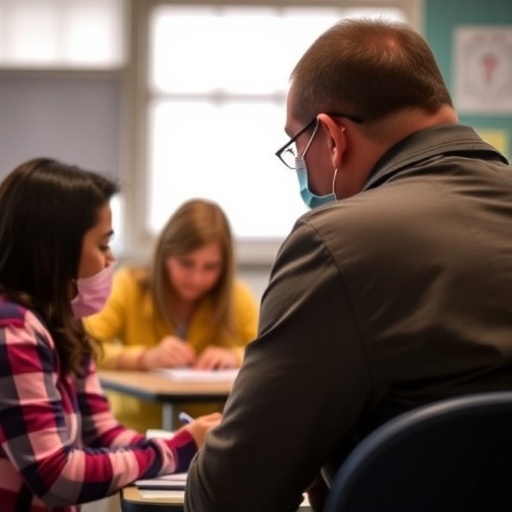
In an unsettling revelation poised to transform how we understand the dynamics within K-12 educational environments, recent research published in Psychology of Violence uncovers that school administrators face disproportionately high levels of verbal and threatening aggression from parents compared to teachers and mental health staff. This comprehensive study, conducted by a team led by Eric Anderman of The Ohio State University, systematically surveyed school personnel across three critical phases relative to the COVID-19 pandemic, revealing trends that defy common assumptions.
Contrary to the expectation that teachers, with their frequent daily interactions with students, would bear the brunt of parental hostility, data indicate that administrators experience these adverse behaviors nearly 3.5 times more frequently after pandemic restrictions lifted. Specifically, 77% of administrators reported verbal or threatening confrontations from parents, compared with significantly lower rates among teachers and mental health professionals.
The study’s scope extended to a nuanced characterization of aggression, including obscene remarks, intimidation, identity-based slurs, verbal threats, bullying, public humiliation, cyberbullying, and sexual harassment. Notably, even during remote learning phases when in-person interactions were minimal, 42% of administrators still reported encounters with verbal or threatening aggression, a figure that escalated as schools resumed normal operations.
This research builds upon almost two decades of inquiry spearheaded by the American Psychological Association’s Task Force on Violence Against Teachers and School Personnel. Previous findings highlighted that nearly half of teachers had contemplated leaving their profession due to violence and threats, with certain academic environments emphasizing grades and test scores exhibiting higher rates of aggression.
What distinguishes this study is its focus on the ‘silent epidemic’ of verbal and threatening aggression—often overshadowed by incidents of physical violence and systematically underreported. Many educators hesitate to disclose these experiences, fearing stigma or perceptions of incompetence, contributing to a substantial gap in reliable national data and media coverage.
Positive parent-school personnel relationships emerge as critical buffers against aggression. The study highlights that robust administrative support, effective disciplinary policies, and community-level investments in education significantly mitigate the frequency of aggressive encounters. The findings further advocate for comprehensive, tiered systems of support and proactive communication strategies to foster safer school climates.
Reflecting on his own early-career experiences with aggression, Anderman underscores the therapeutic value of acknowledging educators’ struggles and the profound impact of positive parental engagement—a rare but powerful tool to reinforce educational motivation and well-being.
This research not only spotlights a largely invisible threat to education professionals but also provides actionable insights to inform policy and practice, advocating for systemic reforms to protect those at the front lines of shaping future generations.
Cite Scienmag News
Courtney Benton. (July 9, 2026). Parents Threaten School Administrators More Than Teachers, Study Finds. Scienmag. https://scienmag.com/parents-threaten-school-administrators-more-than-teachers-study-finds/
Courtney Benton. "Parents Threaten School Administrators More Than Teachers, Study Finds." Scienmag, 9 July 2026, https://scienmag.com/parents-threaten-school-administrators-more-than-teachers-study-finds/. Accessed 3 September 2026.
Courtney Benton. "Parents Threaten School Administrators More Than Teachers, Study Finds." Scienmag. July 9, 2026. https://scienmag.com/parents-threaten-school-administrators-more-than-teachers-study-finds/


