


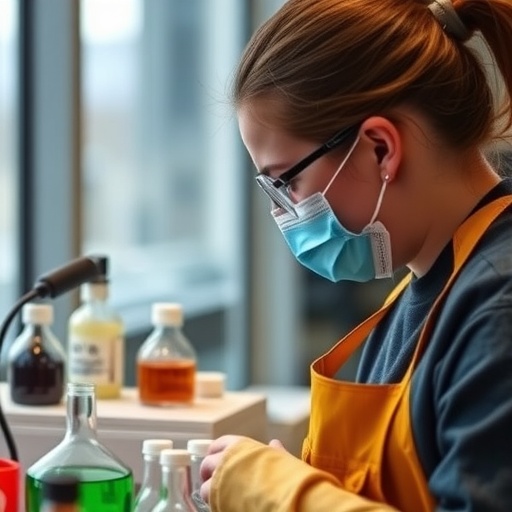
A groundbreaking study published in the esteemed International Journal of Hygiene and Environmental Health reveals a significant association between parental occupational exposure to certain workplace chemicals and the severity of autism spectrum disorder (ASD) symptoms in their children. This research marks one of the first comprehensive examinations to link specific chemical exposures not only to the risk of autism but also to variations in the intensity of autistic traits, cognitive performance, and adaptive behavior.
Autism Spectrum Disorder is a complex neurodevelopmental condition characterized by a spectrum of challenges, including impaired social interaction, difficulty in communication, and the presence of repetitive behaviors. While autism traits differ widely in manifestation and intensity, the scientific community has long recognized both genetic and environmental contributions to its causes. However, this new investigation takes the environmental factor lens a step further, focusing specifically on parental occupational chemical exposures during critical windows of fetal development.
The study utilized data from more than 500 families participating in the extensive CHARGE (ChildHood Autism Risks from Genes and Environment) study, which has been thoroughly tracking developmental and environmental factors related to autism since 2002. Led by Dr. Irva Hertz-Picciotto from the University of California, Davis, the research team collaborated closely with experts from the National Institute for Occupational Safety and Health (NIOSH), combining epidemiological methods with industrial hygiene assessments to produce a nuanced understanding of exposure impacts.
Industrial hygienists conducted meticulous evaluations of parental job histories spanning the three months prior to conception through the birth of the child. These assessments sought to quantify potential exposure levels to sixteen different chemicals and agents commonly encountered in various occupational environments. Among these agents were plastics and polymers such as polyethylene, polypropylene, and polyvinyl chloride (PVC), as well as ethylene oxide, a widely used sterilizing agent, and phenol, a chemical utilized in manufacturing and healthcare industries.
To gauge the autism severity and developmental outcomes, researchers employed the Autism Diagnostic Observation Schedule, 2nd Edition (ADOS-2), a gold-standard clinical instrument that provides calibrated severity scores across multiple domains of autistic behaviors. This tool facilitated an objective measurement framework to correlate parental chemical exposure with the functional profiles of the children diagnosed with autism within the CHARGE cohort.
The study’s findings reveal compelling evidence that workplace chemical exposures, particularly those involving plastics and polymers, are intricately linked to substantial deficits in cognitive functioning and adaptive behaviors among children with autism. Specifically, children whose fathers were exposed to such chemicals in their occupations demonstrated markedly lower scores in fine motor coordination, visual reception, receptive language skills, and expressive language abilities. These cognitive impairments underscore the potential risk paternal exposures pose in shaping neurodevelopmental outcomes.
Moreover, exposure to ethylene oxide was significantly associated with elevated autism severity scores and diminished capacities in daily living skills. Given ethylene oxide’s prevalent use as a sterilizing agent in medical and industrial settings, these findings raise important questions about occupational safety standards and the long-term implications for offspring development.
Phenol exposure also surfaced as a crucial variable, correlating with increased autism severity and the emergence of challenging behavioral symptoms such as marked hyperactivity, repetitive movements, and vocalizations. The neurotoxic effects of phenol compounds, while previously documented in other contexts, have now been linked more explicitly to alterations in autism presentation, suggesting pathways worthy of deeper mechanistic exploration.
Notably, the research highlights the pivotal importance of including both maternal and paternal occupational exposures in epidemiological models. While much previous research has emphasized maternal environmental influences during pregnancy, this study’s results illuminate the often-overlooked contributions of paternal exposures prior to conception. The data suggest that father’s occupational chemical exposures during critical preconception and prenatal periods may have particularly profound effects on the developmental trajectory of children with autism.
Despite its robust methodology and extensive data analysis, the study acknowledges several limitations that underscore the necessity for continuing research. The reliance on self-reported job histories and expert judgment to estimate chemical exposure levels may introduce measurement uncertainties, while the sample size, although substantial, might not capture less common exposures or subtle effects. Importantly, the study delineates that while associations are evident, causation cannot be conclusively established, emphasizing the complexity of disentangling genetic, environmental, and interaction effects.
The implications of this study extend far beyond individual family risk. They signal an urgent call to action for occupational health policies to integrate considerations of reproductive and developmental risks, aiming not only to protect workers but also to safeguard future generations. Enhanced workplace safety protocols, exposure minimization strategies, and targeted public health interventions could significantly reduce the burden of neurodevelopmental disorders linked to environmental toxins.
In light of these findings, researchers advocate for expanded investigations into the mechanistic pathways by which chemical exposures disrupt fetal brain development. They also urge a more inclusive approach that systematically incorporates paternal reproductive health and occupational histories in neurodevelopmental research, advancing a holistic understanding of autism etiology.
The study thus stands as a landmark contribution to environmental health and neurodevelopmental science, shifting the paradigm toward recognizing workplace chemical exposure as a meaningful factor influencing the severity and functional outcomes of autism. Its revelations pave the way for multidisciplinary efforts encompassing public health, occupational safety, neurobiology, and clinical intervention, striving to mitigate preventable risks and improve lives.
As researchers continue to unravel the intricate web of autism influences, this evidence supports a proactive stance on environmental chemical regulation and workplace exposure monitoring. Ultimately, such efforts may translate into refined public health policies and better outcomes for individuals and families affected by autism spectrum disorder worldwide.
News Publication Date:
28-Jun-2025
Web References:
https://doi.org/10.1016/j.ijheh.2025.114613
https://www.cdc.gov/autism/index.html
https://environmentalhealth.ucdavis.edu/
https://health.ucdavis.edu/mind-institute/
References:
McCanlies E, Hertz-Picciotto I, et al. The effects of parental occupational exposures on autism spectrum disorder severity and skills in cognitive and adaptive domains in children with autism spectrum disorder. International Journal of Hygiene and Environmental Health. 2025 Jun 28; [DOI:10.1016/j.ijheh.2025.114613].
Cite Scienmag News
Ophelia Keating. (August 8, 2025). Parental Workplace Chemical Exposure Linked to Autism Risk in Offspring. Scienmag. https://scienmag.com/parental-workplace-chemical-exposure-linked-to-autism-risk-in-offspring/
Ophelia Keating. "Parental Workplace Chemical Exposure Linked to Autism Risk in Offspring." Scienmag, 8 August 2025, https://scienmag.com/parental-workplace-chemical-exposure-linked-to-autism-risk-in-offspring/. Accessed 4 September 2026.
Ophelia Keating. "Parental Workplace Chemical Exposure Linked to Autism Risk in Offspring." Scienmag. August 8, 2025. https://scienmag.com/parental-workplace-chemical-exposure-linked-to-autism-risk-in-offspring/


