


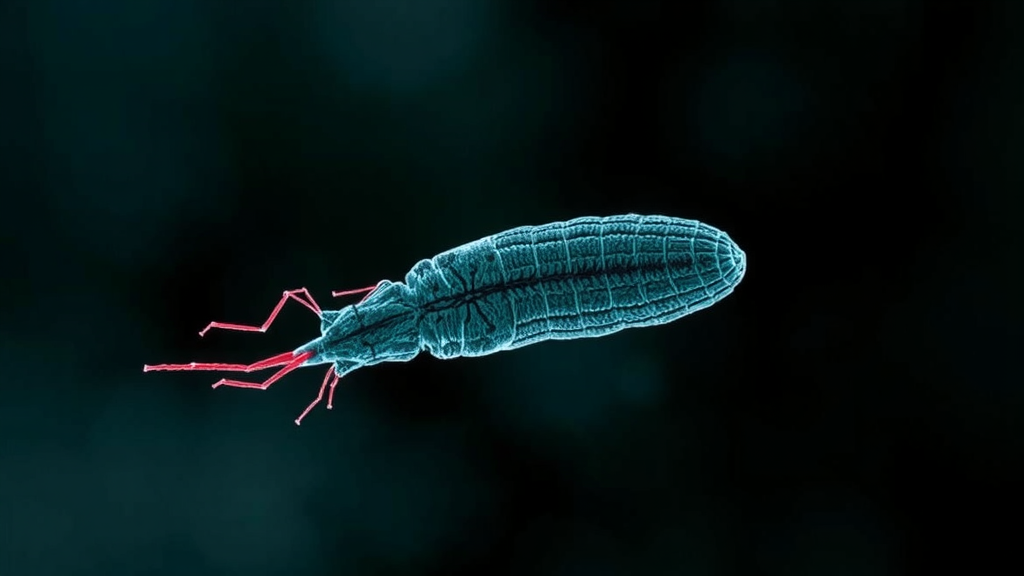
A detailed immunological portrait of one of the world’s most underappreciated parasitic diseases has emerged from southwestern Iran, where researchers have mapped, with unusual precision, how the human immune system responds to infection with the intestinal worm Strongyloides stercoralis. The study, conducted by a collaborative team from Ahvaz Jundishapur University of Medical Sciences in Iran and the Bernhard Nocht Institute for Tropical Medicine in Hamburg, Germany, offers one of the most comprehensive systemic profiles to date of antibody subclasses, cytokines, and chemokines in people naturally infected with this neglected tropical pathogen. The findings, published in the journal Parasites & Vectors, confirm that strongyloidiasis drives a characteristic type 2 immune signature while simultaneously reshaping inflammatory chemokine networks in ways that could inform future diagnostics and treatment monitoring.
Strongyloides stercoralis is a soil-transmitted helminth that infects an estimated 300 to 600 million people worldwide, yet it remains notoriously difficult to diagnose because the parasite persists at low levels in the intestine and sheds larvae intermittently. What makes the infection clinically dangerous is its unique ability to complete its life cycle entirely within the human host through autoinfection, allowing the worm to survive for decades. In individuals whose immunity becomes suppressed, for example by corticosteroid therapy or other conditions, the parasite can multiply uncontrollably and cause hyperinfection syndrome, a frequently fatal complication. Understanding the immune landscape of chronic infection is therefore not merely an academic exercise; it is central to identifying who is at risk and how the disease can be detected earlier.
The research team enrolled 82 individuals with confirmed S. stercoralis infection and 48 uninfected controls living in the same endemic region of Khuzestan province, a design that allowed them to distinguish infection-specific immune changes from background environmental exposures common to both groups. All infected participants presented with eosinophilia, an elevated count of eosinophils, the white blood cells classically associated with defense against parasitic worms. To probe the immune response, the investigators developed in-house enzyme-linked immunosorbent assays to measure antibodies directed against Strongyloides antigens, together with bead-based multiplex assays capable of quantifying a broad panel of cytokines and chemokines in serum.
The antibody results were striking in their subclass specificity. Infected individuals showed significantly elevated Strongyloides-specific immunoglobulin G responses compared with endemic healthy controls, but this elevation was not uniform across all IgG classes. Instead, IgG4 and IgG1 emerged as the dominant subclasses, while IgG2 responses were minimal. This pattern is immunologically meaningful: IgG4 is the subclass most consistently induced by chronic helminth exposure and is often interpreted as a marker of prolonged, repeated antigenic stimulation under a regulatory immune environment. The prominence of IgG1 alongside it suggests a robust, active antibody response to the parasite rather than a purely dampened one, painting a picture of coexisting activation and regulation that is characteristic of long-term worm carriage.
The cytokine data reinforced this type 2 orientation. Infected participants displayed significantly increased serum concentrations of interleukin-4, interleukin-5, interleukin-13, and interleukin-9, the canonical cytokines produced by type 2 helper T cells and, in the case of IL-9, by the increasingly recognized type 9 lineage. IL-4 drives class switching toward IgG4 and IgE, IL-5 recruits and activates eosinophils, and IL-13 promotes mucus production and tissue remodeling at mucosal barriers, all mechanisms directly relevant to expelling intestinal worms. The elevation of IL-9 adds an interesting dimension, as this cytokine has been implicated in mast cell responses and barrier immunity, processes thought to contribute to controlling helminth establishment in the gut.
Perhaps the most unexpected finding concerned the chemokine CXCL9, an interferon-inducible chemokine typically associated with type 1 inflammatory responses and the recruitment of T cells and natural killer cells. The researchers recorded a striking increase in CXCL9 among infected subjects, standing in apparent contrast to the dominant type 2 profile. Meanwhile, the majority of Th1- and Th17-associated cytokines, along with several pro-inflammatory chemokines, were either reduced during infection or increased after treatment and parasite clearance. This suggests that S. stercoralis actively suppresses inflammatory pathways while leaving, or even provoking, a specific interferon-driven chemokine signal, a combination that may reflect the parasite’s strategy of securing long-term survival while the host retains enough immune pressure to keep worm numbers in check.
A longitudinal component of the study strengthened the causal interpretation of these immune signatures. Eighteen patients were reassessed at least six months after receiving albendazole, one of the standard anthelmintic drugs used against strongyloidiasis. Following treatment and presumed parasite clearance, the researchers documented significant reductions in eosinophil counts, parasite-specific IgG1, IgG2, and IgG4 levels, and serum concentrations of both IL-9 and IL-10, the latter being an immunoregulatory cytokine often elevated during chronic helminth infection. In contrast, systemic IL-4 concentrations increased after therapy, an intriguing reversal that the authors note alongside the broader normalization of the infection-associated immune profile. The parallel decline of antibodies, type 2 cytokines, and regulatory signals after cure indicates that these markers track active infection rather than permanent immune reprogramming.
The clinical implications of this work are considerable. Serological diagnosis of strongyloidiasis already relies heavily on detecting parasite-specific antibodies, and the demonstration that IgG4 and IgG1 dominate the response supports the use of subclass-specific assays to improve sensitivity and specificity, particularly in endemic regions where cross-reactivity with other helminths complicates interpretation. Moreover, the finding that antibody levels and type 2 and type 9 cytokines fall measurably after successful treatment raises the possibility of using these immune markers as indicators of cure, something parasitological methods alone have struggled to provide given the intermittent shedding of larvae. In an era of increasing immunosuppressive therapy worldwide, reliable tools to verify parasite elimination before immunosuppression could save lives.
The study also contributes to a broader scientific conversation about how helminths modulate human immunity. Chronic worm infections are widely studied for their immunoregulatory effects, which some researchers hope to harness for treating autoimmune and inflammatory diseases. By documenting, in a well-characterized human cohort, the coordinated suppression of Th1 and Th17 pathways alongside a preserved interferon-inducible chemokine response, the Iranian-German team provides a nuanced dataset that moves beyond the simple dichotomy of type 1 versus type 2 immunity. It shows that natural infection produces a layered and partially contradictory immune landscape whose resolution after treatment can now be followed over time.
Limitations remain, as with any field study conducted in an endemic setting. The number of longitudinally followed patients was modest, and the six-month follow-up window, while sufficient to observe significant immune changes, leaves open questions about the long-term durability of antibody and cytokine normalization. The endemic controls, though carefully selected, cannot fully exclude prior exposure or unrecognized low-level infection. Nevertheless, the study stands as a substantial advance for a disease that has long been overshadowed by better-known tropical parasites. For the millions of people carrying S. stercoralis, many of them unaware of their infection, this work brings the prospect of sharper diagnostics, clearer markers of therapeutic success, and a deeper understanding of the delicate immune equilibrium that this remarkable parasite has evolved to maintain within its human host.
Subject of Research: Immune response profiling in Strongyloides stercoralis infection
Article Title: Systemic profiles of Strongyloides-specific IgG subclass, cytokine, and chemokine response in an eosinophilic Iranian population infected with Strongyloides stercoralis
Article References: Beiromvand, M., Ashiri, A., Rafiei, A., Heepmann, L., Hartmann, W., Linnemann, L., Tappe, D., Veit, A., & Breloer, M. (2026). Systemic profiles of Strongyloides-specific IgG subclass, cytokine, and chemokine response in an eosinophilic Iranian population infected with Strongyloides stercoralis. Parasites & Vectors. https://doi.org/10.1186/s13071-026-07683-9
Image Credits: AI Generated
DOI: 10.1186/s13071-026-07683-9
Keywords: Strongyloides stercoralis, strongyloidiasis, IgG subclasses, cytokines, chemokines, eosinophils, type 2 immunity, albendazole, immunomodulation, Iran, neglected tropical disease, parasitic infection
Cite Scienmag News
Kristina Jarvis. (September 13, 2026). Parasite Immune Fingerprint Revealed in Strongyloides Infection Study. Scienmag. https://scienmag.com/parasite-immune-fingerprint-revealed-in-strongyloides-infection-study/
Kristina Jarvis. "Parasite Immune Fingerprint Revealed in Strongyloides Infection Study." Scienmag, 13 September 2026, https://scienmag.com/parasite-immune-fingerprint-revealed-in-strongyloides-infection-study/. Accessed 5 October 2026.
Kristina Jarvis. "Parasite Immune Fingerprint Revealed in Strongyloides Infection Study." Scienmag. September 13, 2026. https://scienmag.com/parasite-immune-fingerprint-revealed-in-strongyloides-infection-study/


