


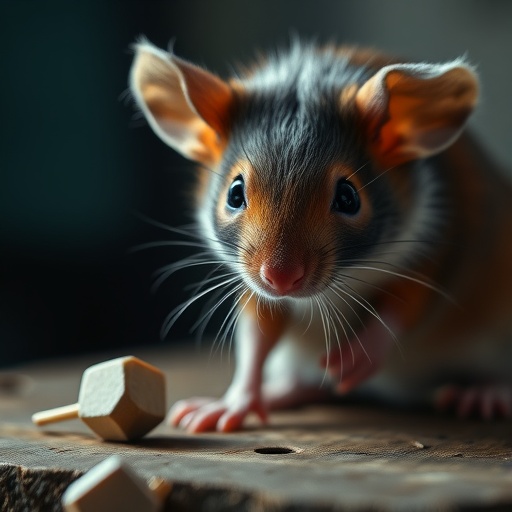
In a groundbreaking study published in the open-access journal PLOS One on November 5, 2025, researchers from Stanford University have unveiled compelling evidence linking abnormal repetitive behaviors in mice—commonly known as stereotypies—to multiple biomarkers of oxidative stress. This revelation sheds new light on the biological underpinnings of a perplexing behavioral phenomenon observed across a range of species, including humans. Led by Kendall Coden and Dr. Joseph Garner, the investigation explores how imbalances in redox biochemistry may contribute to these behaviors and opens the door for novel diagnostic and therapeutic strategies.
Stereotypies—characterized by repetitive, invariant, and apparently purposeless actions—constitute some of the most enigmatic behaviors documented in captive and clinical settings alike. Across mammalian and avian taxa, these behaviors persist in laboratory, zoo, and farm environments, raising questions about their developmental origins and biological significance. Importantly, stereotypies are also a hallmark of human neurodevelopmental and neuropsychiatric disorders such as autism spectrum disorder and schizophrenia, amplifying the urgency for mechanistic insights.
Oxidative stress, a condition where the body’s antioxidant defenses fail to neutralize reactive oxygen species, is increasingly implicated in diverse neuropathologies. The Stanford team concentrated on this redox imbalance premise to uncover whether oxidative stress biomarkers correlate with the severity of stereotypic behavior in murine models. Central to their approach was quantifying the blood concentration of glutathione, a critical antioxidant and a gold-standard biomarker reflecting the oxidative state within an organism.
Intriguingly, the longitudinal analysis revealed a significant, positive correlation between blood glutathione levels and the intensity of stereotypic behavior in young mice, a relationship that was notably absent in older cohorts. This age-dependent association suggests complex developmental processes modulate oxidative balance and its behavioral manifestations. To deepen their understanding, the researchers harnessed advanced proteomic technologies, allowing them to identify a broader spectrum of proteins linked to redox states and behavioral phenotypes.
The proteomic profiling yielded robust signatures connecting multiple redox-related proteins with both glutathione concentrations and the measured severity of stereotypies. While some of these molecular associations were exclusive to juvenile mice, others extended regardless of age, implying additional, age-independent factors influencing repetitive behaviors in adult animals. Validation in independent mouse strains corroborated the reproducibility and generalizability of these biomarker profiles across genetic backgrounds.
Collectively, these findings provide compelling evidence that oxidative stress and redox imbalance contribute to the developmental trajectory of stereotypies. The identification of circulating protein biomarkers furnishes promising targets for early detection and intervention strategies, enabling clinicians and researchers to predict risk and monitor progression with unprecedented precision. Moreover, the evolutionary conservation of many implicated proteins across species hints at translational relevance for human conditions characterized by repetitive behaviors.
Despite these advances, the researchers emphasize the correlational nature of the data, cautioning against premature conclusions regarding causality. Determining whether oxidative stress directly precipitates stereotypic actions or arises as a consequence of underlying neuropathological processes remains an open question. Further experimental studies, potentially involving antioxidant modulation therapies, are essential to elucidate causative pathways and evaluate treatment efficacy.
The translational promise of this research is considerable. If antioxidant treatments can be demonstrated to prevent or ameliorate stereotypies in animal models, similar approaches might be adapted for human neurodevelopmental and psychiatric diseases, providing a much-needed therapeutic avenue. The findings also stimulate fresh inquiry into the interplay between genetics, environment, and redox biology, all of which likely converge to influence individual susceptibility and symptomatology.
Dr. Garner reflects on the enigmatic nature of repetitive behaviors, highlighting how individuals exhibiting stereotypies differ markedly even within genetically identical cohorts raised in uniform environments. This variation underscores a complex etiology where subtle biochemical differences, such as oxidative stress profiles, could offer explanatory power and targets for disruption. The study, therefore, not only advances scientific understanding but also inspires hope for impactful clinical breakthroughs.
Importantly, the research harnesses state-of-the-art methodologies at the intersection of comparative medicine, molecular biology, and proteomics. By integrating behavioral phenotyping with cutting-edge biochemical analysis, the investigators provide a comprehensive, multi-layered perspective rarely achieved in this field. This integrative approach exemplifies how modern technology can illuminate longstanding mysteries in neuroscience.
Overall, this pioneering work on redox imbalance and stereotypies marks a significant stride toward unraveling the biological roots of abnormal repetitive behaviors. It invites further collaborative research into oxidative stress, protein biomarkers, and their broader implications for brain health and disease. As neuropsychiatric disorders continue to pose global health challenges, such innovative studies are crucial for fostering novel diagnostic tools and therapies that can improve patient outcomes worldwide.
For interested readers, the full article is accessible through the PLOS One journal, offering detailed experimental data, comprehensive analyses, and resource-rich supplemental material for deep academic engagement. This publication sets a benchmark for transparency and reproducibility, advancing open science in a field long in need of clear mechanistic insights.
Cite Scienmag News
Ophelia Keating. (November 5, 2025). Oxidative Stress Linked to Abnormal Repetitive Behaviors in Mice. Scienmag. https://scienmag.com/oxidative-stress-linked-to-abnormal-repetitive-behaviors-in-mice/
Ophelia Keating. "Oxidative Stress Linked to Abnormal Repetitive Behaviors in Mice." Scienmag, 5 November 2025, https://scienmag.com/oxidative-stress-linked-to-abnormal-repetitive-behaviors-in-mice/. Accessed 3 September 2026.
Ophelia Keating. "Oxidative Stress Linked to Abnormal Repetitive Behaviors in Mice." Scienmag. November 5, 2025. https://scienmag.com/oxidative-stress-linked-to-abnormal-repetitive-behaviors-in-mice/


