


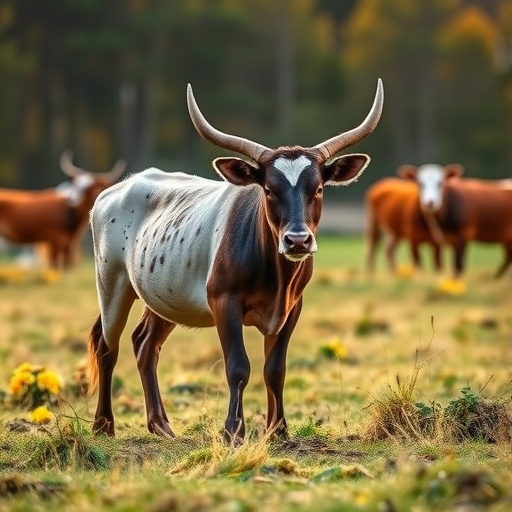
In recent discussions surrounding the impacts of livestock on climate change, a pertinent study has emerged, challenging long-held assumptions about methane emissions, particularly from indigenous bovidae species. The research, led by an innovative team including Shi et al., published in Commun Earth Environ, highlights significant discrepancies in the estimations of methane output attributed to these nitrogen-efficient animals. This revelation not only contributes to our understanding of their environmental footprint but also invites a reevaluation of agricultural practices focusing on sustainability and emissions reduction.
Methane is a potent greenhouse gas, with a global warming potential significantly greater than carbon dioxide. Traditionally, beef and dairy cattle have been pointed to as major contributors to methane emissions within the agricultural sector, leading to strict regulations and policies aimed at reducing livestock farming. However, the findings by Shi and colleagues propose that the actual contribution of indigenous bovidae species may be grossly overestimated, reshaping the narrative around agricultural emissions and potentially leading to shifts in environmental policy.
The research presents a rigorous analysis of the dietary and metabolic factors that contribute to methane production in these animals. Indigenous species such as the Yak and the Himalayan Highland cattle possess unique adaptations that allow them to thrive in nitrogen-deficient environments. This study delves deep into their digestive processes, which are optimized for higher nutrient absorption and lower methane production relative to their conventional counterparts. This research is fundamentally important, as it scrutinizes the established models of methane emissions that largely inform governmental and global policies.
In studying the enteric fermentation process, researchers observed that these bovidae produce less methane due to the efficiency of their digestive systems. Unlike European or American livestock breeds that rely heavily on grain or concentrated feeds, indigenous bovidae utilize a forage-based diet, which plays an important role in mitigating methane output. Their natural grazing habits and unique digestive microbiota significantly alter the dynamics of greenhouse gas emissions, opening avenues for further exploration into sustainable livestock management practices.
The implications of this study stretch beyond academic interest. With methane recognized as a critical contributor to global warming, understanding the actual emissions from various livestock species is crucial for climate strategy development. Misestimating these emissions could lead to unnecessary regulatory burdens on sustainable farming practices that rely on indigenous species. By reevaluating herd management and foraging strategies, there exists the potential to improve operational efficiency while also alleviating some environmental concerns.
Moreover, this research serves as an eye-opener for consumers and policymakers alike. It emphasizes the importance of transparency in livestock emissions calculations and encourages decision-makers to base policies on empirical data rather than broad assumptions. The results could pave the way for a paradigm shift that champions the utilization of indigenous breeds, not just as a climate-friendly alternative, but as a viable means to enhance food security in nutrient-scarce environments.
As the conversation around climate change continues to evolve, studies like this prompt a reconsideration of global agriculture’s general approach to reducing greenhouse gas emissions. It highlights the need for targeted strategies that take into account the full range of livestock impacts, rather than relying on one-size-fits-all models. By advocating for research-backed policies, we can facilitate a more nuanced understanding that genuinely reflects the complexities of our agricultural systems.
Furthermore, the authors suggest that developing and implementing advanced breeding techniques could bolster the favorable traits seen in indigenous bovidae—like nitrogen efficiency and reduced methane output—that are essential in the fight against climate change. These approaches would foster biodiversity, enhance resilience within agricultural systems, and ultimately lead to more sustainable livestock production methods.
The findings also highlight the critical role of local knowledge and traditional farming practices in shaping future research and development efforts. By tapping into the wisdom of indigenous communities, researchers can better understand how traditional practices support sustainable livestock production and contribute to environmental conservation. Enabling collaboration between scientists and local farmers could foster innovative solutions tailored to specific regional challenges associated with methane emissions.
Continuing research into the relationships between livestock diet, greenhouse gas production, and agricultural practices will remain pivotal in transforming policy and practice within the sector. As understanding of these dynamics deepens, opportunities emerge not just for mitigation of climate impacts but also for enhancing productivity in ways that uplift both the environment and local economies.
Looking forward, the scientific community is called upon to further explore these findings, ensuring that future studies build on this foundation and assess the broader implications on global food systems. In light of this work, there’s an urgency to incorporate and integrate indigenous livestock breeds into mainstream agricultural frameworks, particularly as climate change continues to challenge food production and security on a global scale.
In conclusion, the research spearheaded by Shi et al. represents a vital contribution to the dialogue on livestock emissions and sustainable agriculture. By transforming our understanding of methane emissions from indigenous nitrogen-efficient bovidae, the authors challenge us to rethink policies and practices that will lead to a more sustainable future. The path forward lies in embracing our responsibility towards the environment while simultaneously recognizing the importance of indigenous knowledge, advancing agricultural innovation, and being informed by data-driven insights that support climate action.
Shi, F., Ma, Z., Mi, J. et al. Methane emissions from indigenous nitrogen-efficient bovidae are overestimated. Commun Earth Environ 6, 786 (2025). https://doi.org/10.1038/s43247-025-02755-7
Cite Scienmag News
Marcus Vaughn. (October 3, 2025). Overestimating Methane Emissions from Nitrogen-Efficient Bovidae. Scienmag. https://scienmag.com/overestimating-methane-emissions-from-nitrogen-efficient-bovidae/
Marcus Vaughn. "Overestimating Methane Emissions from Nitrogen-Efficient Bovidae." Scienmag, 3 October 2025, https://scienmag.com/overestimating-methane-emissions-from-nitrogen-efficient-bovidae/. Accessed 3 September 2026.
Marcus Vaughn. "Overestimating Methane Emissions from Nitrogen-Efficient Bovidae." Scienmag. October 3, 2025. https://scienmag.com/overestimating-methane-emissions-from-nitrogen-efficient-bovidae/


