


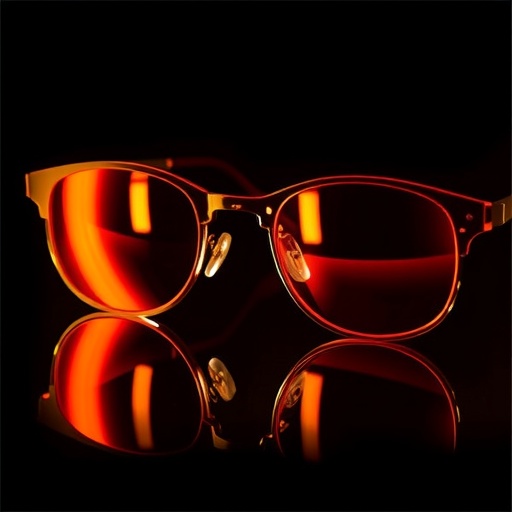
In the era of rapid digital communication, the seamless transmission of high-resolution video has revolutionized human interaction across the globe. Platforms such as Zoom, Microsoft Teams, Tencent Meeting, and Feishu have become ubiquitous, enabling real-time video conferencing and remote collaboration. However, despite these technological advances, a persistent issue continues to compromise the quality and reliability of facial imaging during online communication: the reflections caused by eyeglasses. These reflections, which often present as distracting specular highlights or complex ambient reflections on the lenses, obscure critical facial features and degrade both visual perception and the effectiveness of biometric systems relying on face recognition.
The challenge of eyeglass reflection removal lies in the intricate optical interplay captured in images, where the recorded signal is a composite of two distinct layers—the transmitted facial image and the superimposed reflection layer. Successfully separating these layers is vital for applications that demand clarity and accuracy in facial imagery, including video conferencing, group photography, and secure identity verification. Traditional reflection removal techniques fall into two categories: single-image and multi-image methods. Single-image approaches typically harness statistical image models or deep learning algorithms, but are limited by the absence of additional physical cues, often resulting in diminished performance under uncontrolled environmental lighting. Multi-image strategies gain an edge by leveraging changes across images—such as varying illumination, viewing angles, or polarization states—to disentangle the reflection from the transmission components more effectively.
Emerging research focuses on exploiting the polarization properties of light to advance reflection removal. Given that reflected and transmitted light exhibit distinct polarization characteristics, polarization filtering has the potential to isolate reflection artifacts. The advent of compact polarization imaging devices, including division-of-focal-plane polarization sensors and innovative metasurface-based polarization cameras, has empowered real-world acquisition of polarization data. This breakthrough facilitates sophisticated polarization-guided algorithms designed to enhance eyeglass reflection removal. Nevertheless, conventional polarization filtering tends to be constrained, showing peak effectiveness only under optimal physical circumstances such as incidence at Brewster’s angle and simple single-pass optical reflections, rarely encountered outside controlled environments.
Addressing these major challenges, a pioneering study introduces PDPrior, a novel polarization-guided diffusion prior model tailored specifically for eyeglass reflection removal. This approach transcends the traditional need for extensive paired datasets or ground-truth annotation by integrating polarization cues directly into a generative diffusion framework. Employing a self-supervised learning paradigm, PDPrior exploits the inherent data priors embedded in diffusion models coupled with physical imaging constraints, allowing reflections to be disentangled without the requirement of any pre-collected training data.
At the heart of PDPrior’s innovation lies its unique polarization–generation coupled mechanism. This method iteratively refines reflection and transmission estimates by alternating variable updates during the denoising diffusion process. The framework incorporates a frozen U-Net architecture governed by self-supervised loss functions derived from a physics-based imaging model, ensuring that the resultant images maintain both visual authenticity and physical interpretability. The incorporation of polarization data imparts crucial guidance to the diffusion model, enabling it to robustly generalize and perform effectively under a wide gamut of unknown and variable lighting conditions.
Extensive experiments validate PDPrior’s efficacy across a broad spectrum of scenarios, encompassing diverse indoor and outdoor settings, polarized and unpolarized lighting conditions, varied facial appearances, and multiple eyeglass types. The results exhibit consistent elimination of reflection artifacts without introducing undesirable visual distortions or residual noise. In addition to qualitative improvements, PDPrior outperforms existing methods on recognized face image quality assessment benchmarks such as CR-FIQA and CLIB-FIQA, underscoring its potential to enhance the accuracy and reliability of downstream face recognition and authentication tasks.
Looking ahead, research aims to extend the capabilities of PDPrior to operate efficiently on resource-constrained hardware platforms like edge devices and mobile processors, supporting real-time reflection removal. Achieving this objective will involve advanced model compression techniques and the development of one-step diffusion inference strategies, ensuring faster processing while preserving high image fidelity. Moreover, leveraging near-infrared polarization imaging presents a promising avenue for adapting the method to challenging nighttime or low-light environments, broadening its applicability to all-day and around-the-clock operation.
The implications of such advanced reflection removal technology ripple across numerous domains. In professional and personal video conferencing, the clarity and immersion of communication can be profoundly enhanced. In high-security environments, including government and financial institutions dependent on face recognition for identity verification, minimizing reflection-induced errors can elevate system robustness and trustworthiness. Additionally, the technology holds promise for mobile photography, augmented reality, and intelligent security systems by providing cleaner, artifact-free facial images essential for accurate analysis and user experience.
The researchers have publicly released both the source code and a curated test dataset, enabling the scientific community and industry partners to reproduce, validate, and expand upon their work. This openness accelerates the broader adoption and evolution of polarization-guided diffusion models for reflection removal and beyond.
In conclusion, PDPrior represents a significant advancement in the field of computational imaging and computer vision, effectively resolving the longstanding challenge of eyeglass reflection interference through a novel fusion of physics-based modeling and state-of-the-art generative diffusion techniques. By eschewing the traditional dependency on extensive training data and leveraging real-world polarization information, PDPrior opens new horizons for pristine facial image acquisition essential for the increasingly digitized and interconnected world.
Web References:
- DOI: 10.29026/oea.2026.250249
- Test Dataset: https://cloud.tsinghua.edu.cn/f/a49e0f59a8a54c4eb14d/?dl=1
Keywords
eyeglass reflection removal, diffusion models, untrained learning, polarization-guided optimization, computational imaging, face recognition, generative models, video conferencing enhancement
Cite Scienmag News
Denise Maddox. (April 30, 2026). Overcoming the Reflection Barrier: New Polarization-Generation Method Removes Eyeglass Glare. Scienmag. https://scienmag.com/overcoming-the-reflection-barrier-new-polarization-generation-method-removes-eyeglass-glare/
Denise Maddox. "Overcoming the Reflection Barrier: New Polarization-Generation Method Removes Eyeglass Glare." Scienmag, 30 April 2026, https://scienmag.com/overcoming-the-reflection-barrier-new-polarization-generation-method-removes-eyeglass-glare/. Accessed 5 September 2026.
Denise Maddox. "Overcoming the Reflection Barrier: New Polarization-Generation Method Removes Eyeglass Glare." Scienmag. April 30, 2026. https://scienmag.com/overcoming-the-reflection-barrier-new-polarization-generation-method-removes-eyeglass-glare/


