


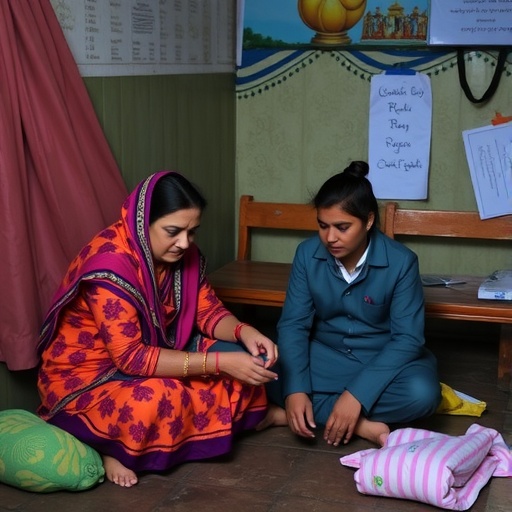
In the intricate landscape of global health, the glaring disparities that extend beyond mere illness present profound challenges to equity and inclusion. A groundbreaking study by Bango, Kashyap, and Chattopadhyay, recently published in the International Journal for Equity in Health, casts an illuminating spotlight on these very issues within the socioeconomically marginalized district of Jhargram in West Bengal, India. This research meticulously uncovers the barriers borne not just from medical conditions but deeply entrenched social exclusion, painting a critical picture of the complex interplay between social determinants and healthcare access.
Healthcare disparities have long been recognized as a multifaceted issue, traditionally attributed to differential access, quality, and affordability of medical services. However, this study propels the discourse forward by emphasizing that in regions like Jhargram, the root causes of inequitable health outcomes cannot be adequately addressed without confronting the societal structures that perpetuate exclusion. The authors argue that social exclusion acts as a formidable barrier that inhibits marginalized populations from accessing not only healthcare facilities but also the social support systems crucial for holistic health.
The researchers deployed a mixed-methods approach combining ethnographic observations, qualitative interviews, and comprehensive surveys across various communities in Jhargram. Their data reveal a disturbing trend: certain groups, especially those from indigenous and lower caste backgrounds, experience systemic neglect fueled by stigma and discriminatory practices. This exclusion limits their interaction with healthcare providers, thereby inhibiting timely diagnosis, adherence to treatment regimes, and ultimately, health improvements.
One of the stark discoveries of the study is the pervasive impact of intersectional marginalization. Factors such as caste, gender, economic status, and education converge to compound disadvantages in healthcare access. Women from lower socioeconomic backgrounds within these communities face heightened vulnerabilities, as patriarchal norms intersect with economic deprivation and societal stigma, creating a labyrinth of barriers difficult to traverse even for the most basic healthcare needs.
The paper delves into the operational mechanisms through which social exclusion manifests within healthcare settings. Healthcare professionals in the region, often influenced by prevailing social biases, may inadvertently perpetuate exclusionary practices. These include differential treatment protocols, reduced communication with marginalized patients, and a lack of culturally sensitive care models. The authors suggest that addressing these institutional biases must form a core strategy to dismantle barriers to healthcare equity.
Another significant aspect explored in the research is the role of geographic isolation that compounds social exclusion. Jhargram’s predominantly rural and forested topography hampers physical access to health centers, especially for marginalized families living in remote hamlets. This geographic isolation synergizes with social exclusion to create what the study terms a ‘double jeopardy’, where the logistics of access and societal barriers intertwine to critically limit healthcare delivery.
The socioeconomic cost of these disparities is emphatically outlined. Individuals barred from appropriate and timely healthcare often succumb to preventable illnesses, leading to a vicious cycle of poverty and ill health. The economic burden is felt not just by the families but also at the community and governmental levels, highlighting the need for systemic intervention that transcends healthcare and touches upon social policy and development planning.
Cultural factors and mistrust towards formal healthcare systems emerge as additional dimensions in the article. The study participants recount experiences of alienation when attempting to seek care, exacerbated by language barriers and cultural misunderstandings. These issues create a preference for traditional healers and informal care networks, which, while integral to local culture, may delay the management of serious health conditions, underscoring the need for culturally competent healthcare delivery.
The authors also investigate the policy implications of their findings, urging policymakers to reframe healthcare strategies through a lens that incorporates social equity at its core. They advocate for integrated approaches that combine health services with social welfare programs, educational initiatives, and community empowerment schemes designed to mitigate exclusion and enhance trust and participation in health systems.
Technology and community engagement appear as pivotal elements in bridging the divide. The paper discusses emerging models where digital health platforms and mobile clinics facilitate outreach to marginalized communities, addressing geographical and social barriers simultaneously. Empowering local leaders and health volunteers to act as cultural mediators fosters a bridge between institutional healthcare and traditional societal structures.
Furthermore, the study exposes gaps in healthcare infrastructure and workforce training that reinforce inequities. The authors highlight the need for sensitization programs targeting healthcare workers to cultivate awareness and responsiveness towards the unique challenges faced by excluded populations. Training curricula refined with inputs from affected communities can help dismantle ingrained prejudices and promote empathetic care.
Mental health, often neglected in similar contexts, receives warranted attention in this research. The cumulative effect of social exclusion, economic deprivation, and limited healthcare creates substantial psychological stress within affected populations. The researchers stress the imperative to integrate mental health services within primary care frameworks, particularly in marginalized regions like Jhargram, to provide comprehensive health support.
In conclusion, the findings presented by Bango and colleagues make a compelling case for a paradigm shift in addressing healthcare disparities. The intricate nexus of social exclusion and health inequity requires multidimensional interventions encompassing societal, institutional, and policy reforms. Only by acknowledging and dismantling the invisible barriers beyond illness can the goal of equitable healthcare in diverse, underserved populations become attainable.
The study’s insights hold profound relevance beyond Jhargram, serving as a model for similar contexts worldwide where marginalized groups remain trapped within cycles of exclusion and inadequate care. It challenges the global health community to expand its focus, moving beyond clinical interventions to embrace social justice as an integral component of health equity.
This pioneering work resonates deeply with ongoing debates about universal health coverage and the social determinants of health, reminding us that achieving health equity demands more than medicine—it requires a fundamental transformation of social relations and institutional practices that govern healthcare access and delivery.
Cite Scienmag News
Courtney Benton. (December 27, 2025). Overcoming Social Exclusion, Healthcare Gaps in Jhargram. Scienmag. https://scienmag.com/overcoming-social-exclusion-healthcare-gaps-in-jhargram/
Courtney Benton. "Overcoming Social Exclusion, Healthcare Gaps in Jhargram." Scienmag, 27 December 2025, https://scienmag.com/overcoming-social-exclusion-healthcare-gaps-in-jhargram/. Accessed 3 September 2026.
Courtney Benton. "Overcoming Social Exclusion, Healthcare Gaps in Jhargram." Scienmag. December 27, 2025. https://scienmag.com/overcoming-social-exclusion-healthcare-gaps-in-jhargram/


