

Tuesday, July 14, 2026
Science
No Result
View All Result
  • Login
  • HOME
  • SCIENCE NEWS
  • CONTACT US
  • HOME
  • SCIENCE NEWS
  • CONTACT US
No Result
View All Result
Scienmag
No Result
View All Result
Home Science News Medicine

Osteoclasts Trigger DCC Loop Causing Chronic Low Back Pain in Mice

July 14, 2026
in Medicine
Reading Time: 2 mins read
0
Osteoclasts Trigger DCC Loop Causing Chronic Low Back Pain in Mice

Osteoclasts Trigger DCC Loop Causing Chronic Low Back Pain in Mice

65
SHARES
587
VIEWS
Share on FacebookShare on Twitter
ADVERTISEMENT

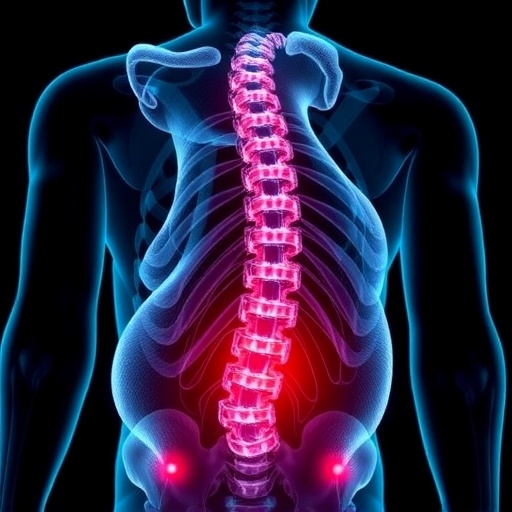
In a groundbreaking study set to reshape our understanding of chronic low back pain, researchers have uncovered a novel cellular mechanism that perpetuates nociplastic pain — a type of chronic pain not directly caused by tissue damage but arising from altered nervous system processing. This discovery, published in Nature Communications, highlights an amplification loop in the dorsal horn of the spinal cord mediated by DCC (Deleted in Colorectal Cancer) signaling, triggered by osteoclasts at the vertebral endplate.

Chronic low back pain remains one of the leading causes of disability worldwide, yet its underlying neurobiological mechanisms are poorly understood. The current study led by Pan, Shen, Abatan, and colleagues employed male mouse models to elucidate how osteoclasts—bone-resorbing cells at the spinal endplates—initiate a pathological cascade that sustains pain hypersensitivity without ongoing tissue injury.

The team identified that increased osteoclast activity at the vertebral endplates elevates the expression of the Netrin-1 receptor DCC within the dorsal horn neurons of the spinal cord. DCC is traditionally known for its role in neural development and axonal guidance, but here it forms a positive feedback loop that amplifies pain signaling. This amplification loop enhances nociceptive neuronal excitability, driving persistent pain perception even in the absence of new peripheral damage.

Mechanistically, osteoclast-derived signals enhance DCC expression and activation in excitatory dorsal horn neurons, which in turn augment synaptic transmission and facilitate central sensitization—key hallmarks of nociplastic pain. This feedback loop was shown to maintain a sustained state of dorsal horn hyperexcitability, generating chronic low back pain phenotypes in the mouse model.

Importantly, pharmacological or genetic disruption of DCC signaling within the dorsal horn effectively broke the amplification loop, reversing hypersensitivity and reducing nociplastic pain responses. These interventions offer promising avenues for targeting central pain processing mechanisms rather than the peripheral pain sources, representing a paradigm shift in chronic pain therapeutics.

The study also links osteoclast activity with central nervous system plasticity, bridging two previously disconnected fields: bone metabolism and neural pain circuitry. This cross-disciplinary insight suggests that aberrant osteoclast function at spinal sites not only contributes to structural degeneration but actively drives maladaptive pain signaling cascades.

Given the complexity and heterogeneity of chronic low back pain in patients, these findings open new paths for precision medicine. Identifying biomarkers of osteoclast activity or dorsal horn DCC dynamics could help stratify patients who might benefit from therapies aimed at interrupting this novel amplification loop.

This innovative research underscores the importance of central nervous system targets in chronic nociplastic pain and challenges the existing framework that centers on peripheral tissue damage as a sole driver. By dissecting the molecular dialogue between bone-resorbing cells and spinal neurons, the study sets the stage for next-generation treatments combating one of the most prevalent and debilitating conditions globally.

As investigations continue, it is hoped that therapeutic strategies derived from this mechanism might alleviate the suffering of millions, improving quality of life and reducing healthcare burdens associated with chronic low back pain.


Subject of Research: Mechanisms of chronic nociplastic low back pain involving dorsal horn DCC signaling and osteoclast activity.

Article Title: Dorsal horn DCC amplification loop induced by endplate osteoclasts generates chronic nociplastic low back pain in male mice.

Article References:
Pan, D., Shen, M., Abatan, E. et al. Dorsal horn DCC amplification loop induced by endplate osteoclasts generates chronic nociplastic low back pain in male mice. Nat Commun (2026). https://doi.org/10.1038/s41467-026-75423-9

Image Credits: AI Generated

Tags: chronic low back painDCC signaling in spinal corddorsal horn neuron activationmouse models of chronic back painneural feedback loops in painneurobiological basis of chronic painnociplastic pain mechanismsnovel targets for pain managementosteoclast-mediated pain amplificationosteoclasts in vertebral endplatesspinal cord dorsal horn neuroplasticityvertebral endplate pathology
Share26Tweet16
Previous Post

Ethics Framework Proposed for Perioperative-Neonatal Care in Open Fetal Surgery

Next Post

Magnetic Fields and Colliding Ejecta in Precessing SS 433 Jets

Related Posts

Ethics Framework Proposed for Perioperative-Neonatal Care in Open Fetal Surgery
Medicine

Ethics Framework Proposed for Perioperative-Neonatal Care in Open Fetal Surgery

July 14, 2026
Single-cell analysis identifies keratinocyte groups driving inflammation in dermatitis
Medicine

Single-cell analysis identifies keratinocyte groups driving inflammation in dermatitis

July 14, 2026
Terasaki Institute Develops Real-Time Biosensor for Donor Liver Preservation
Medicine

Terasaki Institute Develops Real-Time Biosensor for Donor Liver Preservation

July 14, 2026
STN-DBS and LCIG Impact Parkinson’s Disease Axial Symptoms Differently
Medicine

STN-DBS and LCIG Impact Parkinson’s Disease Axial Symptoms Differently

July 14, 2026
Kinesiophobia Profiles Linked to Exercise and Fall Risks in Older Diabetics
Medicine

Kinesiophobia Profiles Linked to Exercise and Fall Risks in Older Diabetics

July 14, 2026
Simple Test May Track Metabolic Health in Cancer and Chronic Illnesses
Medicine

Simple Test May Track Metabolic Health in Cancer and Chronic Illnesses

July 14, 2026
Next Post
Magnetic Fields and Colliding Ejecta in Precessing SS 433 Jets

Magnetic Fields and Colliding Ejecta in Precessing SS 433 Jets

  • Mothers who receive childcare support from maternal grandparents show more

    Mothers who receive childcare support from maternal grandparents show more parental warmth, finds NTU Singapore study

    27656 shares
    Share 11059 Tweet 6912
  • University of Seville Breaks 120-Year-Old Mystery, Revises a Key Einstein Concept

    1061 shares
    Share 424 Tweet 265
  • Bee body mass, pathogens and local climate influence heat tolerance

    682 shares
    Share 273 Tweet 171
  • Researchers record first-ever images and data of a shark experiencing a boat strike

    546 shares
    Share 218 Tweet 137
  • Groundbreaking Clinical Trial Reveals Lubiprostone Enhances Kidney Function

    531 shares
    Share 212 Tweet 133
Science

Embark on a thrilling journey of discovery with Scienmag.com—your ultimate source for cutting-edge breakthroughs. Immerse yourself in a world where curiosity knows no limits and tomorrow’s possibilities become today’s reality!

RECENT NEWS

  • Veillonella ratti alters gut microbiome to prevent EAE disease progression
  • China’s Resource Cities Face Divergent Wealth Paths and Policy Challenges
  • Seasonal Cycle Balances Tropical Rain-Band Asymmetry
  • Detecting Exclusionary Nationalism in Prewar Japan Through Language Analysis

Categories

  • Agriculture
  • Anthropology
  • Archaeology
  • Athmospheric
  • Biology
  • Biotechnology
  • Blog
  • Bussines
  • Cancer
  • Chemistry
  • Climate
  • Earth Science
  • Editorial Policy
  • Marine
  • Mathematics
  • Medicine
  • Pediatry
  • Policy
  • Psychology & Psychiatry
  • Science Education
  • Social Science
  • Space
  • Technology and Engineering

Subscribe to Blog via Email

Enter your email address to subscribe to this blog and receive notifications of new posts by email.

Join 5,146 other subscribers

© 2025 Scienmag - Science Magazine

Welcome Back!

Login to your account below

Forgotten Password?

Retrieve your password

Please enter your username or email address to reset your password.

Log In
No Result
View All Result
  • HOME
  • SCIENCE NEWS
  • CONTACT US

© 2025 Scienmag - Science Magazine

Discover more from Science

Subscribe now to keep reading and get access to the full archive.

Continue reading
