


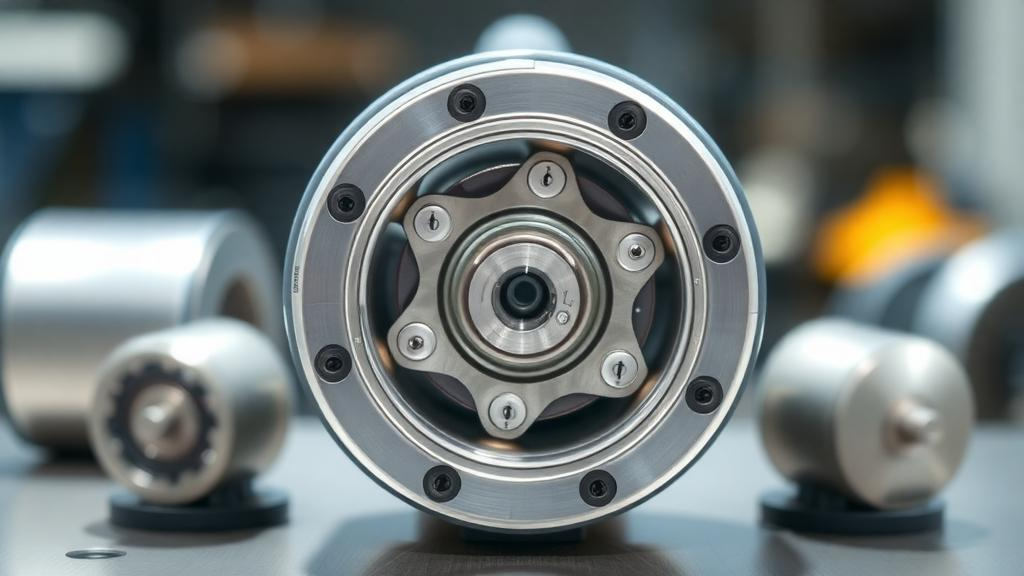
Electric motors sit at the heart of modern industrial civilization. They propel hybrid and electric vehicles down highways, drive the pumps and compressors of manufacturing plants, spin the fans and compressors inside household appliances, and underpin the energy infrastructure that keeps grids stable. Yet the technologies that make these machines possible depend on a narrow set of critical materials, most notably copper for windings and conductors and rare earth elements for the permanent magnets that give many motor designs their exceptional power density. As demand for electrification accelerates worldwide, the supply chains that deliver these materials have come under intensifying pressure from geopolitical tension, trade restrictions, price volatility and concentrated production in a handful of countries. For manufacturers, the question of which motor technology to invest in has never been more consequential, or more difficult to answer with confidence.
Researchers at the Department of Energy’s Oak Ridge National Laboratory have developed a response to this dilemma. The platform, called Motor Decide, is described by its creators as a Super Intelligence, or SI, driven decision-support tool that helps manufacturers evaluate competing electric motor technologies before market conditions shift against them. Rather than telling a company which motor to build, the system models how different motor options would perform across a range of future scenarios, weighing performance characteristics against critical material availability, supply chain stability, technology maturity and long-term resilience to changing market conditions. The goal is to move technology selection away from instinct and toward structured, data-driven analysis.
“Many companies make technology decisions based largely on market momentum or competitor activity,” said ORNL’s Praveen Kumar, lead researcher on the project. “We wanted to create a tool that helps organizations make more informed, data-driven decisions for the long term.” The distinction matters because motor technology choices lock in material demand for years or decades. A manufacturer that commits to a permanent magnet motor design today is implicitly committing to a continued supply of rare earth elements, and if those supplies tighten or prices spike, the entire product line can become economically vulnerable. Motor Decide is designed to surface those hidden dependencies before the commitment is made.
The platform does not design motors directly. Instead, it analyzes which motor technology may be the best fit for a specific application under changing market and supply chain conditions. A manufacturer, for example, could use the tool to compare several motor technologies for an electric system and determine which option would remain the most reliable and cost-effective path to production if material prices spiked or supplies became strained. This scenario-based framing is what separates the tool from conventional comparison exercises, which typically evaluate motors under a single set of assumptions about cost and availability that may be obsolete by the time a product reaches the market.
Under the hood, Motor Decide combines SI-driven analysis, advanced modeling and large-scale scenario analysis to evaluate how motor technologies could perform under fluctuating material costs and supply chain disruptions. Researchers can model what happens if copper prices increase sharply, or if a newer motor technology becomes commercially viable years from now. The output is a ranked set of motor technology options accompanied by insights into cost, performance, critical material use, manufacturability and long-term risk. By quantifying these dimensions together, the platform gives decision-makers a structured view of tradeoffs that would otherwise be scattered across procurement data, engineering assessments and market forecasts.
“We define the operating environment in which the decision is being made,” Kumar explained. “That includes procurement sources, manufacturing readiness, technology maturity and application requirements. Then we test how those factors change under different scenarios.” This approach reflects a broader trend in engineering decision science: rather than optimizing for a single predicted future, robust decision-making tools stress-test candidate technologies across many plausible futures and identify the options that remain viable across the widest range of outcomes. For motor manufacturers, that could mean favoring a design with slightly lower peak performance but far less exposure to rare earth supply risk, or staging a transition plan that shifts material sourcing as new technologies mature.
The platform also accounts for how organizations actually make decisions, helping users evaluate tradeoffs and quantify risk when comparing emerging technologies against established ones. “People ultimately own the decision,” Kumar said. “We are trying to quantify uncertainty and incorporate it into the decision-making process.” That framing positions Motor Decide as a decision-support system rather than an autonomous decision-maker. The tool’s value lies in making the uncertain elements of a technology choice explicit and comparable, so that engineers, procurement specialists and executives can deliberate with a shared, quantified picture of the risks they are accepting.
The project draws on decades of motor, power electronics and transportation research conducted at ORNL’s National Transportation Research Center, the Department of Energy’s only user facility dedicated to transportation research and a hub for advanced mobility innovation. At the center, ORNL researchers work with industry partners to advance next-generation mobility and manufacturing technologies, giving the Motor Decide team direct access to the technical data on motor performance and manufacturability that such a platform requires. “We are combining motor research expertise with SI-driven analysis in a way that can help industry make smarter, more resilient technology decisions,” Kumar said. Researchers envision the tool helping manufacturers reduce dependence on vulnerable supply chains while planning future products more strategically.
Motor Decide is also designed to work alongside another ORNL-developed platform, Motor AI, which uses SI-assisted engineering tools to accelerate detailed motor design. The two systems form a pipeline: while Motor Decide helps identify the best motor technology pathway for a given application and market outlook, Motor AI performs the detailed design work needed to bring those concepts to life. Once a company selects a preferred motor approach, researchers can transition the results into Motor AI to generate detailed design configurations and engineering specifications. Together, the tools could help accelerate the development of more resilient electric motor systems while reducing the risks associated with critical material shortages, volatile supply chains and rapidly changing global markets.
The effort reflects ORNL’s broader mission to combine super intelligence, advanced manufacturing and energy research in support of U.S. competitiveness and industrial resilience, and researchers are continuing to evaluate and expand the platform’s capabilities for future applications. The project was funded by the Department of Energy’s Office of Critical Minerals and Energy Innovation’s Transportation Technologies Office, an alignment that underscores the federal government’s growing focus on securing the material foundations of electrification. As industries from automotive to aerospace confront the same arithmetic of rising demand and constrained supply, tools like Motor Decide suggest a future in which the materials risk embedded in every engineering choice can be measured, modeled and managed before it becomes a crisis. UT-Battelle manages ORNL for the Department of Energy’s Office of Science, the single largest supporter of basic research in the physical sciences in the United States.
Subject of Research: A decision-support platform for evaluating electric motor technologies against critical material supply chain risks
Article Title: New platform tackles critical material risks in electric motors
Article References: New platform tackles critical material risks in electric motors. (n.d.). Original publication
Image Credits: AI Generated
DOI: Not provided
Keywords: electric motors, critical materials, supply chain, rare earth elements, copper, Oak Ridge National Laboratory, Super Intelligence, decision support, manufacturing, Motor Decide, Motor AI, transportation research
Cite Scienmag News
Neil Sanderson. (October 14, 2026). ORNL’s Motor Decide Platform Helps Manufacturers Weigh Critical Material Risks in Electric Motors. Scienmag. https://scienmag.com/ornls-motor-decide-platform-helps-manufacturers-weigh-critical-material-risks-in-electric-motors/
Neil Sanderson. "ORNL’s Motor Decide Platform Helps Manufacturers Weigh Critical Material Risks in Electric Motors." Scienmag, 14 October 2026, https://scienmag.com/ornls-motor-decide-platform-helps-manufacturers-weigh-critical-material-risks-in-electric-motors/. Accessed 14 October 2026.
Neil Sanderson. "ORNL’s Motor Decide Platform Helps Manufacturers Weigh Critical Material Risks in Electric Motors." Scienmag. October 14, 2026. https://scienmag.com/ornls-motor-decide-platform-helps-manufacturers-weigh-critical-material-risks-in-electric-motors/


