


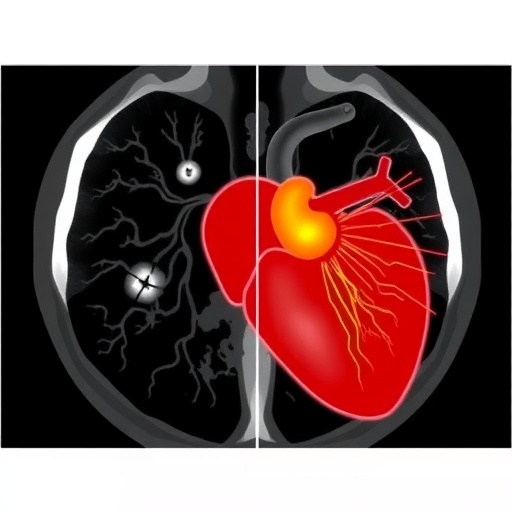
In an era where cardiovascular diseases are a leading cause of mortality, the importance of precise coronary artery segmentation cannot be overstated. Recent research conducted by Hung et al. has provided groundbreaking insights into optimizing this crucial process, targeting the intricacies of dataset size, windowing, model architectures, and the geometry of coronary vessels. These elements play significant roles in developing robust segmentation algorithms, which can ultimately enhance diagnostic accuracy and treatment decisions in cardiology.
The study elaborates on the necessity of dataset size for training segmentation models, emphasizing how large and diverse datasets can significantly improve algorithm performance. By providing ample examples, including various coronary artery anatomies and pathologies, models can learn to generalize better, leading to more reliable outcomes in real-world applications. This finding is particularly pertinent as medical imaging datasets are often limited, which can hamper the development of effective machine-learning algorithms.
Windowing techniques emerge as pivotal tools in the segmentation process. Hung et al. systematically analyze different windowing methods that affect image input to neural networks, exploring how variations can lead to differing segmentation success rates. The research underscores the need for optimal window settings to capture essential features while minimizing irrelevant information that can lead to confusion within the algorithms. This meticulous attention to detail in preprocessing allows for a more effective model, capable of handling the complexities of coronary artery shapes and sizes.
The exploration of various model architectures showcases the potential of deep learning in medical imaging. The researchers compare traditional models with more advanced deep learning architectures, revealing that newer neural networks often outperform their predecessors. By diving into the specifics of each architecture, including convolutional neural networks and innovative variants, the study highlights how these systems can be tailored to improve segmentation efficacy. This is a significant advantage for practitioners who rely on these technologies for diagnostic procedures.
Vessel geometry emerges as another critical component in segmentation. The unique shapes and branching patterns of coronary arteries pose challenges for segmentation algorithms. The researchers delve into how understanding these geometric properties can lead to more accurate modeling of vascular structures. By analyzing the relationships between artery size, branch points, and overall vessel trajectories, the findings advocate for algorithms designed with these geometrical considerations in mind.
Moreover, the findings of this research have broader implications for the use of artificial intelligence in healthcare. With the advancement of machine learning and computer vision, there is a potential for real-time, automated segmentation, paving the way for faster diagnostics and interventions. The enthusiasm surrounding AI’s capacity to assist medical professionals in interpreting imaging data has never been higher, but as this research shows, the groundwork must be meticulously laid for these technologies to reach their full potential.
In addition, Hung et al.’s work is a clarion call for collaboration across disciplines. The intersection of engineering, computer science, and medicine has emerged as a powerhouse for innovation, and the authors advocate for continued interdisciplinary partnerships. By leveraging the expertise of various fields, the development of robust segmentation algorithms can be accelerated, ensuring they meet the needs of medical practitioners and patients alike.
An important consideration is the balance between computational efficiency and accuracy. This research underscores the necessity for segmentation algorithms to not only perform well but to do so within reasonable timeframes. This is particularly critical in clinical environments where time is often of the essence. The ability to swiftly and accurately segment coronary arteries could lead to more timely interventions, ultimately saving lives.
As researchers dig deeper into the nuances of coronary artery segmentation, they also raise important questions about the validation of segmentation algorithms. The need for rigorous testing against clinical standards is paramount. The authors push for comprehensive validation studies to ensure these algorithms’ reliability and applicability in real clinical settings. Without extensive validation, even the most sophisticated algorithms risk being ineffective in life-saving situations.
The research by Hung et al. serves as a comprehensive guide, offering design rules for those interested in developing and refining coronary artery segmentation algorithms. Their systematic analysis provides a roadmap for future work in the field, ensuring that subsequent studies build upon these foundational principles. This work not only contributes to the domain of medical imaging but also sets a precedent for rigorous scientific inquiry in applied machine learning.
Looking ahead, the potential applications of this research extend beyond coronary artery segmentation. As the methodologies for robust segmentation become established, similar processes can be adapted for other vascular structures and possibly for different organ systems. This adaptability amplifies the significance of the research, as it opens up avenues for improving medical imaging technologies across the board.
In summary, the work of Hung et al. represents a significant leap forward in the realm of coronary artery segmentation. By systematically analyzing the interplay of dataset size, windowing, architectures, and vessel geometry, they collectively pave the way for more refined and reliable algorithms. As the healthcare landscape continues to evolve, their findings will undoubtedly resonate within the future of medical imaging and artificial intelligence in healthcare.
As researchers continue to refine these techniques, the hope is that they will translate into tangible benefits for patient care. With cardiovascular diseases being the leading cause of death worldwide, the importance of accurate coronary artery segmentation cannot be overstated. Through continued research and innovation in this field, we move closer to improving patient outcomes and advancing the role of technology in healthcare.
Cite Scienmag News
Ophelia Keating. (January 9, 2026). Optimizing Coronary Artery Segmentation: Key Design Insights. Scienmag. https://scienmag.com/optimizing-coronary-artery-segmentation-key-design-insights/
Ophelia Keating. "Optimizing Coronary Artery Segmentation: Key Design Insights." Scienmag, 9 January 2026, https://scienmag.com/optimizing-coronary-artery-segmentation-key-design-insights/. Accessed 4 September 2026.
Ophelia Keating. "Optimizing Coronary Artery Segmentation: Key Design Insights." Scienmag. January 9, 2026. https://scienmag.com/optimizing-coronary-artery-segmentation-key-design-insights/


