

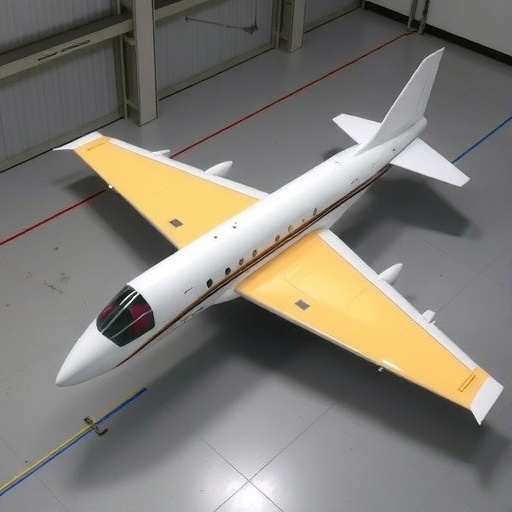
In recent years, the advancement of aerospace engineering has been significantly influenced by the development of composite materials. These materials offer remarkable strength-to-weight ratios, making them particularly valuable for aircraft design and manufacturing. A recent study conducted by Korolskii and Gavva delves deeply into the numerical implementations and unique characteristics of optimal size-weight projects for composite stringer aircraft panels. The research is rooted in refined buckling theory, which provides a robust framework for understanding the performance limitations and advantages of using composite materials in structural applications.
The significance of this study arises from the need for innovative solutions to enhance the structural integrity of aircraft while simultaneously reducing weight. In traditional aircraft designs, the use of heavy metals has often compromised the efficiency and performance of the aircraft. Korolskii and Gavva’s work represents a substantial shift towards utilizing composite materials that can withstand the rigorous demands of aviation while minimizing weight. Their research aims to optimize the size and weight characteristics of stringers, which are critical components in the structural framework of aircraft panels.
The research adopts a systematic approach to analyze various parameters influencing the performance of composite stringer panels. The authors emphasize the importance of numerical methods in predicting the behavior of these materials under complex load conditions. This comprehensive analytical framework allows for a more accurate reflection of real-world conditions, enhancing the reliability of the results. Through detailed simulations and calculations, the study uncovers various scenarios demonstrating how different configurations of composite materials can yield distinct advantages when subjected to mechanical stress.
One of the critical aspects of the research is its exploration of refined buckling theory. This theoretical framework considers the geometric and material properties of the composite structures, which are pivotal in preventing premature failure due to buckling. Buckling is a common concern in aerospace applications, and understanding its implications can lead to safer and more efficient aircraft designs. The study provides an in-depth analysis of how refined buckling theory can be integrated with numerical simulations to optimize the design codes for composite stringer panels.
The authors further introduce innovative computational models that simulate the interaction between stringers and the composite panels they support. These models incorporate various parameters, including material anisotropy, loading conditions, and structural geometries, allowing for a multidimensional analysis. The results indicate that the optimal configuration of composite stringers significantly enhances the stiffness and load-bearing capacity of the panels while keeping weight to a minimum.
Another notable aspect of Korolskii and Gavva’s work is their emphasis on the industrial implications of their findings. By optimizing composite stringer designs, manufacturers can produce lighter, more efficient aircraft that adhere to stringent safety regulations without compromising performance. The research highlights the pressing need for the aerospace industry to adapt to the changing landscape of materials science and engineering, particularly in light of growing environmental concerns and the push for sustainable aviation practices.
In addition to the technological advancements, this study also raises awareness about the economic implications of employing composite materials in aerospace applications. The potential reduction in manufacturing costs due to optimized designs can provide a significant return on investment for aircraft manufacturers. This economic perspective is particularly timely, given the challenges the aviation industry faces in recovering from recent downturns and transitioning towards more sustainable operations.
The implications of this research extend beyond traditional aircraft. The findings have the potential to influence a range of applications, from drones to space vehicles. As the demand for lighter, more efficient designs increases across various sectors, the innovative approaches highlighted by Korolskii and Gavva could become pivotal in shaping the future of aerospace engineering.
In conclusion, the findings of Korolskii and Gavva represent a substantial advancement in the understanding of composite materials and their application in aircraft design. By utilizing refined buckling theory alongside numerical simulations, their study exemplifies the integration of theoretical and practical approaches necessary for modern engineering challenges. As the aerospace industry continues to evolve, this research serves as a crucial step towards optimizing aircraft design, improving safety, and ultimately contributing to the sustainability of global aviation.
The study sets a precedent for future research, encouraging exploration into other materials and innovative design strategies. By continually refining the theoretical underpinnings associated with aircraft structures, engineers can pave the way for breakthroughs that meet the demands of modern flight. As we look to the future, the research by Korolskii and Gavva stands as a testament to the potential of composite materials in revolutionizing the aerospace industry.
Ultimately, the journey toward optimal aircraft design is an ongoing quest for knowledge and innovation. The work of Korolskii and Gavva is a significant milestone in this endeavor, blending theoretical rigor with practical applications. As the exploration of composite materials continues, we can expect to see even more groundbreaking advancements that will redefine what is possible in aerospace engineering, propelling us toward a new era of efficient and sustainable aviation.
Subject of Research: Composite stringer aircraft panels and refined buckling theory.
Article Title: Numerical implementation results and features of optimal size-weight project for composite stringer aircraft panels with restrictions according to refined buckling theory.
Article References: Korolskii, V.V., Gavva, L.M. Numerical implementation results and features of optimal size-weight project for composite stringer aircraft panels with restrictions according to refined buckling theory. AS (2025). https://doi.org/10.1007/s42401-025-00402-9
Image Credits: AI Generated
DOI: 17 October 2025
Keywords: Composite materials, refined buckling theory, aerospace engineering, numerical simulations, aircraft design, structural integrity, stringer panels, optimization techniques.


