


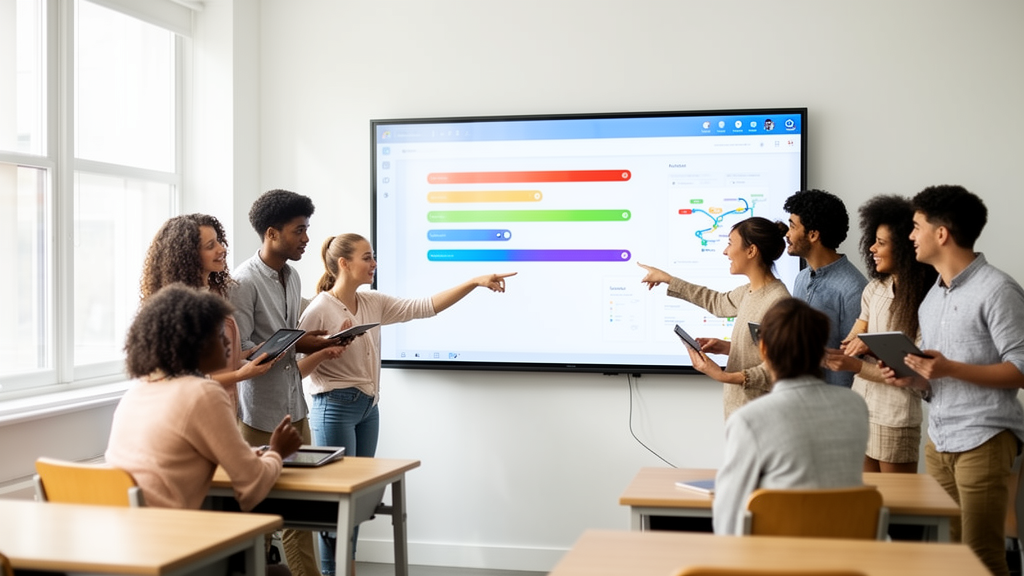
Researchers from the University of Trás-os-Montes and Alto Douro have developed Score, an open-source web-based platform designed to integrate gamification with synchronous collaborative learning in higher education. Published in the journal SoftwareX in December 2026, the study details the architectural design and initial empirical validation of the system, which seeks to address common limitations in existing educational technology ecosystems. The platform is engineered to transform traditional teaching models into an interactive ecosystem that combines student motivation, peer collaboration, and academic performance through a modular, scalable infrastructure.
The development of Score was motivated by the recognition that student motivation is a central pillar of engineering education, yet the increasing prevalence of technology in everyday life has made concentration more difficult. External stimulus overload has become a significant concern for productivity in classrooms, prompting the adoption of Game-Based Learning and gamification strategies. While tools like Kahoot! and Duolingo have shown success in increasing participation and retention, they often suffer from structural limitations. Synchronous assessment tools frequently favor individual competition over deep collaborative reflection, while self-regulated platforms can lead to student isolation due to a lack of real-time mediation.
Score addresses these gaps by introducing a comprehensive pedagogical cycle that extends beyond simple testing. The platform allows teachers to create custom challenges and interactive quizzes, while students participate individually or in teams. A key differentiator is the support for content co-creation, where students can submit new questions that, after teacher curation, are integrated into a shared database. This feature encourages participation and co-authorship, bridging the gap between individual retention and collective group intelligence. The system is built on an open-source modular architecture, distinguishing it from proprietary alternatives that typically restrict content creation to teachers.
Technologically, Score adopts a multi-layered architecture that separates the frontend, backend, persistence, and real-time communication layers to ensure high concurrency and data synchronization. The client-side frontend utilizes Next.js and React to manage interaction and rendering logic, minimizing server workload. The backend is powered by Node.js and Express, employing a non-blocking, asynchronous I/O model to handle heavy concurrent connection loads. This design choice was specifically selected to outperform traditional thread-based architectures when managing real-time streams and business rules.
A critical component of the platform is its real-time communication layer, which uses WebSockets via the Socket.IO library. This bidirectional layer facilitates the instantaneous exchange of messages and state events, ensuring immediate synchronization among group members during collaborative quizzes. By establishing permanent, full-duplex connections, the system provides the low latency necessary for synchronous group activities. Data persistence is managed through MongoDB, a document-oriented NoSQL system that offers the structural flexibility required for dynamic entities such as users, challenges, and educational games.
The gamification mechanics in Score are inspired by motivation theories and reward-based learning. Users earn points for correct answers and participation, which allows them to advance through levels and unlock additional features. Symbolic rewards, such as badges and medals, acknowledge individual performance, while dynamic leaderboards promote healthy competition. However, the design balances these extrinsic incentives with objectives of collaboration and reflection. The platform includes a virtual economy where accumulated points can be used to customize avatars and unlock autonomous mini-games, which serve as pedagogical pause mechanisms to maintain engagement.
To validate the platform, the research team conducted a multi-tiered evaluation strategy combining infrastructure stress tests, web performance audits, and empirical classroom trials. For technical robustness, the team used Artillery to simulate heavy user loads on the WebSocket network. The stress tests demonstrated that the system supported an active user load with complete stability, recording a zero failure rate and exceptionally low response times. The average latency was measured at 1 millisecond, with a 95th percentile of just 2 milliseconds, indicating that the event-driven architecture can handle intense concurrent message streaming without perceptible delays.
Client-side efficiency was audited using Google Lighthouse to ensure cross-device compatibility and accessibility. In a desktop environment, the platform achieved a performance score of 98, an accessibility score of 94, and an SEO score of 92. On mobile devices, the performance score was 88, with accessibility at 90 and SEO remaining at 92. These results reflect an optimized frontend implementation that minimizes resource blocking and ensures immediate rendering, which is crucial for eliminating technical friction during active class deployment.
Empirical testing was conducted with a sample of 70 students from multidisciplinary academic backgrounds, including undergraduate students in Computer Engineering and Mathematics, as well as Master’s students in Engineering, Data Science, and Multimedia Technology. Feedback was collected using structured questionnaires based on a 5-point Likert scale to measure perceptions of usability, collaborative social interdependence, and motivational impact. The results indicated high overall acceptance across all classes, with no significant discrepancies between theoretical and technological fields.
In the usability dimension, 72.86% of participants strongly agreed that the Score interface is intuitive and easy to use. Regarding collaborative learning, 55.71% strongly agreed that the mandatory group discussion phase successfully promoted positive social interdependence before final submission. The gamification and autonomous study features achieved unanimous appreciation, with 100% global agreement from students. Participants highlighted the effectiveness of unlocking mini-games through accumulated points and maintaining weekly study streaks to preserve motivation and regular study habits.
The platform’s design aims to support a paradigm shift in instructional roles, encouraging teachers to transition from knowledge transmitters to facilitators of interactive experiences. Students are encouraged to assume an active, participatory role, navigating learning paths through peer collaboration and continuous self-evaluation. The integration of real-time group dynamics is intended to foster transversal skills such as teamwork, critical thinking, and academic self-regulation. By bringing the digital experience closer to face-to-face classroom interaction, Score seeks to reinforce students’ involvement and autonomy in the learning process.
From a scientific perspective, Score is positioned as an experimental platform that can support future empirical analyses regarding the influence of synchronous collaborative gamification on teaching and learning. Its modular architecture enables investigators to isolate and explore key education variables, including the operational relationship between competitive and cooperative mechanics and the capacity of extrinsic rewards to facilitate internalization pathways. The platform provides a controlled environment to test and analyze the impact of gamification on motivation, academic performance, and students’ sense of community.
Although currently in the development phase, the authors note that future iterations plan to integrate artificial intelligence for adaptive learning support and educational games tailored to different cognitive styles. These developments are expected to reinforce Score’s role as an experimental environment for research and pedagogical practice. The study concludes that Score offers a promising path for integrating gamification and synchronous collaboration, highlighting a potential approach to making digital learning experiences more collaborative and meaningful in higher education.
Subject of Research: Development and evaluation of an open-source web-based gamification platform for collaborative learning in higher education
Article Title: Score: A web-based gamification platform to support student motivation and collaborative learning
Article References: Jacinta, B., Ricardo, N., Arsénio, R., José, C., & Pinto, T. (2026). Score: A web-based gamification platform to support student motivation and collaborative learning. SoftwareX, 36, Article 103190. https://doi.org/10.1016/j.softx.2026.103190
Image Credits: AI Generated
DOI: 10.1016/j.softx.2026.103190
Keywords: gamification, collaborative learning, higher education, open-source software, student motivation, web platform, WebSockets, pedagogical tools, interactive assessment, educational technology, Score, web-based
Cite Scienmag News
Denise Maddox. (November 8, 2026). Open-Source Score Platform Aims to Boost Student Collaboration. Scienmag. https://scienmag.com/open-source-score-platform-aims-to-boost-student-collaboration/
Denise Maddox. "Open-Source Score Platform Aims to Boost Student Collaboration." Scienmag, 8 November 2026, https://scienmag.com/open-source-score-platform-aims-to-boost-student-collaboration/. Accessed 8 November 2026.
Denise Maddox. "Open-Source Score Platform Aims to Boost Student Collaboration." Scienmag. November 8, 2026. https://scienmag.com/open-source-score-platform-aims-to-boost-student-collaboration/




