


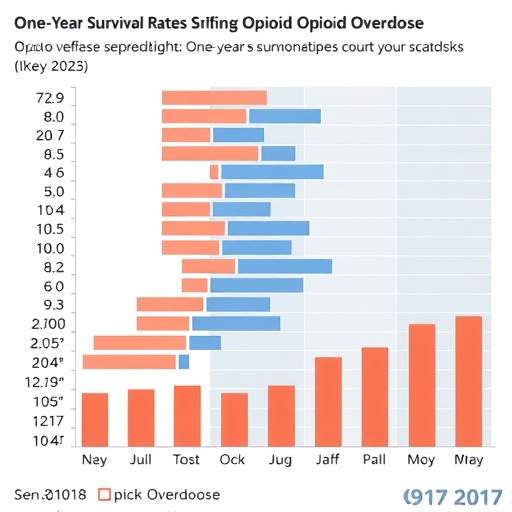
In a groundbreaking population-based cohort study recently published in JAMA, researchers have revealed alarming trends in mortality and repeat overdose rates following emergency department visits due to opioid overdoses. The investigation offers an unprecedented look into the changing dynamics of the opioid crisis in the context of fentanyl’s widespread infiltration into the drug market. This study not only quantifies the sobering reality faced by individuals who survive initial overdose events but also highlights the increased risk of fatal outcomes linked to newer drug formulations.
The study meticulously tracked a large sample of individuals presenting to emergency departments with opioid overdoses, monitoring them over a one-year period. The results demonstrated an 8.6% mortality rate within one year post-overdose, a figure significantly elevated compared to historical data. Previous research studies, primarily conducted before fentanyl surged as a dominant opioid, had estimated one-year mortality rates after overdose between 5.3% and 5.5%. This rise in mortality is a stark indicator of the heightened lethality associated with modern opioid use patterns, underlining the urgency of re-evaluating treatment and intervention strategies.
Critical to interpreting these findings is the consideration of cohort definitions, which varied among previous studies and could partly explain discrepancies in mortality estimates. The current research employed rigorous inclusion criteria and comprehensive data collection methods, ensuring robust capture of emergency department visits and subsequent outcomes across a broad population. The enhanced methodological framework bolsters the credibility of the observed increase in mortality rates, while emphasizing the need for updated epidemiological surveillance to fully grasp the evolving opioid crisis.
In addition to mortality data, the study uncovered that 21.2% of individuals who survived an initial opioid overdose experienced at least one subsequent overdose within the 12-month follow-up period. This high recurrence rate underscores the chronic and relapsing nature of opioid use disorder and indicates that surviving an overdose does not markedly reduce the risk of future, potentially fatal episodes. The findings argue for comprehensive, sustained post-overdose care that extends beyond acute emergency treatment to include long-term addiction management and support services.
Fentanyl’s role as a primary driver of increased overdose fatalities cannot be overstated. The study contextually ties the elevated mortality and repeated overdose rates to the drug’s extraordinary potency and the unpredictability of illicit fentanyl-laced substances. Fentanyl’s pharmacological profile—estimated to be 50 to 100 times more potent than morphine—dramatically raises the risk threshold for accidental overdose, complicating clinical management and post-overdose recovery. Moreover, fentanyl analogues further exacerbate these challenges due to their varying potency and detection difficulties.
This study’s revelations have profound implications for emergency medicine and public health policy. Emergency departments, often the first point of contact for overdose survivors, represent critical intervention nodes for engaging patients in long-term treatment pathways. The high rate of repeat overdose suggests that current protocols may lack sufficient focus on linkage to opioid use disorder treatments such as medication-assisted treatment (MAT), counseling, and harm reduction resources. Enhanced integration of addiction medicine services into emergency care could mitigate the risk of mortality highlighted by this study.
The population-level design of the cohort study allowed for an encompassing view of the opioid epidemic’s human toll, factoring in demographic variables, healthcare access, and comorbid conditions. Analyses revealed that certain subpopulations exhibited disproportionately higher mortality and repeat overdose risks, indicating the necessity for targeted prevention efforts. Tailoring interventions to address social determinants of health, including economic instability, housing insecurity, and mental health disorders, will be vital for reducing the burden of opioid overdose on vulnerable groups.
Furthermore, the study draws attention to the potential limitations of prior overdose research, where exclusion of fentanyl-related cases or restricted geographic samples may have underestimated the true scope of opioid overdoses today. The current findings advocate for harmonized research criteria and real-time data monitoring systems to track emerging trends accurately and inform timely public health responses.
The expert team, led by Dr. Robert A. Kleinman, MD, MSc, based at the Centre for Addiction and Mental Health, communicated these critical results via the prestigious JAMA platform, ensuring their wide dissemination among clinicians, researchers, and policymakers. Dr. Kleinman emphasizes that addressing the opioid overdose epidemic in the era of fentanyl requires not only reactive emergency responses but proactive, systemic changes in addiction treatment infrastructure and social support frameworks.
Moreover, this study calls for enhanced public awareness campaigns that inform communities about the dangers posed by fentanyl contamination and the importance of Naloxone availability as a life-saving intervention. Despite Naloxone’s proven efficacy in reversing opioid overdoses, its distribution and utilization remain inconsistent, potentially limiting its impact in a fentanyl-dominant drug environment.
In conclusion, this large-scale cohort study exposes the stark reality that opioid overdose mortality is rising, with nearly one in ten patients dying within a year of an emergency department visit for overdose. Coupled with a strikingly high incidence of repeat overdoses, these findings necessitate urgent re-evaluation of clinical practices, public health policies, and addiction treatment modalities. The opioid crisis, exacerbated by fentanyl’s deadly potency, demands an integrated, multidisciplinary approach to save lives and reduce the societal costs of addiction.
The evolving landscape of opioid misuse illuminated by this research highlights a critical crossroads. The intersection of powerful synthetic opioids and vulnerabilities within healthcare and social systems underpins the crisis’s persistence. This study serves as a clarion call for comprehensive action to develop scalable interventions that offer not only immediate overdose prevention but also long-term recovery solutions, sustaining hope for affected individuals and communities alike.
For further inquiries or detailed discussion regarding the research methodology and findings, the corresponding author Dr. Robert A. Kleinman welcomes contact via email at robert.kleinman@camh.ca. The full-text article will be accessible to the public through the journal’s embargoed media website upon release, ensuring transparency and broad dissemination of this vital knowledge.
News Publication Date: (Not provided in the content)
Web References: (None provided)
References: doi:10.1001/jama.2026.6469
Cite Scienmag News
Phoebe Ingram. (May 7, 2026). One-Year Survival Rates Following Opioid Overdose: New Insights. Scienmag. https://scienmag.com/one-year-survival-rates-following-opioid-overdose-new-insights/
Phoebe Ingram. "One-Year Survival Rates Following Opioid Overdose: New Insights." Scienmag, 7 May 2026, https://scienmag.com/one-year-survival-rates-following-opioid-overdose-new-insights/. Accessed 3 September 2026.
Phoebe Ingram. "One-Year Survival Rates Following Opioid Overdose: New Insights." Scienmag. May 7, 2026. https://scienmag.com/one-year-survival-rates-following-opioid-overdose-new-insights/


